
Attraction
Siret
Siret is a town in the north-east of Suceava County, on the right bank of the Siret river near the border with Ukraine, recorded as a town as early as the first half of the fourteenth century. It was the residence of the princes of Moldavia in the second half of the fourteenth century, until the capital moved to Suceava, and preserves the Holy Trinity church from that period.
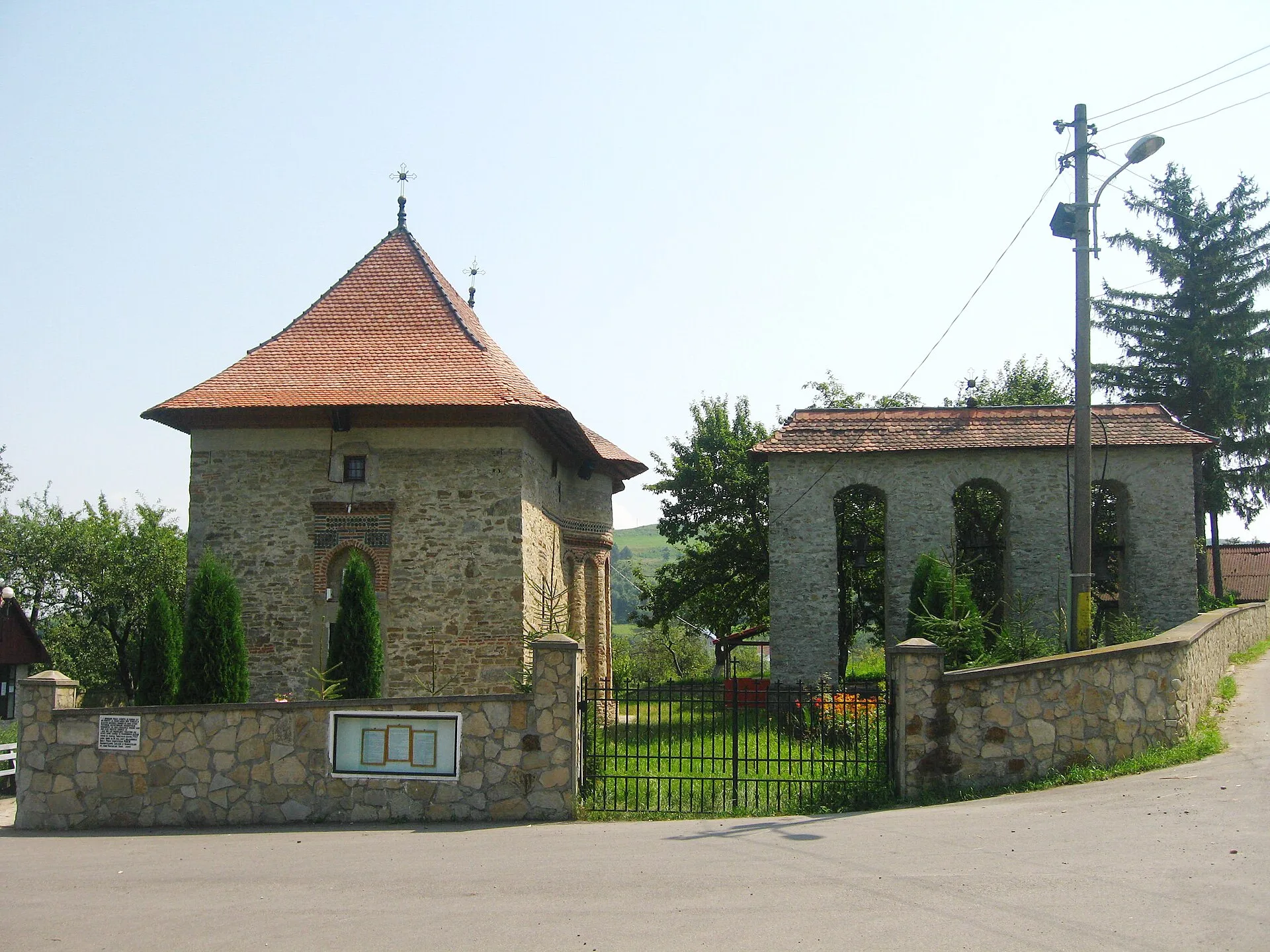
Foto: Cezar Suceveanu, CC BY 3.0, via Wikimedia Commons
The town of Siret lies at the north-eastern tip of Suceava County, on the right bank of the Siret river, on the E85 (DN2) European road, 42 km from Suceava and close to the border crossing into Ukraine. It had 6,708 inhabitants in 2021 and also administers the villages of Mănăstioara and Pădureni. East of the town is the Rogojești reservoir on the Siret river.
Siret appears in the sources in the first half of the fourteenth century, when it had a Franciscan friary. The town was the residence of the princes of Moldavia in the second half of the fourteenth century, under Bogdan I and Lațcu, and in 1371, at Lațcu's request, the pope established a Roman Catholic diocese here. Around 1388 Petru I moved the capital to Suceava. The chronicler Ion Neculce recorded the tradition that Dragoș Vodă built at Siret a "zamca", an earthen fort with princely houses; nothing of it survives above ground, and the sites studied by archaeologists (Dealul Sasca, Dealul Ruină, Dealul Horodiște) are listed on the List of Historic Monuments as archaeological sites. From 1775 to 1918 the town was part of Austrian Bukovina and had a large Jewish community, deported in 1941.
The oldest monument is the Orthodox church of the Holy Trinity on Dealul Sasca (10 Victoriei Street), one of the oldest stone churches in Moldavia and the first built on a triconch plan. Its dating is debated: the LMI gives the year 1352, some authors attribute it to Prince Sas, and archaeological research in the early twenty-first century dated it to the end of the fourteenth century, as the chapel of the princely court. In the town centre stands the church of the Nativity of St John the Baptist, rebuilt under Prince Ștefan Petriceicu (seventeenth century) on the site of a late fourteenth-century wooden church uncovered by archaeologists in 1984.
In the village of Mănăstioara stand the church of St Onuphrius, built in 1673 under Ștefan Petriceicu, and the wooden church of St Demetrius of the Sbiera family, from around 1730. On Dealul Horodiște lies the Jewish cemetery, with eighteenth-century gravestones, a historic monument. The town also preserves buildings from the Austrian period on the LMI: the former town hall of 1826, the nineteenth-century inn and the building of the Siret History Museum. Siret is a member of the Douzelage town twinning association.
Orașul Siret, județul Suceava