
Attraction
Historic centre of Roman
The city of Roman, in Neamț County, lies north of the confluence of the Moldova and Siret rivers and is first recorded in a domestic charter of 30 March 1392. Its historic urban centre, a listed monument, runs along Strada Ștefan cel Mare and preserves buildings from the mid-nineteenth to the early twentieth century, while the town is also home to the Roman Episcopal complex and churches from the sixteenth and seventeenth centuries.
Roman lies in the centre of historical Moldavia, in the Roman depression, north of the confluence of the Moldova and Siret rivers. The DN2 (E85) runs through the town and meets the DN15D here, which leads to Piatra Neamț and Vaslui, and Roman station is on main railway line 500. The town appears in the Novgorod chronicle, dated to around 1387, and the first domestic document mentioning it is a charter of 30 March 1392. Its name is linked to Prince Roman I Mușat.
Roman was largely destroyed in 1467 during Matthias Corvinus's campaign in Moldavia and rebuilt by Stephen the Great. The Bishopric (now Archbishopric) of Roman was most likely founded in 1408-1413, under Alexander the Good. The town was the seat of Roman land and of Lower Moldavia, later of Roman County, and since 1968 it has been a city in Neamț County. The site of the Mușatin fortress of Roman, dated in the List of Historic Monuments between 1392 and the early fifteenth century, lies in the area of the Zoo Park and is a listed monument. Alongside Romanians, the town was home to significant Armenian, Jewish and Catholic communities.
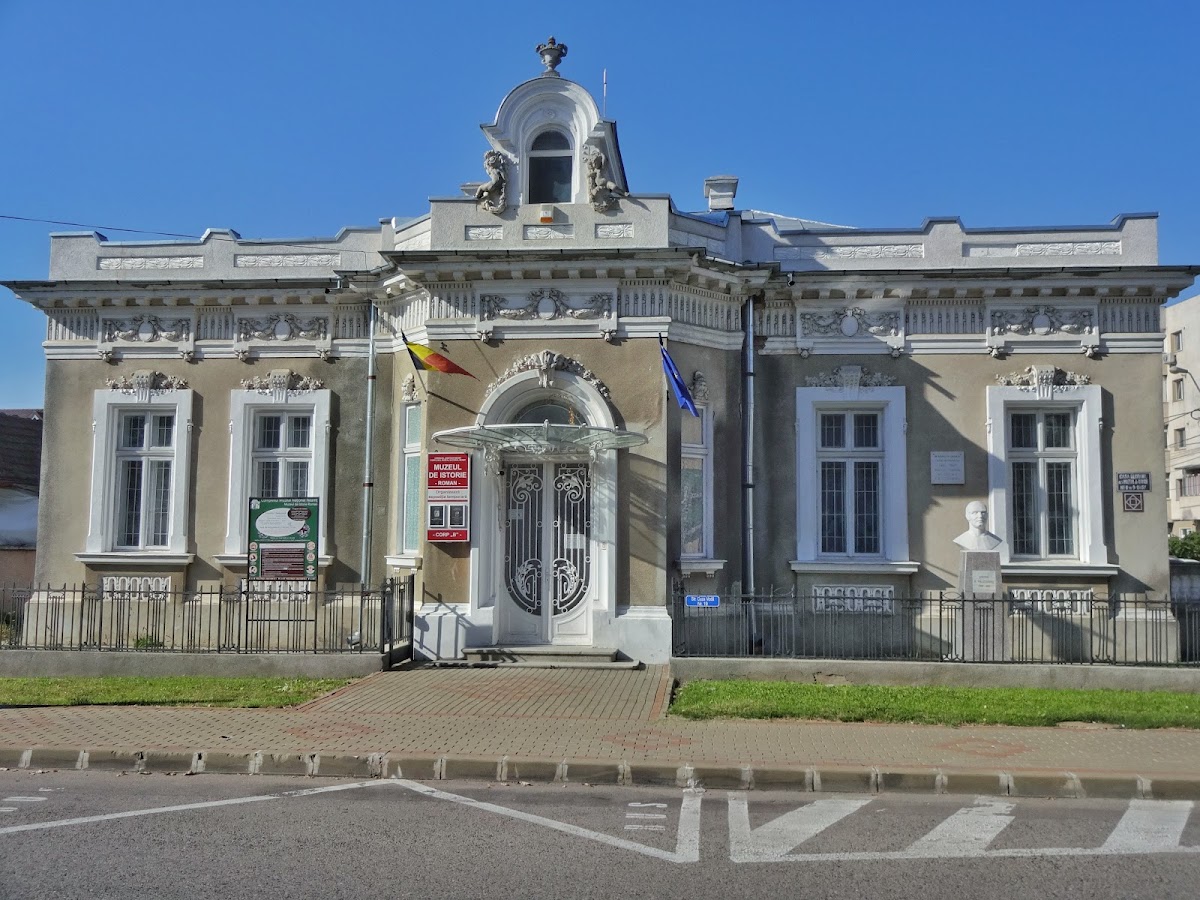
The historic monument „Centru istoric urban” (LMI code NT-II-a-B-10680) covers Strada Ștefan cel Mare from no. 181 to no. 292, with buildings from the mid-nineteenth to the early twentieth century, including Casa Romașcană, Casa Brănișteanu (1885, now the Military Club), Casa Costache Morțun (now the Natural Sciences Museum) and the railway station of 1869. Nearby are the History Museum (Casa Nevruzzi), the Art Museum (Casa Robu, 1900) and the Roman Vodă National College (1899).
The Roman Episcopal complex, a class A historic monument, includes the cathedral of St Paraskeva, built in 1542-1550 by Petru Rareș and described in a separate entry. The Church of the Dormition (Precista Mare) was founded in 1569 by Lady Ruxandra, widow of Alexandru Lăpușneanu. The former Armenian church, from 1609, was rebuilt in 1863-1868, and the White Church (Biserica Albă) of the Holy Archangels is dated 1611-1615 in the List of Historic Monuments.
Roman, județul Neamț