
Attraction
City of Râmnicu Sărat
Râmnicu Sărat is a city first documented in 1439, located in the eastern part of Buzău County, about 45 km from the county seat, on the DN2 (E85) road and rail axis. The historic center preserves 18th-19th century monuments, including the Brâncovenesc Complex — with the "Dormition of the Mother of God" church (1691-1697) — and holds the former political prison, one of Romania's key sites of memory for 20th-century repression, where Corneliu Zelea Codreanu was assassinated (1938) and leaders such as Ion Mihalache and Corneliu Coposu were held.
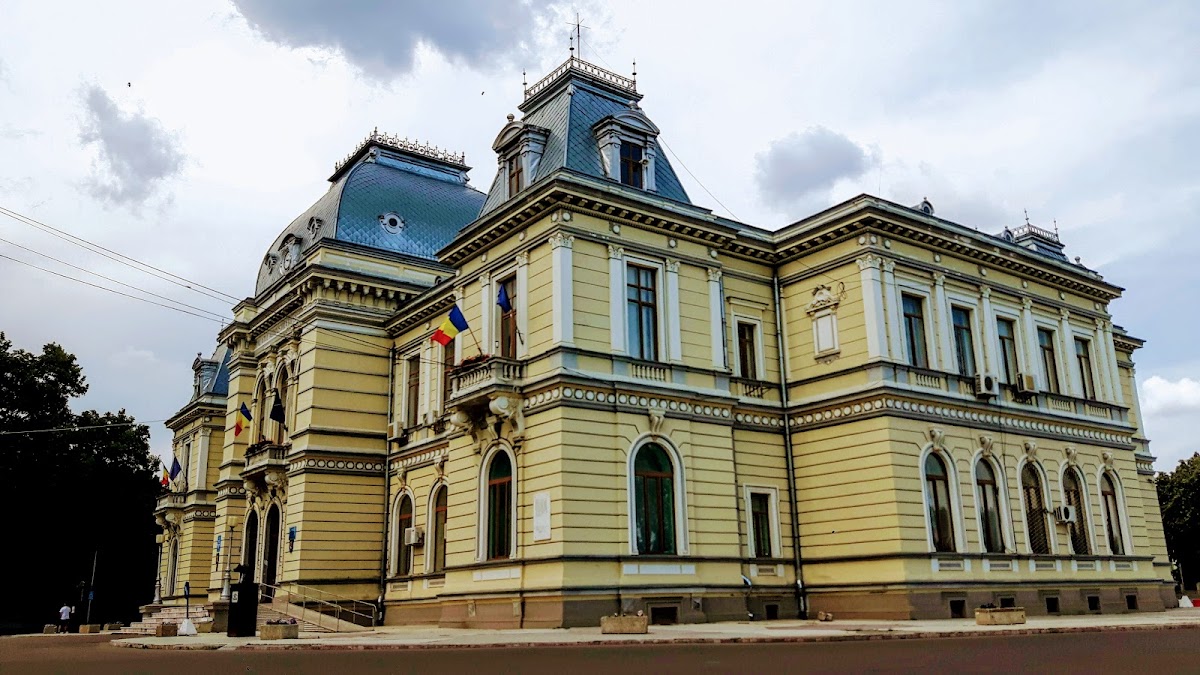
Râmnicu Sărat is a city in the eastern part of Buzău County, at the confluence of the Râmnicu Sărat River with several minor tributaries, at an altitude of about 130 m, in the contact zone between the Romanian Plain and the Curvature Subcarpathians. The city has a population of about 34,000 (33,843 per the 2011 census, down from 38,828 in 2002) and is the most important urban center in the eastern half of Buzău County.
The city is first documented on 8 September 1439, mentioned in a trade privilege granted by ruler Vlad Dracul to Polish, Russian, and Moldavian merchants; it is first recorded as a town in 1474. Its status as a town solidified during the medieval period due to its strategic location on the trade route between Moldavia and Wallachia, and from 1862 to 1950 it served as a county seat.
The historic center preserves architectural elements from the 17th-19th centuries. The main monument is the Brâncovenesc Complex, with the "Dormition of the Mother of God" church, founded by Constantin Brâncoveanu between 1691 and 1697, on the site of an older church dedicated to Saint George, documented since 1593. The complex also includes Brâncoveanu's princely residence, the abbey house, and monastic cells, all surrounded by an enclosure wall with defense towers; the church preserves interior murals attributed to the renowned painter Pârvu Mutu and was reconsecrated in 2014, after extensive reinforcement and restoration work. The city has several other historic churches — "Saint Paraskeva" (1905-1907, on the site of a foundation by Stephen the Great), "Saint Demetrius" (1707-1708, painted by Gheorghe Tattarescu), "Nativity of the Mother of God"-Robeasca (1781-1784), and "Archangels Michael and Gabriel" (1765).
The former political prison complex is a key landmark of Romania's recent historical memory. The prison initially held common-law prisoners, but from 1938, under King Carol II's dictatorship, it housed leaders of the Iron Guard movement — here, on the night of 29-30 November 1938, Corneliu Zelea Codreanu was assassinated, along with 14 other legionnaires, on the way to Jilava prison. After the communist regime was established, numerous representatives of Romania's political and religious elite were held here, including, from 1955, leaders of the National Peasants' Party — Ion Mihalache, Corneliu Coposu, and others — as well as Greek Catholic and Roman Catholic clergy. The prison was shut down in April 1963.
Economically, the city functioned as a regional hub for light and food industries. It is reached via national road DN2 (E85), about 140 km northeast of Bucharest and 45 km east of the city of Buzău, with rail connections on the Bucharest-Focșani line. The city is worth visiting for its relatively well-preserved historic architecture and its significance in the history of political detention in communist Romania.
Ramnicu Sarat judetul Buzau