
Attraction
Deva Historic Centre
Deva's historic centre lies at the foot of Citadel Hill, along Bulevardul 1 Decembrie 1918 and around Piața Unirii, and is protected as a historic urban ensemble. It includes Magna Curia Palace, the city park, the 1890 Administrative Palace, the 1911 theatre and nineteenth- and twentieth-century bank, school and hotel buildings.
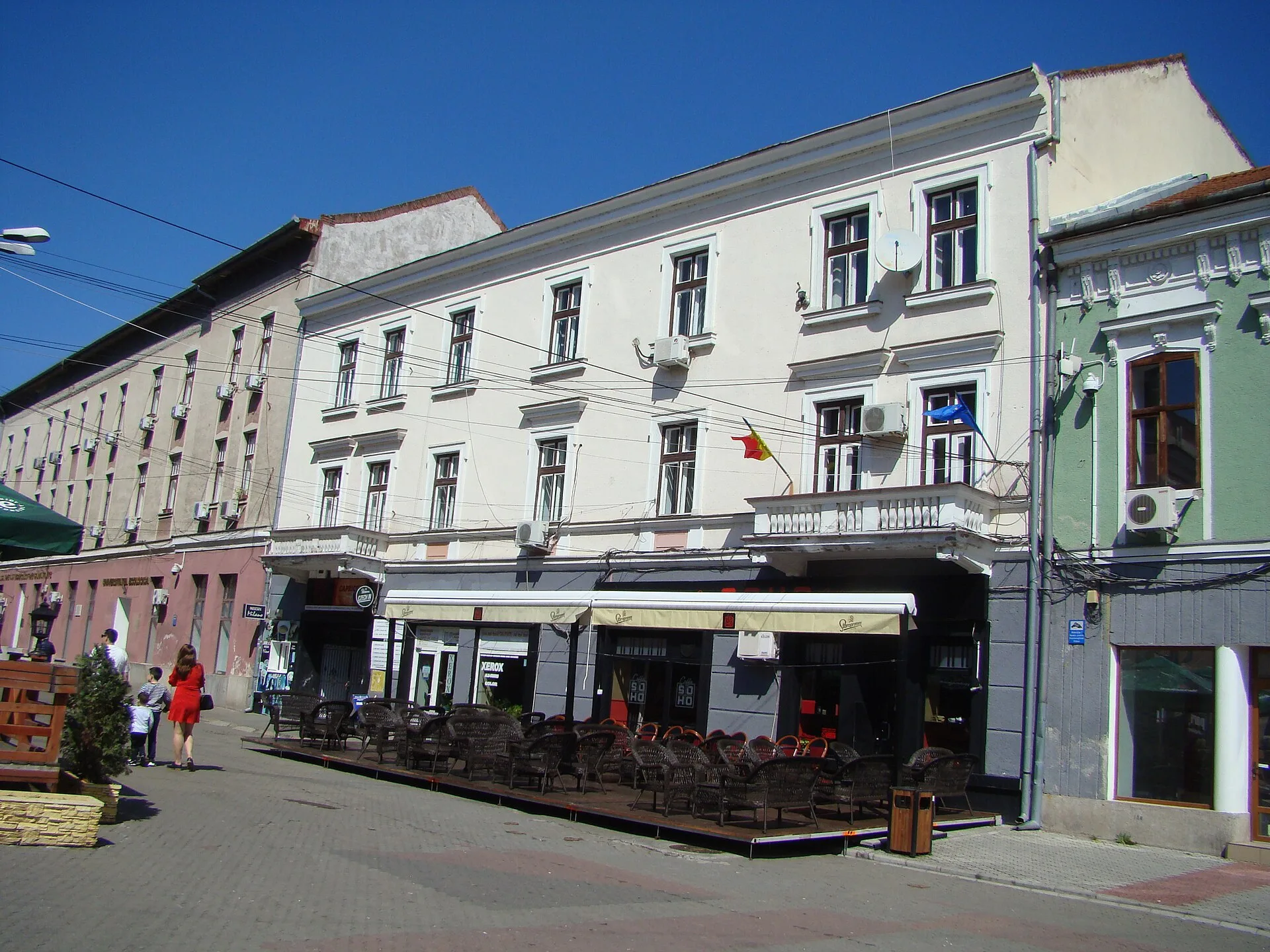
Foto: Țetcu Mircea Rareș, CC BY-SA 4.0, via Wikimedia Commons
Deva, the seat of Hunedoara County, lies at 187 m above sea level on the left bank of the Mureș, at the foot of Citadel Hill. The fortress on the hill is documented from 1269, and in 1444 the fortress and the Deva estate passed to John Hunyadi. Until 1920 the town was the seat of Hunedoara County.
The historic centre is listed as an urban historic site (code HD-II-s-B-03218) and includes the urban ensembles of Bulevardul 1 Decembrie 1918, Piața Unirii and the streets George Barițiu, Lucian Blaga, Mihai Eminescu, Octavian Goga, Libertății and Andrei Șaguna, with buildings from the nineteenth and twentieth centuries.
At the northern end of the boulevard, by Citadel Hill, stand Magna Curia Palace (Bethlen Castle), home of the Museum of Dacian and Roman Civilisation, and the nineteenth-century city park, with the 1937 statue of Decebalus at its entrance. The boulevard also has the Administrative Palace (1890), now the seat of the Prefecture and County Council, the Town Theatre of 1911, now the Deva Art Theatre, the former Hotel Orient (1900) and the early twentieth-century former headquarters of Banca Dacia and the National Bank.
Piața Unirii has the Reformed Church (1908-1910), the Romanian Casino (1872) and the former Investment Bank (1906). Nearby are Parva Curia, from the eighteenth century, the 1896 synagogue on Strada Libertății, the eighteenth-century Franciscan friary and the tower of the old Orthodox church, from 1700, in the Romanian cemetery on Strada Călugăreni.
Bd. 1 Decembrie 1918 și Piața Unirii, Deva, județul Hunedoara