
Attraction
Câmpia Turzii
Câmpia Turzii is an industrial city on the right bank of the Arieș, about 7 km from Turda, formed in 1925 by merging the villages of Ghiriș-Arieș and Ghiriș-Sâncrai. In the centre are the 1680 Reformed church and the interwar civic centre on Piața Mihai Viteazul, a historic monument of national importance.
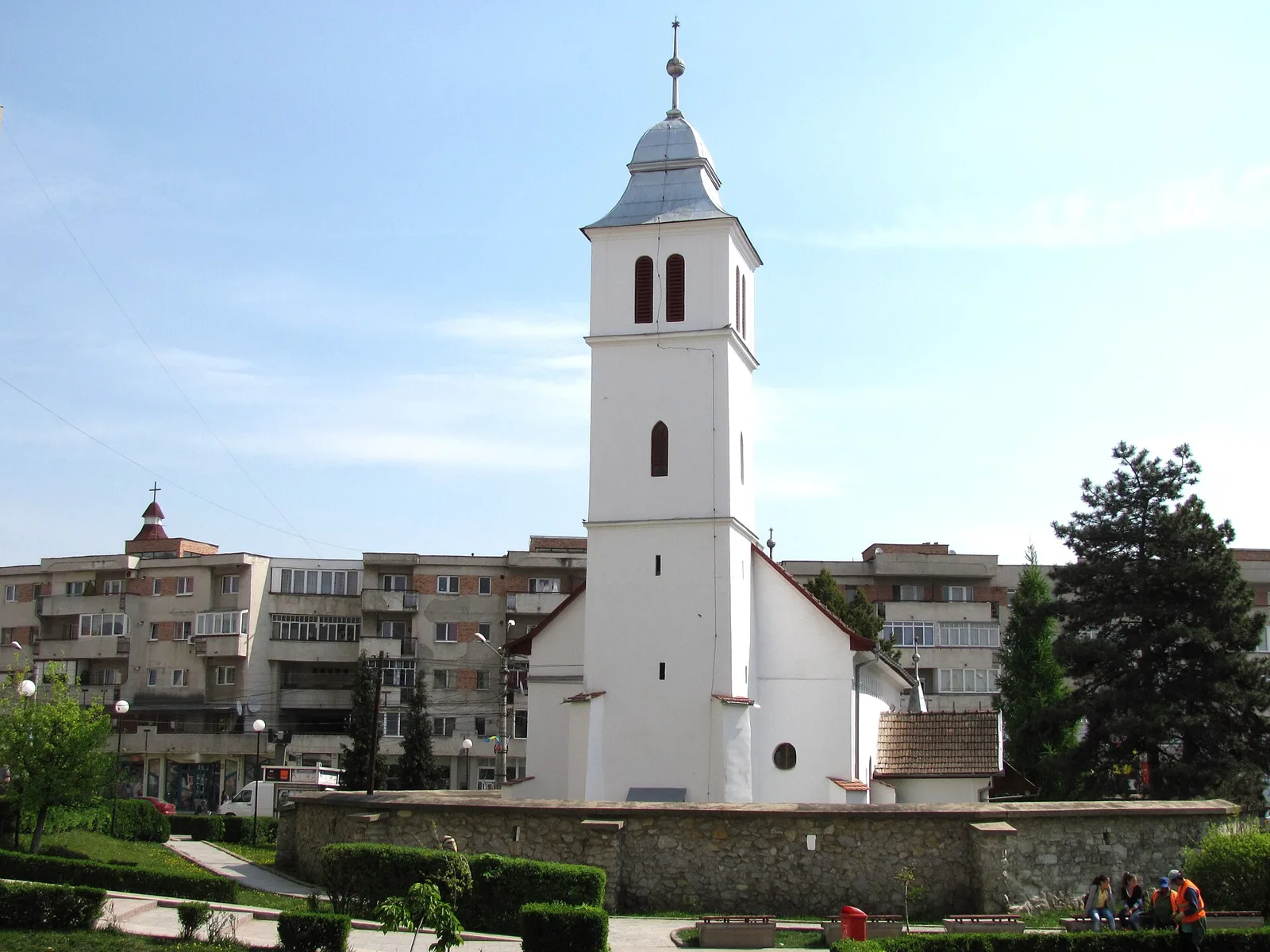
Foto: Ana Maria Catalina, CC BY-SA 3.0, via Wikimedia Commons
Câmpia Turzii is a city in south-eastern Cluj County, on the right bank of the Arieș River, about 7 km from Turda and 40 km from Cluj-Napoca. At the 2021 census it had 20,590 inhabitants. The town centre is Piața Mihai Viteazul.
The town was formed in 1925, by royal decree, from the villages of Ghiriș-Arieș and Ghiriș-Sâncrai. Sâncrai is first recorded in 1219 as "villa Sancti Regis", and Ghiriș in 1292. In August 1601, Michael the Brave was killed by General Basta's men on the plain near Turda, in the area of today's town. The Războieni-Cluj railway has passed through here since 1873, and from 1921 the Industria Sârmei wire works turned the village into an industrial centre. It became a city (municipiu) in 1998.
In the centre you can see the Reformed church on Piața Mihai Viteazul, the oldest building in town: its foundation stone was laid in 1679 and it was completed in 1680, funded by the will of Count Ferenc Rhédey. The church is surrounded by a stone wall about 2.5 m high. On the same square is the interwar community civic centre, with the former Workers' Club and the Orthodox church, built in the late 1930s and the 1940s. The town also keeps the Paget, Bethlen and Betegh manor houses, used, according to the 2015 List of Historic Monuments, as a children's activity centre, a school library and a kindergarten, and the building of the first Romanian school (8 Avram Iancu Street). The town has a station on the Războieni-Cluj railway.
The interwar community civic centre is a historic monument of national importance (LMI CJ-II-a-A-07556), including the Workers' Club (CJ-II-m-A-07556.01) and the Orthodox church (CJ-II-m-A-07556.02). The Reformed church (CJ-II-m-B-07555), the Bethlen (CJ-II-m-B-07554), Paget (CJ-II-m-B-07553) and Betegh (CJ-II-m-B-07557) manor houses and the first Romanian school (CJ-IV-m-B-07858) are monuments of local importance.
Did you know that Virginia Ruzici, winner of the 1978 French Open women's singles title, was born in Câmpia Turzii on 31 January 1955?
Piața Mihai Viteazul, Câmpia Turzii, județul Cluj