
Attraction
Obcina Mare
Obcina Mare is a mountain subgroup of the Bukovina Obcinas, in the northern Eastern Carpathians, made of flysch deposits. It is crossed by the DN17A through Ciumârna Pass (1,100 m), with the 1969 „Palma” monument, and by the DJ177 through Poiana Mărului Pass (1,125 m), between Sucevița and Mănăstirea Humorului.
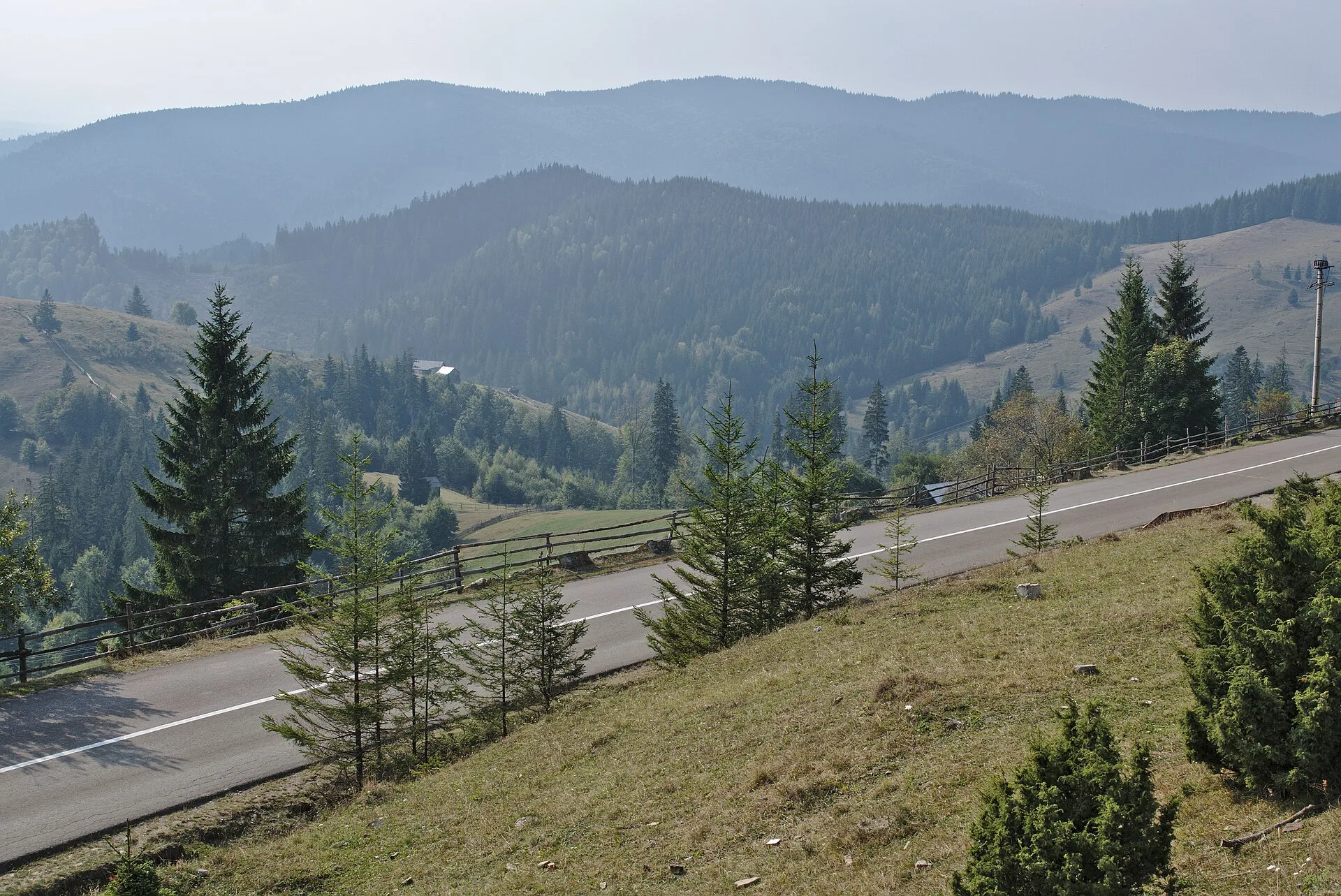
Foto: Alexander Klink, CC BY 4.0, via Wikimedia Commons
Obcina Mare is a mountain subgroup of the Maramureș and Bukovina Carpathians, part of the Bukovina Obcinas together with Obcina Feredeului, Obcina Mestecăniș and Obcina Brodinei. It is made of flysch deposits. To the east it descends into the Rădăuți Depression, where Vicovu de Jos and Sucevița lie at the foot of the mountains, and to the north it reaches the border with Ukraine, where Cornu peak (1,279 m) rises near the village of Sadău.
On the Romanian side, the highest peaks, Sihloaia and Scorușet, reach about 1,220-1,230 m. Several streams of the Suceava basin rise in Obcina Mare, and the Gura Putnei - Putna railway runs along the Putna valley, which cuts through it.
The DN17A, Sadova - Sucevița - Rădăuți, crosses Obcina Mare through Ciumârna Pass (also called Palma Pass), at 1,100 m, between Ciumârna and Sucevița. The road was begun in 1949 and completed in 1969; at its highest point stands the Road Builders' Monument, a hand almost 7 m tall raised in 1969 to mark the meeting of the two construction teams.
Further south, the DJ177 county road crosses Poiana Mărului Pass (1,125 m), between Scorușet and Poiana Trisiciori peaks, linking the communes of Sucevița and Mănăstirea Humorului, and thus the Sucevița valley with the Moldova valley. Sucevița and Moldovița monasteries lie on either side of Ciumârna Pass.
Obcina Mare, între Moldovița, Sucevița și Putna, județul Suceava