
Attraction
Golești Museum of Viticulture and Fruit Growing
The Golești Museum of Viticulture and Fruit Growing is a national open-air museum spread across 14 hectares in the town of Ștefănești, 10 km from Pitești, on the Pitești–București road. It includes the Golescu Manor House, built in 1640 and restored in 1942–1944, and over 30 traditional homesteads of vine and fruit growers brought from across Romania. The museum was established by royal decree in 1939 under the name Muzeul Dinicu Golescu.
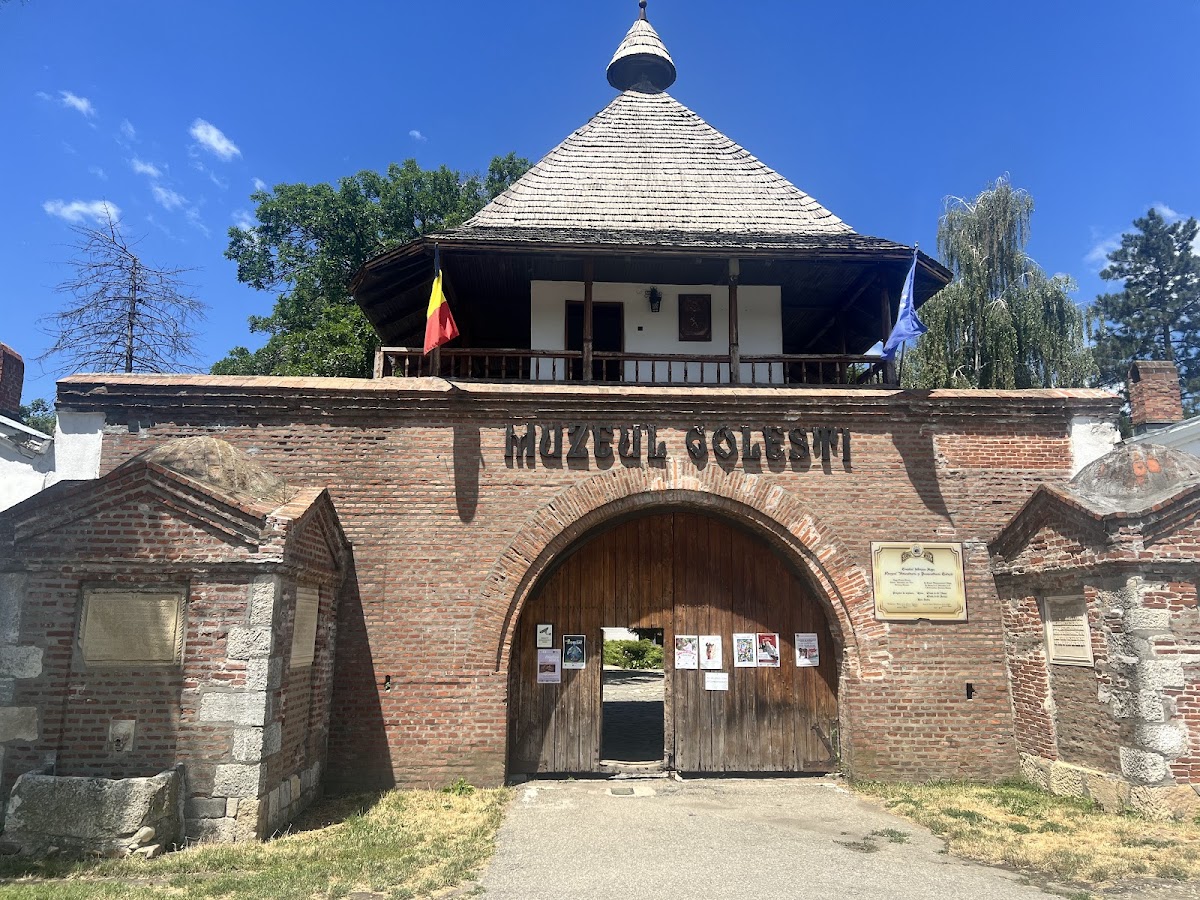
The Golești Museum of Viticulture and Fruit Growing is a national museum organised on the historic estate of the Golescu family in the town of Ștefănești, Argeș County, approximately 10 km east of the municipality of Pitești, on the national road Pitești–București. The institution was established by royal decree of Carol al II-lea on 7 June 1939, under the name Muzeul Dinicu Golescu, after architect Horia Teodoru oversaw the restoration of the ensemble between 1942 and 1944. The museum complex extends over 14 hectares and is organised into two main sections. The History and Ethnography Section encompasses the medieval ensemble of Curtea Goleștilor: the Golescu Manor House (built in 1640), the Turkish Bath, the Watchtower, the Bolnița of Ban Radu Golescu, the Școala Slobodă Obștească founded by Dinicu Golescu, the enclosure wall with four corner towers, and the arhondaric. The manor house contains period furniture, personal belongings of the Golescu family, manuscripts, and decorative art. The Open-Air Ethnographic Section, opened in 1966, brings together over 30 homesteads of vine and fruit growers gathered from across Romania. The Golescu family played a central role in the modern history of Țara Românească: the brothers Ștefan, Nicolae, Radu, and Alexandru Golescu worked at Golești on the plans for the 1848 revolution, Tudor Vladimirescu was captured on the estate in 1821, and the future king Carol I was received here upon his arrival in Romania. A dendrological garden featuring rare species, planted in the nineteenth century, completes the ensemble.
Orașul Ștefănești, județul Argeș