
Attraction
Textile Museum, Băița
The Textile Museum in Băița, Hunedoara County, is a private museum displaying the FARZ Collection (Florica, Ana, and Romulus Zaharia) — a collection of textiles and traditional textile-production tools from around the world, considered the only one of its kind in Eastern Europe. Open to the public since 13 May 2024, the museum operates across three buildings: two in Băița and one in a peasant homestead in the village of Hărțăgani. Worth visiting for the scale and professional rigor of its collection, rarely matched among Romanian museums.
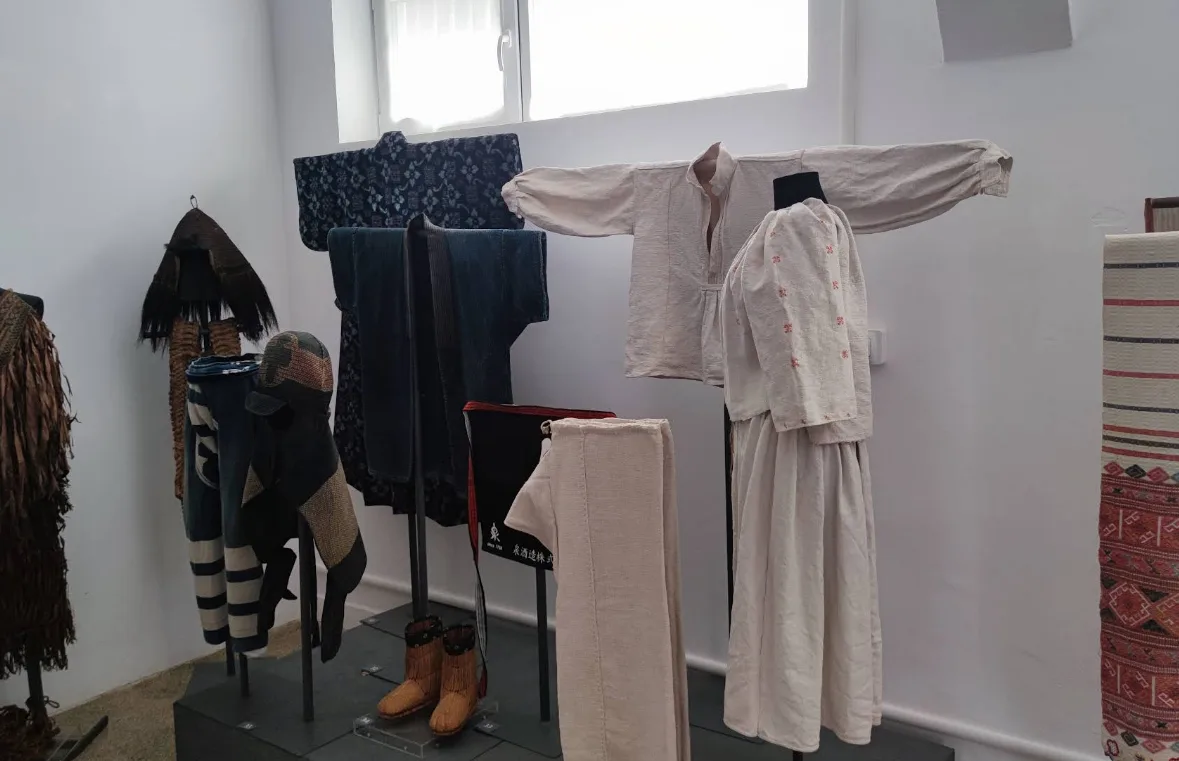
The Textile Museum is a private museum located on Strada Principală in Băița, Hunedoara County, opened to the public on 13 May 2024, with the exhibitions "Visible Cultural Heritages: Traditional Costumes of Romania and Japan" and "Distaff and Spindles: Instruments of the Threads from Romania and Neighboring Areas." The museum houses the FARZ Collection (Florica, Ana, and Romulus Zaharia), built over four decades of professional passion for textiles. The collection's founder, Dr. Florica Zaharia, spent thirteen years as head of the Textile Conservation Department at the Metropolitan Museum of Art in New York, where she worked for nearly half her career.
The collection brings together flat textile pieces, costumes, accessories, and textile-production tools from Romania, Eastern and Western Europe, the Near East, India, Central Asia, Japan, China, Southeast Asia, Africa, Oceania, and the Americas, along with a rich reference collection of fibers, dyes, and textile structures, as well as a specialized library. It is considered the only collection of its kind in Eastern Europe, built with a systematic approach focused on the technical aspects of textiles.
The museum operates across three buildings, all in Hunedoara County. Building A, the main site, is a house built in 1857 in the center of Băița by merchant Gheorghe Bartos, one of ASTRA's founders — the building is currently under restoration, with seven rooms and a veranda on the main floor and six vaulted rooms in the basement; its garden will be turned into a garden of dye plants and textile fibers. Building B, also in Băița, houses administrative spaces, a conservation lab, a conference room, and an Art Café, in a 1960s building that was once the town's general store. Building C stands in a peasant homestead in the village of Hărțăgani, with five structures, three of them dated and signed by local craftsmen — Tripon Petru (1902, 1912) and Popa Aron (1936) — illustrating household textile production typical of the Hunedoara region.
The museum frequently partners with institutions in the field, including the National Museum of Romanian History and the ASTRA National Museum Complex in Sibiu, organizing themed exhibitions and natural dye workshops. It is open to the public Tuesday through Saturday, 10:00 AM to 4:00 PM; Building C can only be visited by appointment. Worth visiting for the scale and professional rigor of its collection — rarely found at this level in a private Romanian museum.
Strada Principala, 337045 Băiţa