
Attraction
National Museum of Art of Romania
The National Museum of Art of Romania, housed in the former Royal Palace on Calea Victoriei in Bucharest, holds over 70,000 works of art, organized into two permanent galleries: the National Gallery (Romanian art) and the European Art Gallery. The building, erected in stages between 1812 and 1937 and fully rebuilt after a 1926 fire, served as the royal residence until 1947; the museum was founded here in 1948. Worth visiting for the exceptional range and value of its collections, spanning six centuries of Romanian and European art.
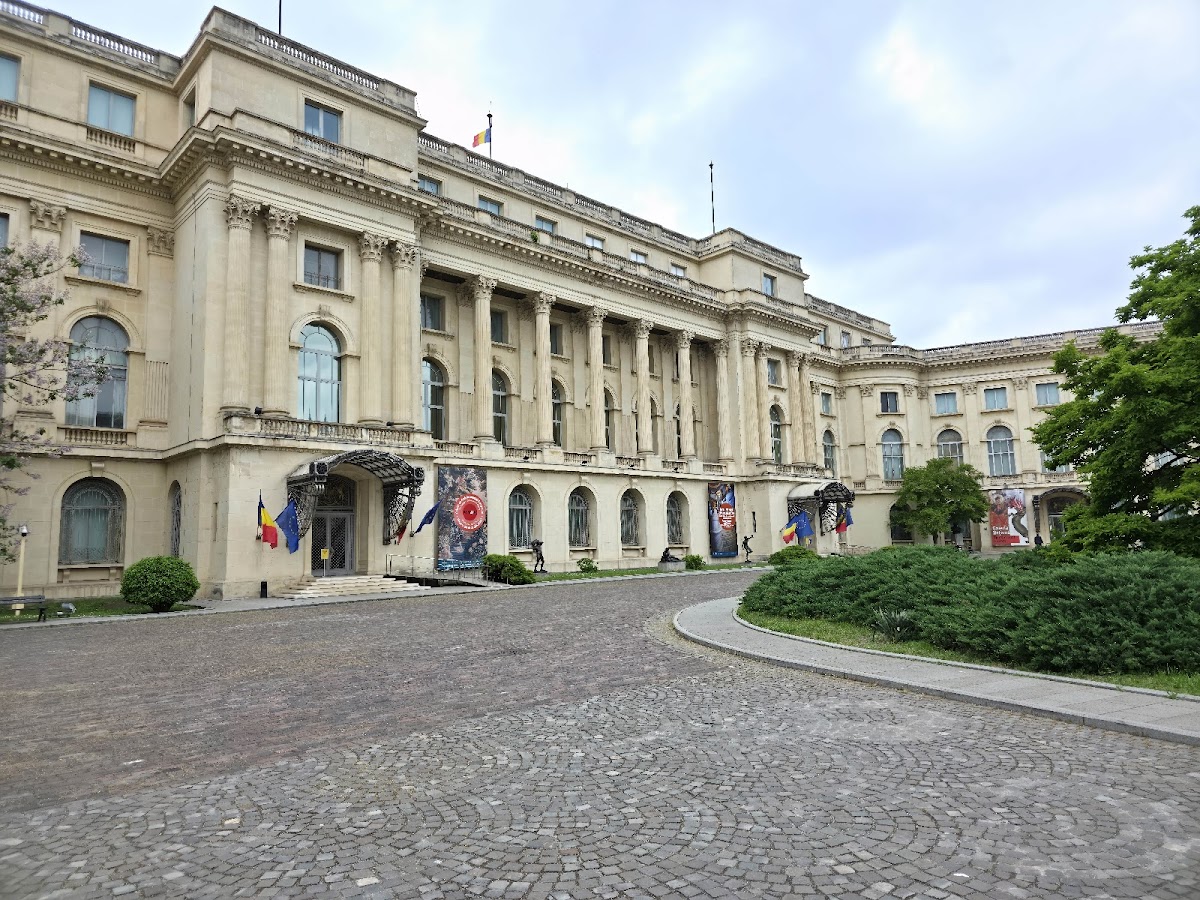
The National Museum of Art of Romania is the country's leading art institution, housed in the former Royal Palace at Calea Victoriei 49-53, Bucharest — a building erected in stages between 1812 and 1937, covering a total area of about 30,000 square meters. The palace served as the official royal residence until 1947; a major fire destroyed the central wing in 1926, requiring a complete rebuild finished in 1937. The museum was founded here in 1948, with its first permanent gallery opening in 1950.
The permanent collections are organized into two main galleries: the National Gallery, devoted to Romanian art, and the European Art Gallery. The National Gallery includes the Old Romanian Art Gallery (objects from the 14th-18th centuries, with a Treasury room dedicated to religious and secular pieces in precious metals and stones) and the Modern Romanian Art Gallery, featuring works by Nicolae Grigorescu, Ioan Andreescu, Theodor Aman, and Constantin Brâncuși. The European Art Gallery brings together works from the 14th-19th centuries — Rembrandt, Rubens, El Greco, Tintoretto — originally drawn from King Carol I's collection.
The museum's total holdings exceed 70,000 pieces, though only part is on permanent display. In December 1989, the building was damaged 80%, with more than 1,000 artworks destroyed or damaged; the permanent galleries reopened only gradually, between 2000 and 2002, after extensive restoration work. It is reached from central Bucharest by metro to Universitate or Piața Victoriei stations, by tram line 1, or by buses serving Calea Victoriei. Worth visiting for the sheer scope of Romanian and European art collections gathered under one roof, making it one of the most comprehensive art museums in Eastern Europe.
Calea Victoriei 49-53, 010063 București