
Attraction
National Military Museum
The National Military Museum "King Ferdinand I" in Bucharest, at 125-127 Mircea Vulcănescu Street, is Romania's largest military-themed museum, founded on 18 December 1923 by royal decree. Its holdings exceed 1.28 million objects — weapons, uniforms, military vehicles, decorations, and documents — organized into more than 25 thematic collections and spanning roughly 2,500 years of military history. It is reached conveniently from Eroilor or Izvor metro stations, about 10-15 minutes on foot.
The National Military Museum "King Ferdinand I" is one of Romania's most important military-themed museum institutions, founded on 18 December 1923 by Royal Decree no. 6064, signed by King Ferdinand I. Its roots go back further, to the Artillery Museum founded in 1893. Its original home was the Palace of Arts in Carol I Park, and its collections suffered major losses in a 1938 fire and the 1940 earthquake.
Since 1985, the museum has operated from its current site at 125-127 Mircea Vulcănescu Street, a building constructed in 1898 as a barracks for the 4th Ilfov Infantry Regiment, later the headquarters of the Border Troops Command. After extensive restoration, the museum reopened formally in 1988, and in 1990 it reverted to the name National Military Museum. The complex covers more than 22,000 square meters across four buildings and nine levels, plus an outdoor military hardware park.
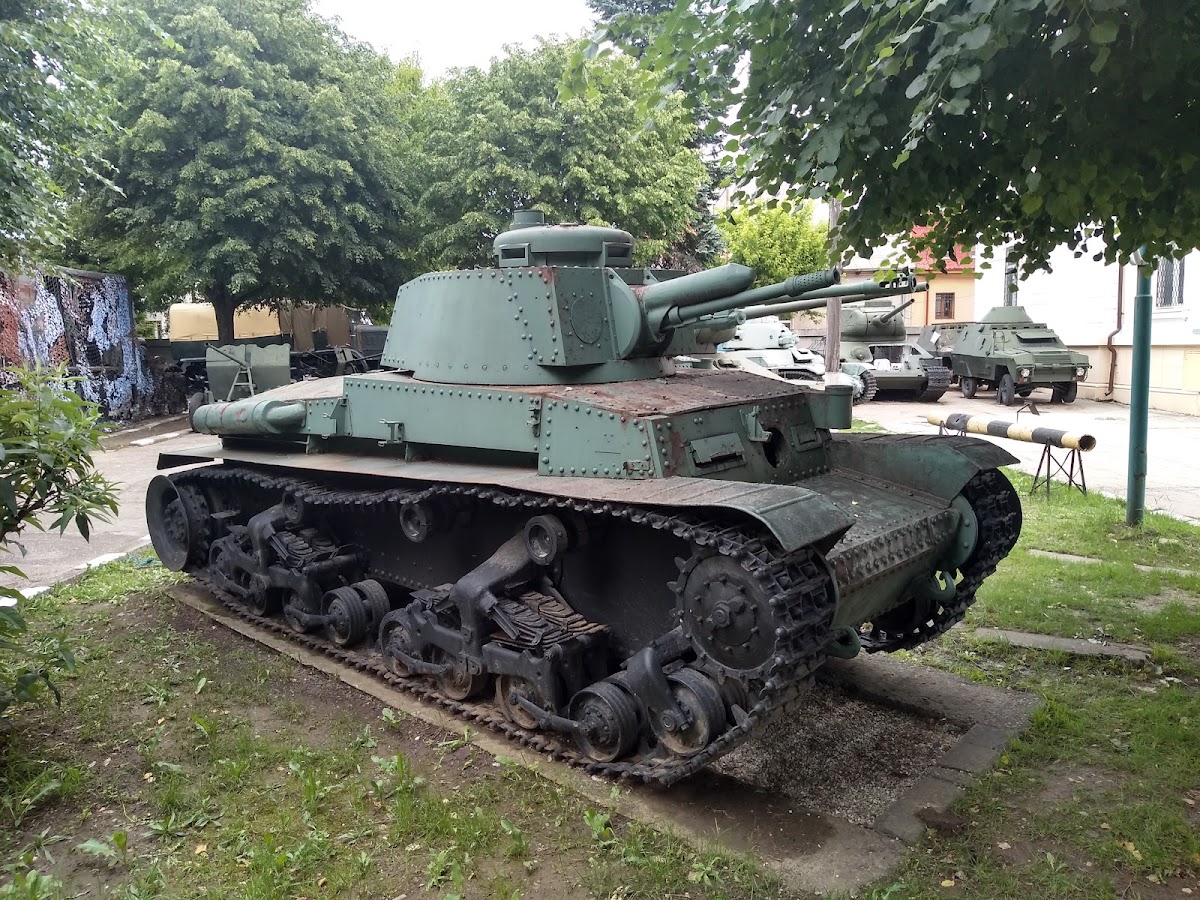
The museum's holdings exceed 1.28 million objects, organized into more than 25 thematic collections: edged and firearms, Romanian and foreign uniforms, orders and medals, flags, artillery, aviation, navy, and ancient and medieval archaeology. Notable exhibits include the swords of Romania's rulers and kings, a replica of the "Coandă 1910" aircraft, the space capsule module in which cosmonaut Dumitru Prunariu returned to Earth in 1981, and tanks and aircraft displayed in the museum's courtyard. The museum is open to the public Wednesday through Sunday (closed Mondays and Tuesdays) and can be reached by metro from Eroilor or Izvor stations, 10-15 minutes on foot. Worth visiting for the scale and diversity of its collection, one of the most complete records of Romanian military history available to the public.
Strada Mircea Vulcanescu 125-127 Bucuresti