
Attraction
Steam Locomotives Museum
The Steam Locomotives Museum in Sibiu, opened in 1994 at 22 Dorobanților Street, on the grounds of the former CFR Depot, preserves and displays 35 steam locomotives, 2 cranes, and 2 snow plows, built between 1885 and 1959 in Romania, Germany, Austria, Hungary, Poland, the USA, and Sweden. The collection documents the history of rail traction in Transylvania, a region with a rail network systematically developed from the second half of the 19th century onward. It is one of the few specialized collections of its kind in Romania, reached about 1.5 km from Sibiu's historic center.
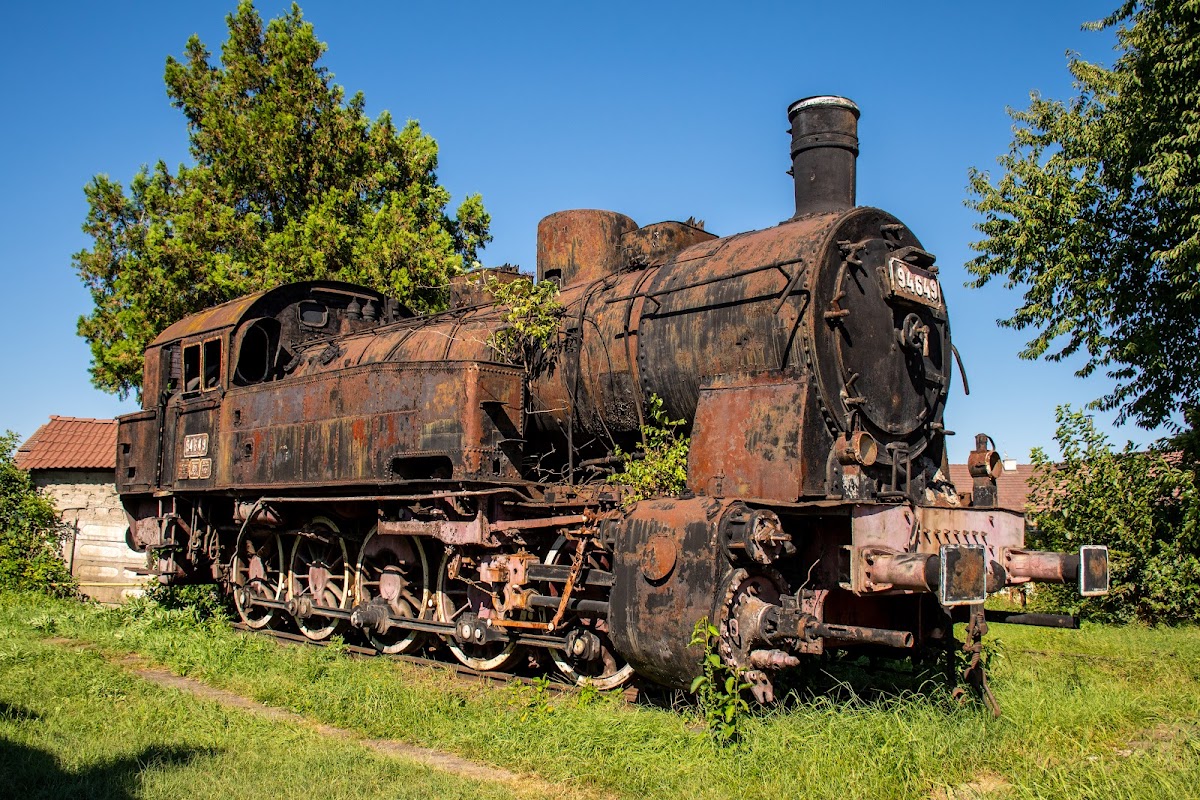
The Steam Locomotives Museum in Sibiu is one of Romania's few museums dedicated exclusively to steam rail traction, located at 22 Dorobanților Street, on the grounds of the former Sibiu CFR Depot, right next to Sibiu's rail infrastructure, on the side opposite the train station. The museum opened on 23 August 1994, with the collection itself gathered starting in 1991, aiming to preserve, in a well-supervised space, the most valuable surviving locomotives from Romania's rail network.
The collection brings together 35 steam locomotives, along with 2 steam cranes and 2 steam-powered snow plows, built between 1885 and 1958-1959. The exhibits come from Romanian manufacturers — the Domeniilor Reșița Works, the 23 August Works, and the Malaxa Works in Bucharest — as well as from Germany (Schwartzkopff, Borsig, Henschel, Schichau), Austria (Wiener Neustadt, Florisdorf), Hungary (MAV Budapest), Poland (Chrzanow), Sweden, and the United States (Baldwin). The oldest exhibit is a locomotive from 1885, built at Wiener Neustadt, near Vienna, originally used to carry passengers between Transylvania and the Austrian Empire. The collection includes both standard-gauge locomotives and narrow-gauge models typical of mountain "mocănițe" trains; two of the locomotives remain functional and are occasionally brought out onto the tracks for special events.
The locomotives on display offer a technical record of the evolution of rail transport in the Carpathian-Danubian region, during a period when Transylvania's rail network — initially run by the Austro-Hungarian Empire — began expanding systematically, continuing into the decades after World War II. Sibiu County played an important role in the region's railway history, with the city's rail junction connecting central Transylvania to Wallachia via the Turnu Roșu Pass.
The museum operates outdoors, with the exhibits displayed directly on the tracks of the former depot, giving them an authentic weathered look but also leaving them continuously exposed to the elements. There are no systematic information panels, though CFR staff working in the area are generally happy to provide visitors with additional details. Worth visiting for the direct access it offers to period railway equipment, rarely found in similar condition elsewhere in Romania.
Strada Dorobantilor 22 Sibiu judetul Sibiu