
Attraction
Arad County Museum
The Arad Museum Complex, established in 1893 at the initiative of the "Kölcsey" Association, operates in the Cultural Palace at George Enescu Square no. 1, built in 1913 by architect Ludovic Szantay. It brings together collections of archaeology, history, ethnography, natural sciences, Romanian and European art, decorative art, and theatre history. The institution documents the history of Arad County from the Palaeolithic to the modern era, with an emphasis on the Revolution of 1848–1849 and the Union of Transylvania with Romania in 1918.
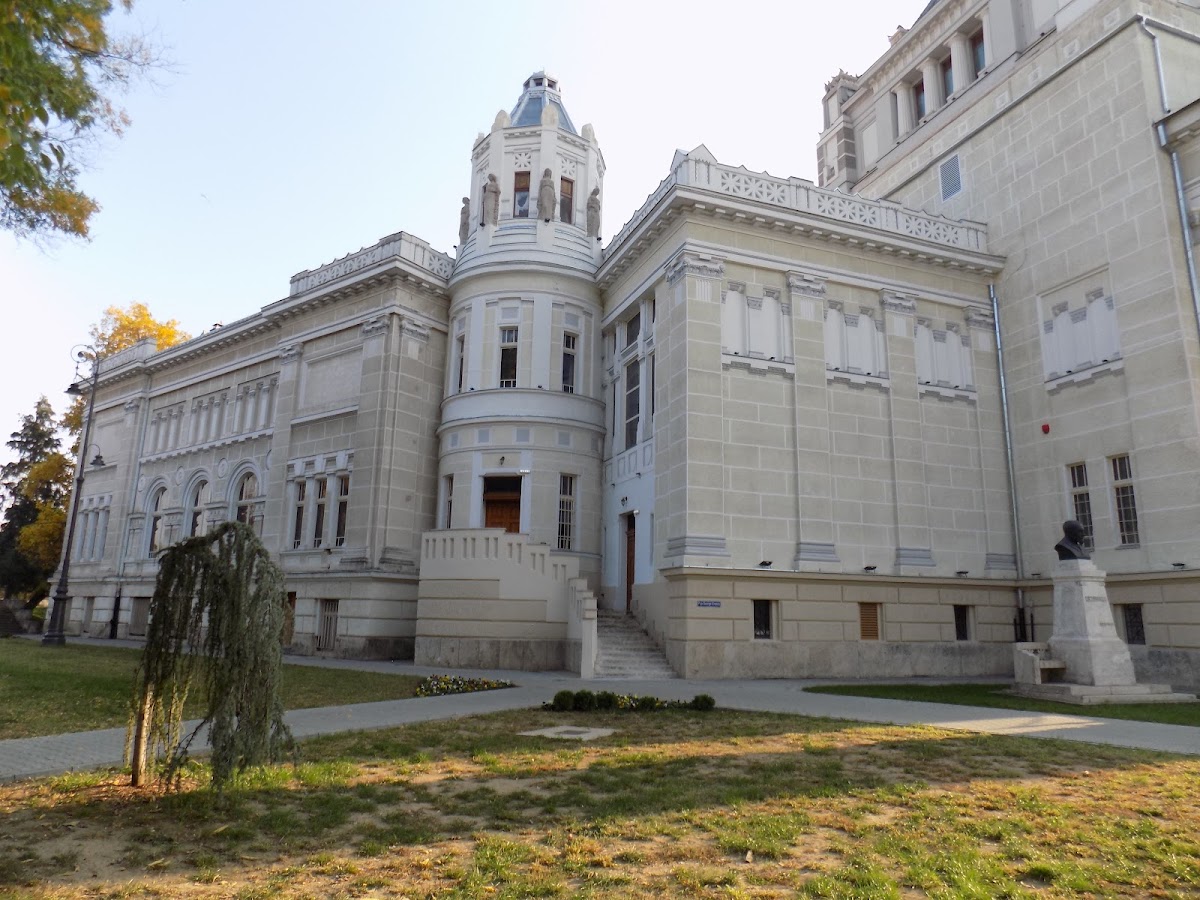
The Arad Museum Complex is a public cultural institution subordinated to the Arad County Council, headquartered in the Cultural Palace at George Enescu Square no. 1, an architectural monument built in 1913 according to the plans of architect Ludovic Szantay. The museum was opened in March 1893, at the initiative of the "Kölcsey" Association of Arad, initially as the "Museum of Relics of the Revolution of 1848–1849", in the foyer of the second floor of the State Theatre. In 1913 it was moved to the Cultural Palace, where rooms were arranged for the archaeology and medieval history collections and a European art gallery. During the interwar period, an ethnography exhibition and memorial rooms dedicated to Arad political figures Vasile Goldiș and Ștefan Cicio-Pop were added (1934). The collections are organised into several sections: archaeology (the Bronze Age, Dacian period, Migration period, and early medieval period), history (the Revolution of 1848 in Transylvania, the Union of Transylvania with Romania in 1918), ethnography, natural sciences (mineralogy, flora and fauna specific to Arad County), classical and contemporary Romanian art, European painting from the 17th to the 20th century, decorative art, and theatre history. Between 1958 and 1988, sections were opened across the county: Lipova, Șiria, Săvârșin, and Miniș. The archaeology section has recently been renovated and reopened.
Piața George Enescu nr. 1, Arad.