
Attraction
Ethnographic Museum of Transylvania
The Ethnographic Museum of Transylvania, the first ethnographic museum in Romania, was founded in 1922 and is housed in the Reduta Palace at 21 Memorandumului Street, in central Cluj. It shows the permanent exhibition "Folk Culture of Transylvania, 18th-20th centuries" in the building where the Memorandum trial was held.
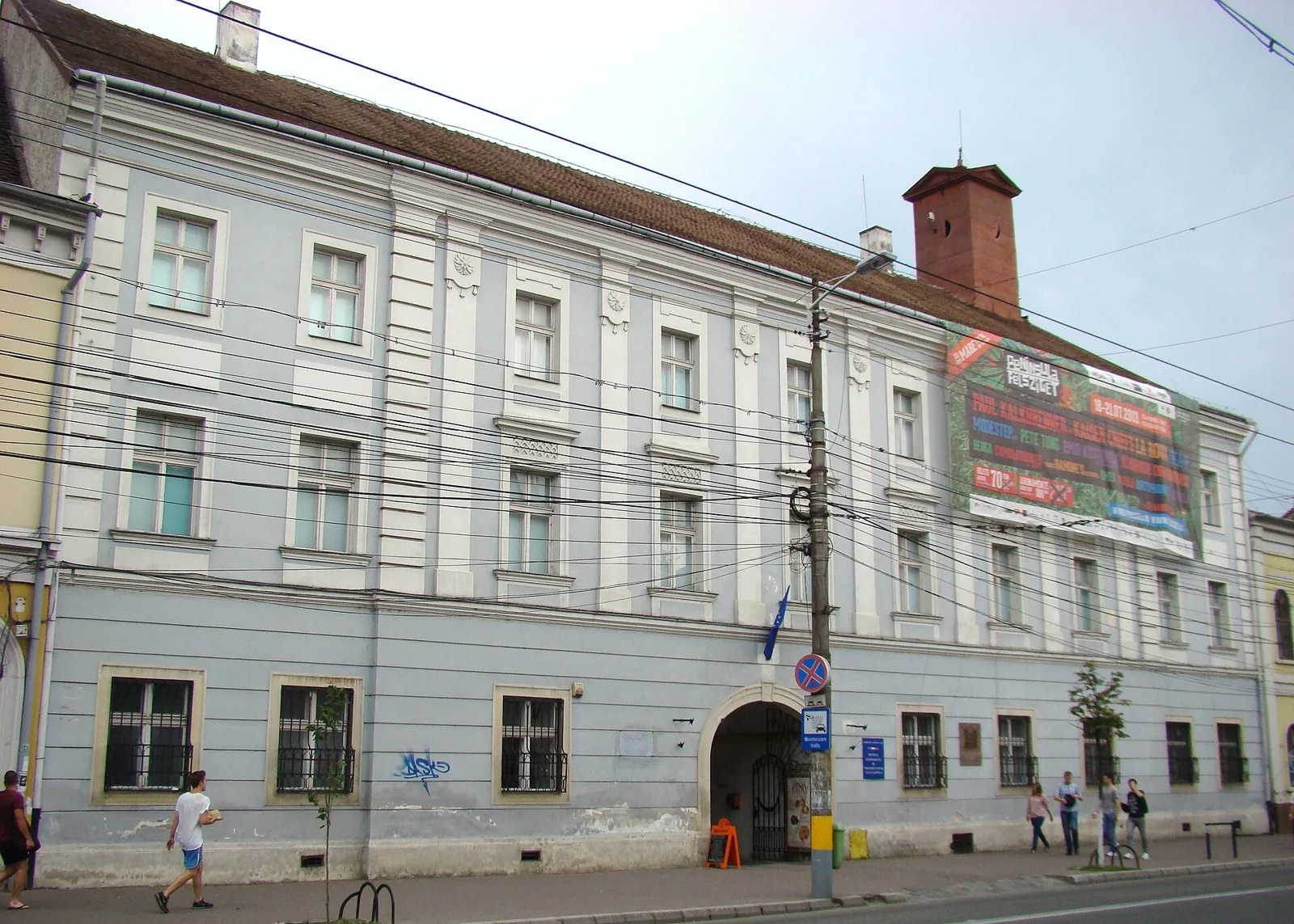
Foto: Țetcu Mircea Rareș, CC BY-SA 3.0 RO, via Wikimedia Commons
The Ethnographic Museum of Transylvania has its main seat in the Reduta Palace, at 21 Memorandumului Street, in central Cluj-Napoca, a short walk from Unirii Square. This is the museum's city branch; its open-air branch, the "Romulus Vuia" Ethnographic Park, is a separate site on Hoia hill.
The museum was set up in 1922 and has officially operated since 1 January 1923, making it the first ethnographic museum in Romania. The initiative came from the Governing Council of Transylvania, and the work was completed by the "Prince Carol" Cultural Foundation through a committee that included Sextil Pușcariu, George Vâlsan, Alexandru Lapedatu, George Oprescu and Romulus Vuia, its first director (1923-1948). The museum moved several times: Mihai Viteazul Square (the 1928 exhibition), then the Casino building in the city park (1935-1957), with a refuge in Sibiu between 1940 and 1945. In 1957 it received its present home, the Reduta building. The building has medieval roots: in the 18th century it was the most important inn of Cluj ("The White Horse"), then an officers' school under Joseph II, and after 1794 the city renovated it. The Reduta hall hosted sessions of the Transylvanian Diet, concerts by Franz Liszt, Johannes Brahms, Béla Bartók and George Enescu, and in 1894 the Memorandum trial.
The permanent exhibition, "Folk Culture of Transylvania, 18th-20th centuries", opened in 2006, presents traditional occupations, crafts (working wood, clay, metal, leather and textile fibres), traditional food and the folk costumes of the regions of Transylvania, Maramureș, Crișana and Banat, with items chosen from the museum's more than 40,000 artefacts. The museum also has a tactile exhibition and holds temporary exhibitions. The Reduta Palace is visited with a ticket.
The Reduta building is a historic monument, code CJ-II-m-B-07407 ("The house where the Memorandum trial was held"). The museum is an institution of Cluj County Council.
Did you know that the Reduta hall hosted the first film screening in the history of Cluj, in 1897?
Strada Memorandumului 21, Cluj-Napoca, județul Cluj