
Attraction
Natural History Museum Sibiu
The Natural History Museum in Sibiu, a section of the Brukenthal National Museum, is at Strada Cetății 1, in a building erected in 1894-1895 for the collections of the Transylvanian Society of Natural Sciences, founded in 1849. Its permanent exhibition, opened in December 2007, has four sections: the evolution of life, ecosystems, palaeontology and mineralogy.
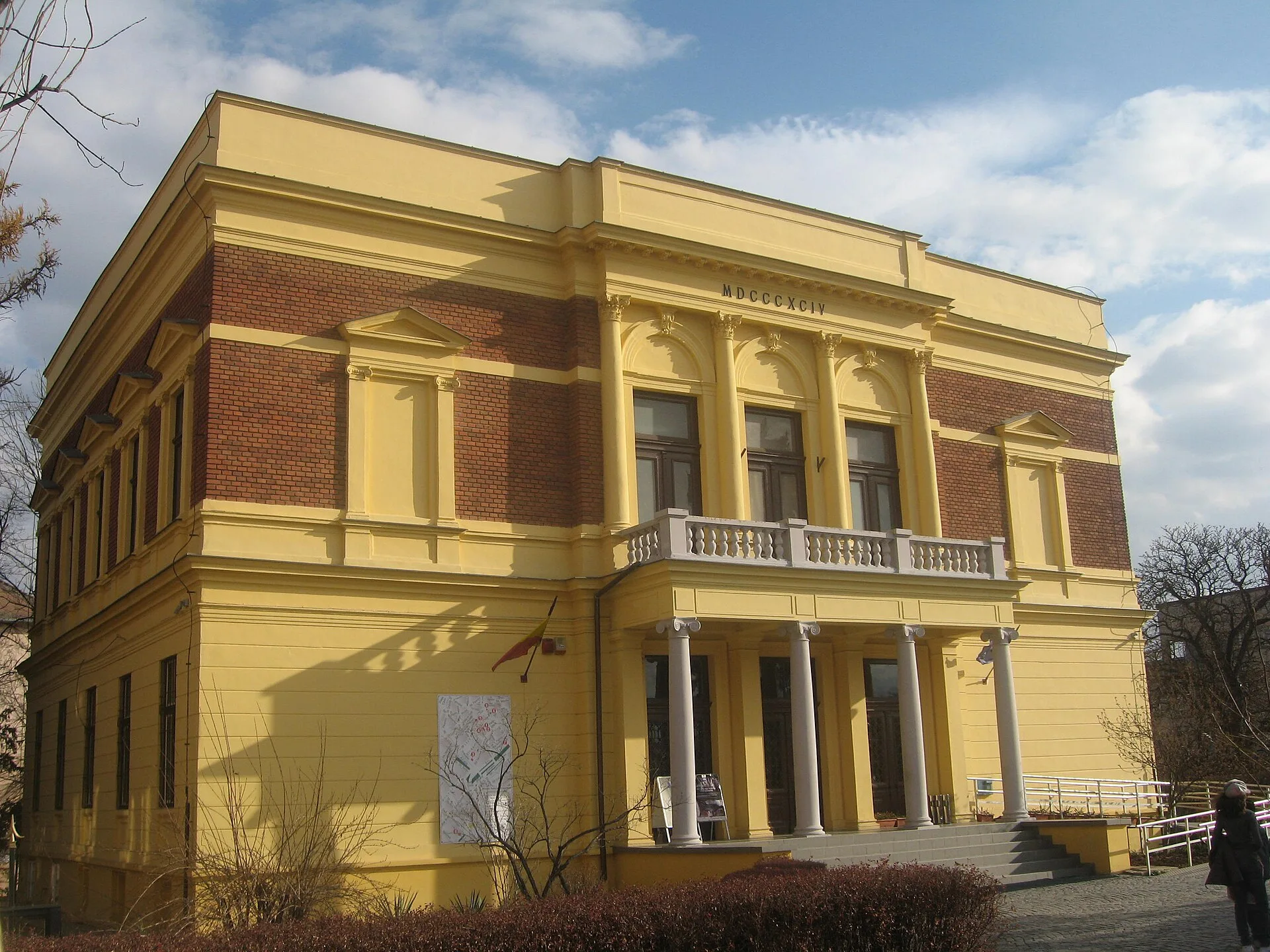
Foto: Cezar Suceveanu, CC BY-SA 3.0, via Wikimedia Commons
The Natural History Museum stands at Strada Cetății 1, south-east of Piața Mare, in the former theatre park, and is a section of the Brukenthal National Museum. It grew out of the Transylvanian Society of Natural Sciences (Siebenbürgischer Verein für Naturwissenschaften zu Hermannstadt), founded in Sibiu in 1849 by Saxon intellectuals with an interest in the natural sciences. The first collections were the herbaria of J. Lerchenfeld and M. Fuss, joined in the nineteenth century by the F.W. Stetter bird collection (1853) and Johann Michael Ackner's mineral collection.
As the collections grew, the society built its own premises, funded by donations. Work began in autumn 1894 to designs by the architect C.W. Friedrich Maetz, a native of Mediaș, and the building was inaugurated on 12 May 1895. Built in the late Italian Renaissance style, it has a semi-basement, ground floor and upper floor, a portico of four Ionic columns supporting a balcony, and a hall with a coffered ceiling painted with plant and animal motifs. It is considered the first building in Romania erected specifically as a museum, and it was fully renovated between 2006 and 2008.
After the society was dissolved in 1948, the museum passed to the state, and since 1957 it has been part of the Brukenthal Museum. The holdings grew considerably after the war through collections such as the Kimakowicz molluscs, Eugen Worell's insects, the Breckner palaeontological collection (Tertiary shark teeth from Porcești, Turnu Roșu) and the Nyárády herbarium, reaching more than a million items.
The permanent exhibition, opened in December 2007, is arranged in four sections: the evolution of life, ecosystems, palaeontology and mineralogy, with dioramas and sound and light effects suggesting the cycle of day and night. The building is surrounded by a garden with ornamental trees and shrubs. The Museum of the History of Pharmacy and the August von Spiess Hunting Museum are sub-sections of the same department.
Strada Cetății 1, Sibiu