
Attraction
The National History and Archaeology Museum of Constanța
The National History and Archaeology Museum of Constanța (MINAC) is one of the most important archaeological museums in Romania, housed in the former Constanța City Hall Palace, built in 1921. It holds over 150,000 artefacts spanning three millennia of Dobrogean history, with a focus on Greek, Roman and Getic civilisations. Its iconic piece is the Glykon Serpent — a unique marble sculpture in the world, dating from the 2nd century AD — part of the Tomis Sculpture Treasure discovered in 1962. The museum also displays a copy of the Thinker of Hamangia, the original being held at the National History Museum of Romania in Bucharest.
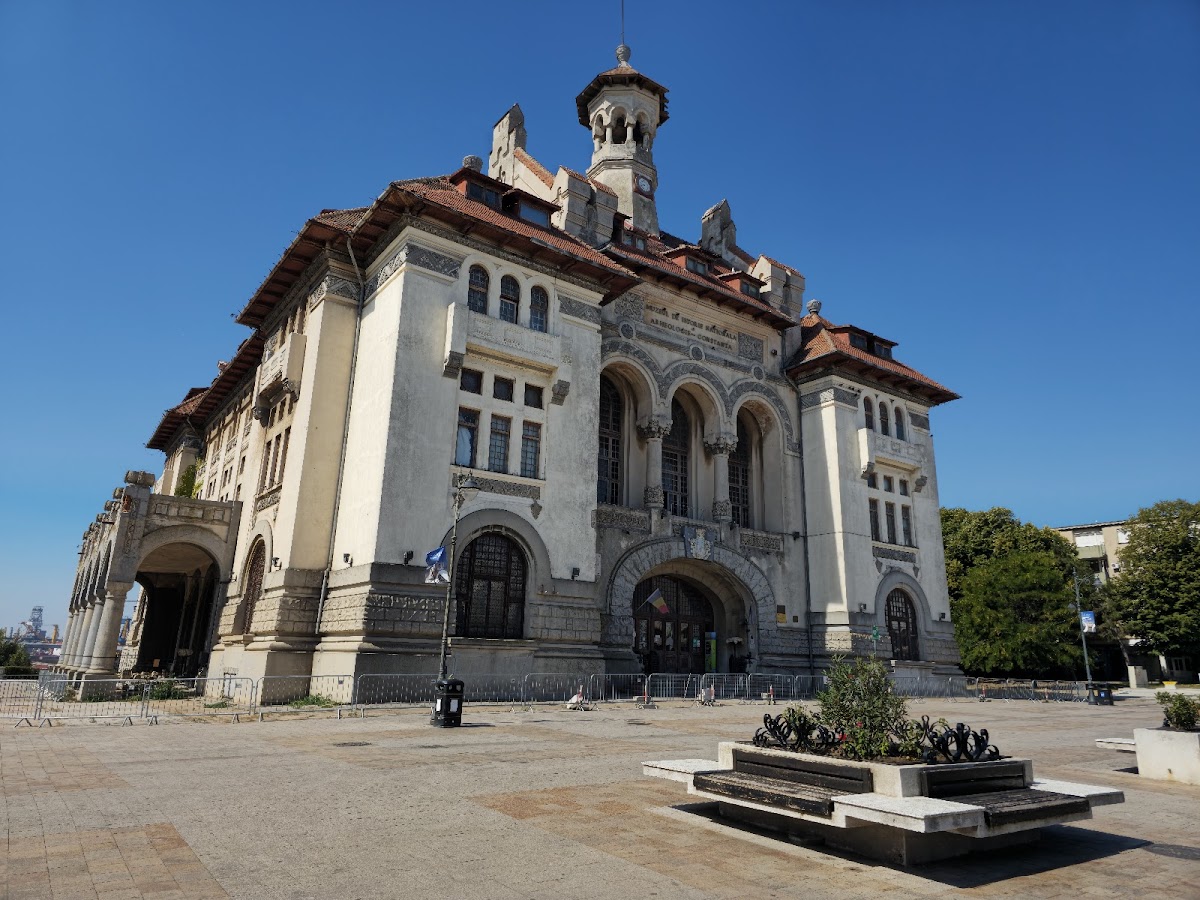
The National History and Archaeology Museum of Constanța, known as MINAC, is the principal archaeological museum in Dobrogea, located in the former Constanța City Hall Palace, a building constructed in 1921 in an eclectic style with Baroque influences, transferred to the museum by the Constanța City Hall in 1977. The idea of an archaeology museum in Constanța dates back to 1878, when the first prefect of Northern Dobrogea, Remus Opreanu, proposed its establishment immediately after the region was integrated into the Romanian state. The institution holds a collection of over 150,000 artefacts, covering a period of approximately three millennia — from the Palaeolithic to the modern era — with a focus on Greek, Roman, Romano-Byzantine and Getic civilisations from the Pontus Euxinus region. The ground floor houses exceptional pieces, rarities and unique items: the Tomis Sculpture Treasure, discovered in 1962 during the excavation of foundations for a residential building — 24 marble sculptures representing deities of ancient Tomis. The centrepiece and emblem of the museum is the Glykon Serpent, a marble sculpture dating from the 2nd–3rd century AD, unique in the world as a representation of this deity. Alongside it stand the sculptural group of Fortuna with Pontos — the protective gods of the city and of the Black Sea — and the aedicula with the double representation of Nemesis. The upper floor follows the history of Dobrogea in chronological order: mammoth tusks from Poarta Albă, Hamangia ceramics, a copy of the Thinker of Hamangia and his companion (the originals are held at the National History Museum in Bucharest), the Mycenaean sword from Medgidia (14th century BC), a statue of a Thraco-Scythian chieftain, and collections of Scythian coins — numismatic rarities. The inner courtyard houses an open-air lapidarium with sarcophagi, altars and ancient architectural fragments. Please note: the permanent exhibition is temporarily closed for building restoration works — check visiting hours before your visit.
Piata Ovidiu 12 Constanta judetul Constanta