
Attraction
National Museum of Geology
The National Museum of Geology in Bucharest, at 2 Kiseleff Avenue in a Neo-Brâncovenesc building from 1906-1908, holds roughly 70,000-85,000 geological and paleontological specimens, including Pleistocene mammal fossils and Cretaceous dinosaur remains from Transylvania. The institution operates under the Geological Institute of Romania and is the country's main public repository of geological heritage. It is reached by public transport from the Piața Victoriei area.
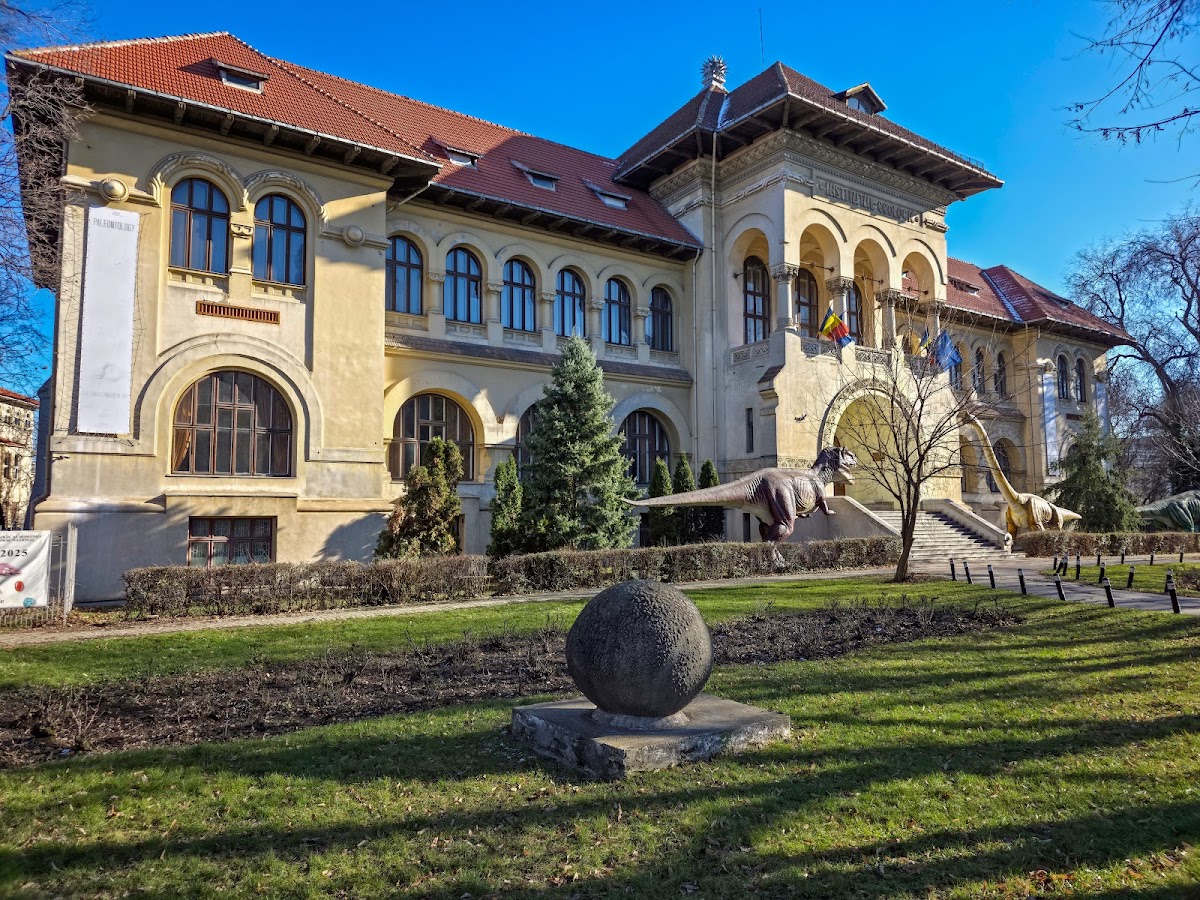
The National Museum of Geology in Bucharest is one of Romania's leading institutions in its field, originally founded in 1892, housing collections that span over 3.5 billion years of Earth's geological history. The museum is located at 2 Kiseleff Avenue, in a building constructed between 1906 and 1908 to designs by architect Victor Ștefănescu — who also designed the National Military Circle in Bucharest, the Great Mosque in Constanța, and the Reunification Cathedral in Alba Iulia. The building, raised in Neo-Brâncovenesc style on the initiative of the Geological Institute of Romania (founded by royal decree of Carol I in 1906), originally housed only the "Collections" room, open to the public from 1908; the full museum, with access to all collections, was only re-established and reopened in 1990.
The scientific collections total roughly 70,000-85,000 catalogued specimens, of which about 7,700 are on permanent display, across 14 core exhibitions including minerals, rocks, fossils, and geological maps. Notable exhibits include Pleistocene mammal skeletons, including specimens of Mammuthus primigenius found in Romania, as well as an extensive collection of Cretaceous dinosaurs — including life-size reconstructions of the famous "dwarf dinosaurs of the Hațeg Country." The mineralogy section includes representative samples from the metal-bearing deposits of the Apuseni Mountains, dating from the Neogene and volcanic periods, as well as the famous "mine flowers" from Banat, Maramureș, and the Apuseni region. The Geological Institute also holds an impressive rock-sample library, with drill core samples stored in more than 55,000 drawers.
The building was severely damaged by the earthquake of 4 March 1977, and its collections were temporarily relocated; reinforcement work only began in 1983. It is reached by public transport in Bucharest: trolleybus 66 and bus 131 stop near the building, with parking available on the adjacent street. The museum is open to the public Tuesday through Sunday. Worth visiting for its unique collection of fossil vertebrates from the Romanian Cretaceous, one of the most complete such paleontological repositories documented in Central Europe.
Soseaua Kiseleff 2 Bucuresti