
Attraction
The Museum of Archaeology and Medieval History Focșani
The Museum of Archaeology and Medieval History in Focșani operates within Casa Alaci — a building constructed before 1945, located in the former Armenian quarter of Focșani, at Bulevardul Gării nr. 1. The permanent exhibition traces the history of Vrancea County from the large mammals of the Quaternary period through to the medieval era, featuring remarkable artefacts from the Cucuteni and Monteoru cultures and from the Dacian necropolis at Bârsești. A memorial to Armenian civilisation — an historically significant community in Focșani — is being arranged on the mezzanine floor.
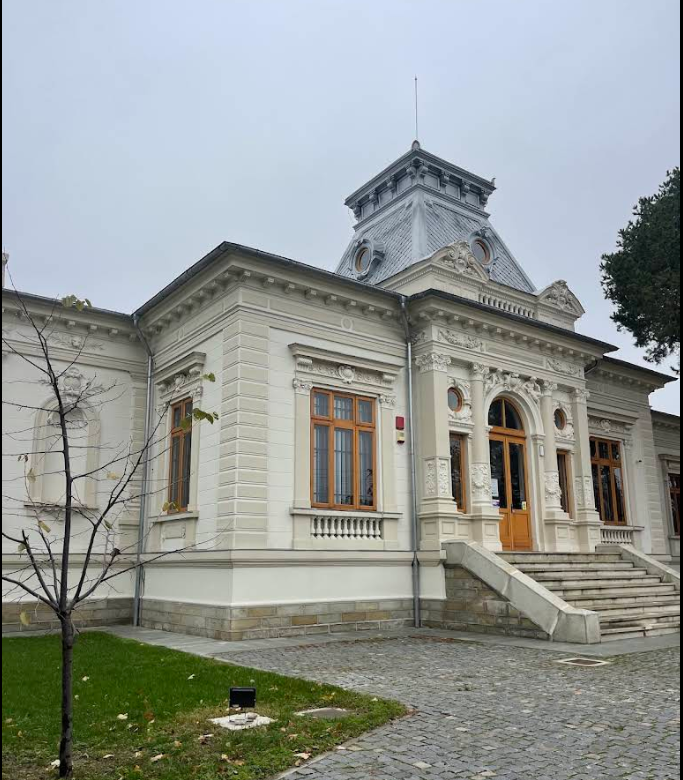
The Museum of Archaeology and Medieval History in Focșani is a branch of Muzeul Vrancei, housed in Casa Alaci — a building constructed before 1945, located at Bulevardul Gării nr. 1, in the area of the city's former Armenian quarter, which stretched from the centre beyond the railway station and included several churches, an Armenian cemetery, and a main boulevard flanked by Armenian residences. Reopened to the public in 2024 following renovation, the building is also set to house a memorial to Armenian civilisation on the upper floor, created in collaboration with the Armenian community in Vrancea. The permanent exhibition offers a chronological journey through the history of Vrancea County, beginning with the large mammals of the Quaternary period and the earliest human traces from the Upper Palaeolithic. This is followed by the Neolithic period, illustrated through the exceptional ceramics of the Cucuteni culture — one of the most advanced prehistoric civilisations in Europe — and the reconstruction of a prehistoric dwelling. The Bronze Age is represented by the Monteoru culture, with remarkable artefacts from the necropolis at Cândești. The Hallstatt period is documented through research carried out at the tumular necropolis at Bârsești, while the Geto-Dacian era is represented by fibulae, coins and ceramics that illustrate the cultural identity of the Dacians in this region. The exhibition also includes materials from the Sântana de Mureș and Ipotești-Cândești migratory cultures. The medieval history section presents ceramics, tools and ornaments discovered at Budești, Câmpineanca, Bătinești, Mera, Bordești, Focșani and Dragosloveni, alongside religious monuments from Vrancea, printed works and objects from the 18th and 19th centuries. The modern history section encompasses testimonies relating to the Revolution of 1848, the Union of the Principalities, the election of Alexandru Ioan Cuza, and the 1917 battles of Mărășești, Mărăști and Oituz. Muzeul Vrancei holds a total of over 20,000 archaeological, historical and memorial objects.
Bulevardul Gării nr. 1, Focșani