
Attraction
Museum of Urban Civilization, Brașov
The Museum of Urban Civilization in Brașov, located right in Council Square no. 15, across from the Corona galleries, documents the city's urban history in a building archaeologically dated to the 13th-14th centuries and rebuilt in 1566 by the Closius family. Opened in 2009 as a branch of the Brașov Ethnographic Museum, it displays artifacts, documents, and everyday objects from urban life across the 17th-19th centuries. Awarded by the Romanian ICOM Committee in 2010, the museum is a short walk from the historic center, near the Black Church. Worth visiting for its systematic view of the social and economic organization of a major Transylvanian urban center.
The Museum of Urban Civilization in Brașov is located right in the historic heart of the city, at 15 Council Square, in a building of significant architectural value to Brașov's urban heritage, across from the Corona galleries and restaurant, near the Black Church. The building is archaeologically dated to the 13th-14th centuries, part of Brașov's old citadel, and was rebuilt in 1566 by the Closius family, influential Saxon patricians in the city's life — a date confirmed by an inscription found on a stone door frame. The facade facing the square, originally with stone arcades and pillars (used for selling merchants' and guild members' goods), was altered around 1800. From 1873 the building belonged to merchant Dimitrie Eremias, then to his nephews, Ilie and Gheorghe Savu, until nationalization in 1949.
The museum opened on 8 September 2009, as a branch of the Brașov Ethnographic Museum, following an extensive restoration process carried out between 1993 and 2008, which preserved about 80% of the building's original fabric. In early 2010, the institution received the Romanian ICOM Committee Award, recognizing its modern exhibition approach and its innovative thematic concept, unusual among Romanian museums.
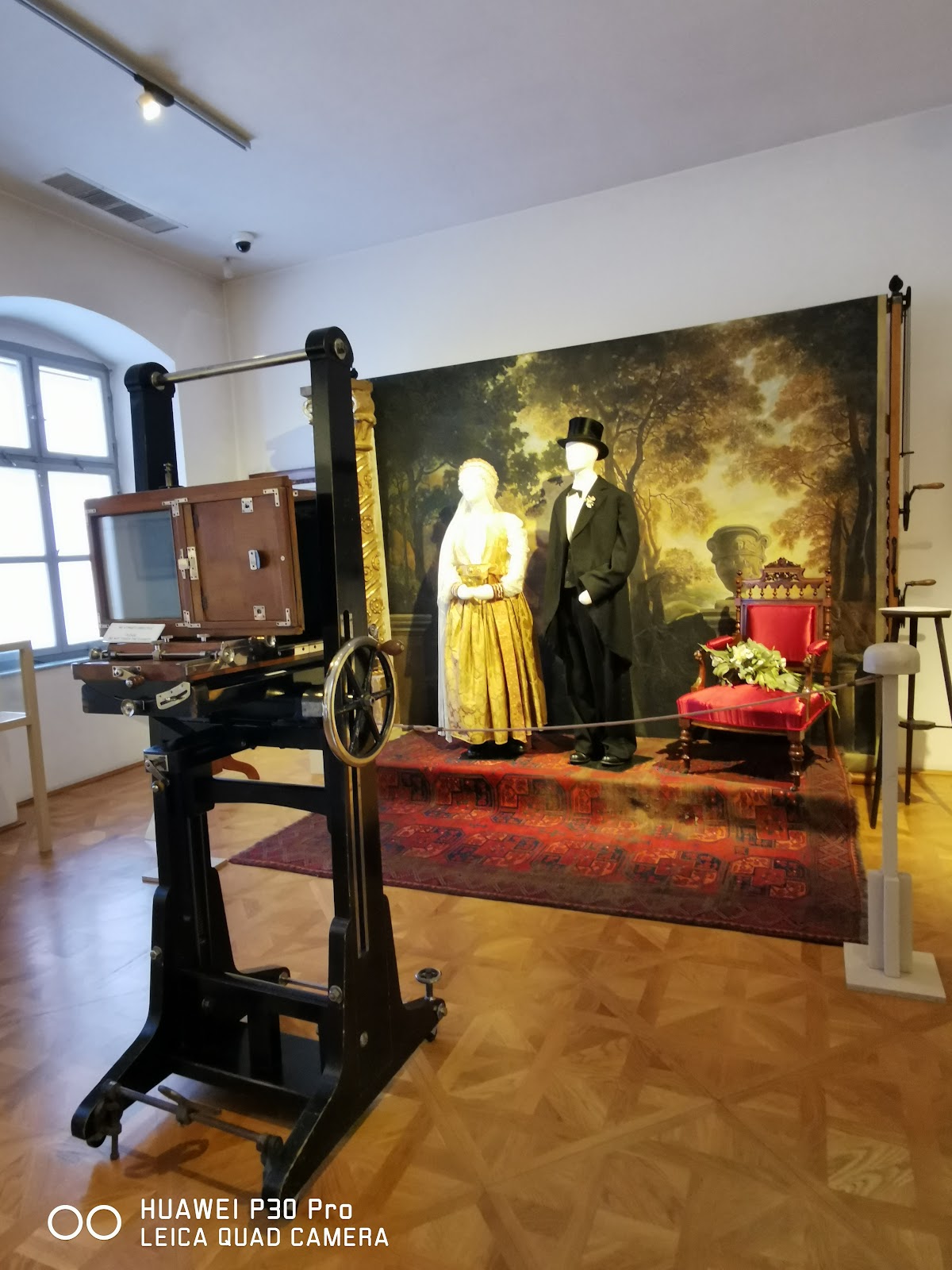
The permanent exhibition documents Brașov's evolution from the medieval era to modern times, arranged chronologically by floor: the 17th century in the basement (a goods cellar), the 18th century on the ground floor (a Brașov inn, commercial spaces), and the 19th century upstairs (a child's room, a patrician's room, a milliner's workshop, an embroidery workshop, a photography studio). The attic is reserved for temporary exhibitions. The museum highlights aspects of the craft guilds, which played an essential role in the economic organization of medieval and modern Brașov, along with elements of urban architecture from successive historical periods.
The museum is reached on foot from the city's central area, a few minutes from the Black Church. Public transport connects the area to every neighborhood, and parking is available nearby. The museum is recommended for visitors interested in Transylvania's urban history, offering concrete documentary context for understanding the evolution of one of Romania's best-preserved medieval cities.
Piața Sfatului 15, 500031 Brașov