
Attraction
Căpățânii Mountains
The Căpățânii Mountains are part of the Southern Carpathians, in the Parâng group, on the border of Vâlcea and Gorj counties, reaching a maximum altitude of 2,130 m at Nedeia Peak. They form a long ridge of about 50 km, with broad crests, wide pastoral plateaus and steep slopes, famous for their carpets of rhododendron. They are worth visiting for their open mountain scenery, their wildlife and the pastoral tradition of sub-mountain Oltenia.
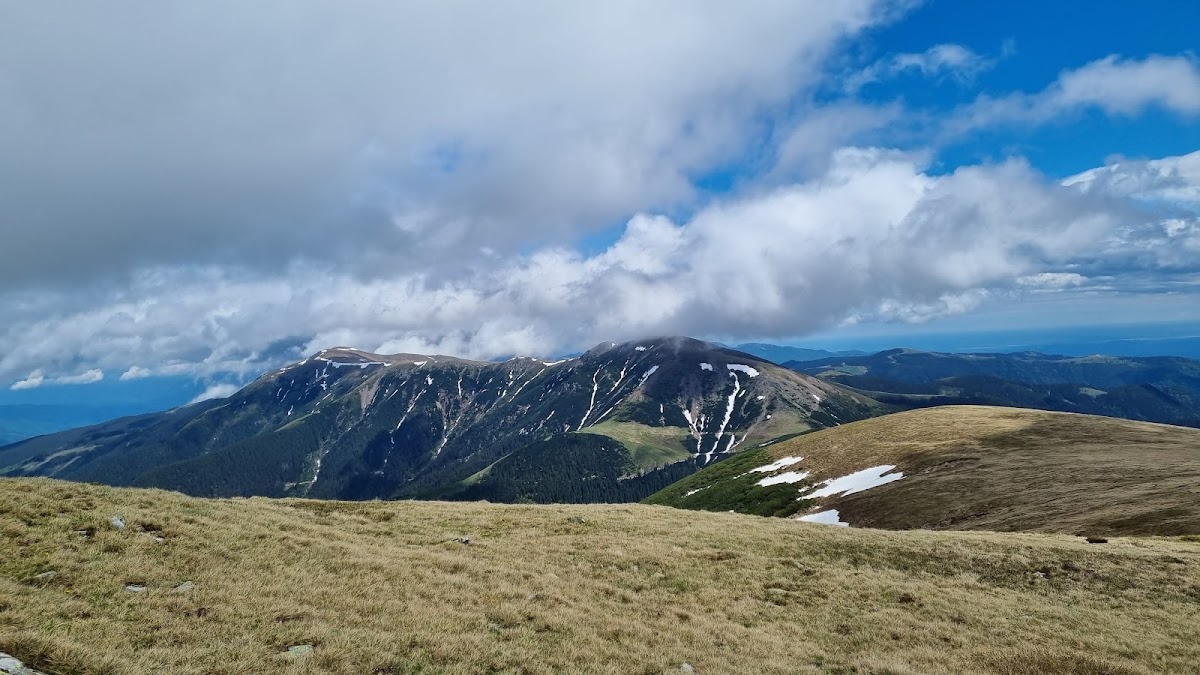
The Căpățânii Mountains are a range in the Southern Carpathians, part of the Parâng group, on the border of Vâlcea and Gorj counties, with a predominantly east-west orientation. They form a high, long ridge of about 50 km, bordered to the north by the Lotru Valley and to the south by the sub-Carpathian depressions, and linked to the west to the Parâng Mountains. The maximum altitude is reached at Nedeia Peak (2,130 m), followed by Ursu Peak (2,124 m), Beleoaia and Căpățâna.
The geology is dominated by crystalline schists, giving the relief a massive character, with broad crests, wide plateaus and steep slopes. The layered vegetation includes beech and conifer forests up to about 1,700 m, above which alpine and subalpine meadows develop, long used for grazing. The range is famous for its vast carpets of rhododendron, which bloom in early summer. The fauna includes brown bear, wolf, lynx, red deer and golden eagle.
The Căpățânii Mountains preserve a strong pastoral tradition, crossed by a dense network of shepherds' paths and plateaus of sub-mountain Oltenia. To the south, the range hosts the Olteț Gorges and the Polovragi Cave, while to the east it borders the spectacular Buila-Vânturarița massif. The main access is from the town of Horezu, via Bistrița Monastery, from Vaideeni commune, or from Voineasa and the Lotru Valley, along forest roads and marked trails. The range is worth visiting for its open, wild mountain scenery, its faunal diversity and the authenticity of the pastoral world that animates it.
Muntii Capatanii judetul Valcea