
Attraction
Historic Maramureș (Maramureș Land)
Historic Maramureș, or the Maramureș Land (Țara Maramureșului), is the historical and ethnographic region of the Maramureș Depression on the upper Tisa, divided since 1920 between Romania and Ukraine. The Romanian part, centred on Sighetu Marmației, includes the Iza, Mara, Cosău, Vișeu and Săpânța valleys, with five of the eight Maramureș wooden churches on the UNESCO World Heritage List.
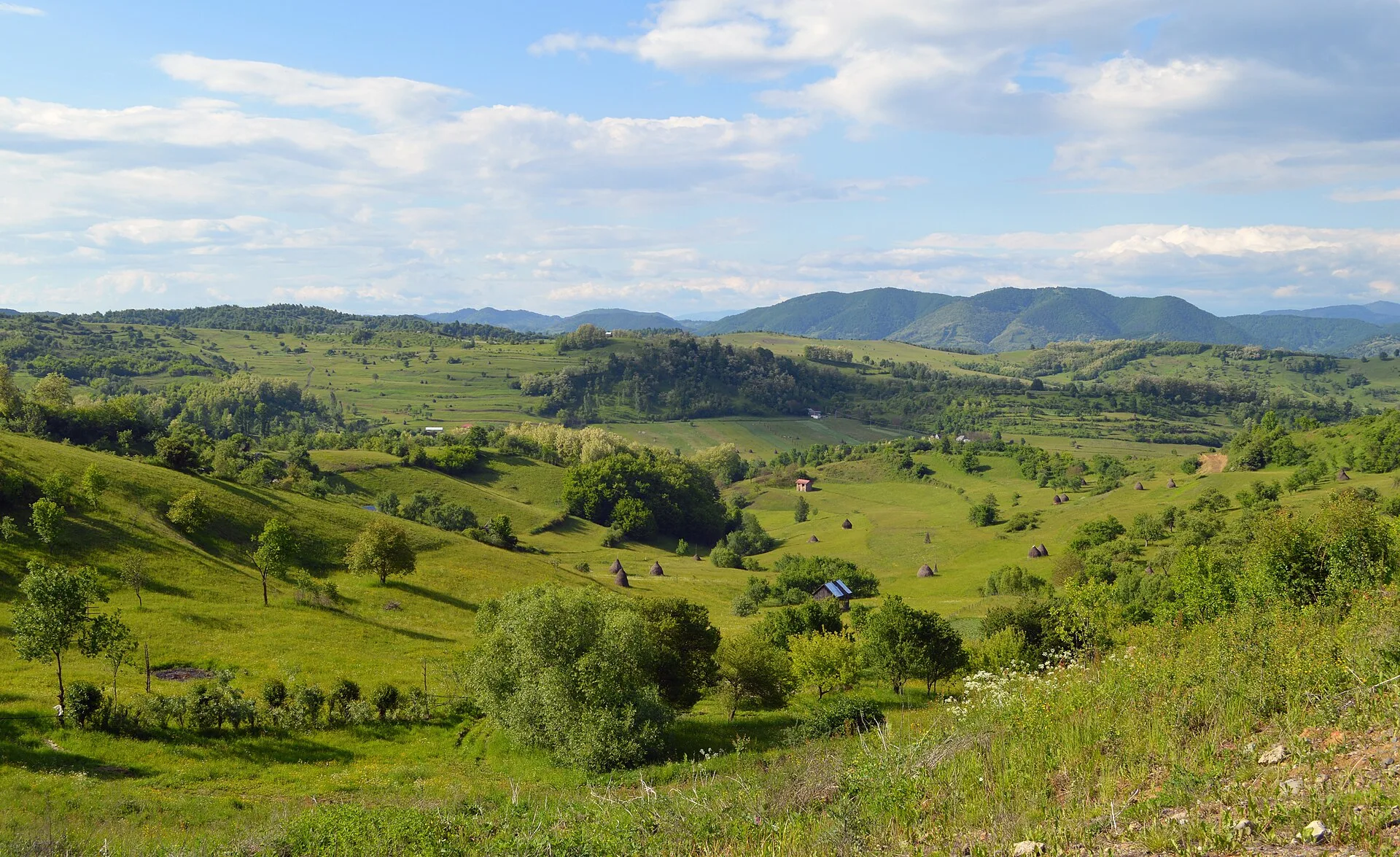
Foto: DimiTalen, domeniu public (CC0), via Wikimedia Commons
Historic Maramureș is a geographical and ethno-cultural region made up of the Maramureș Depression on the upper Tisa and the slopes of the surrounding mountains: the Oaș, Gutâi, Țibleș and Rodna Mountains to the west and south, and the Maramureș Mountains to the east and north. The southern part belongs to Romania and forms the north-east of Maramureș County, while the northern part lies in Ukraine's Zakarpattia region. The main rivers of the Romanian part are the Vișeu, Iza, Cosău, Mara and Săpânța, all tributaries of the Tisa; the region's traditional centre is Sighetu Marmației.
In the first centuries of the second millennium, the Voivodeship of Maramureș was led by local voivodes and organised into valley knezates. From Maramureș came Dragoș of Bedeu, sent in 1351 to organise a voivodeship east of the Carpathians as a vassal of Hungary, and Bogdan of Cuhea, who in 1359 secured Moldavia's independence. In 1381, Dragoș's sons Balc and Drag obtained stauropegic status from the Patriarchate of Constantinople for their foundation, Peri Monastery. After the peace treaties that followed the First World War, the border was fixed on the Tisa (1920) and the northern part was assigned to Czechoslovakia. In 1968 the Romanian part (about a third of the historic region) was joined with the Lăpuș Land, the Chioar Land and the eastern Codru Land to form the present Maramureș County.
The region is known for its wood culture, used for houses, churches, gates, wayside crosses and household objects, for its peasant dress, songs and dances, and for the Maramureș dialect, one of the subdialects of Daco-Romanian, spoken in the villages of the Iza, Mara and Cosău valleys. Five of the eight wooden churches inscribed on the UNESCO World Heritage List in 1999 are here: Bârsana, Budești Josani, Desești, Ieud Hill and Poienile Izei; the other three lie outside the region: Plopiș and Șurdești in Șișești commune, and Rogoz in the Lăpuș Land.
Sighetu Marmației has the Maramureș Village Museum and the Memorial of the Victims of Communism and of the Resistance, and the region includes the monasteries of Bârsana and Săpânța-Peri; these have their own entries. To the east lies the Maramureș Mountains Natural Park, created in 2004, and to the south the Rodna Mountains National Park.
Maramureșul istoric (Țara Maramureșului), nordul județului Maramureș; centru: Sighetu Marmației