
Attraction
Zamca Monastery
Zamca Monastery is a former fortified Armenian monastic complex on a plateau in western Suceava, built in the early seventeenth century; its bell tower bears the year 1606. The complex comprises the church of St Auxentius, the 26 m bell tower and the west building with the chapel of St Mary, all enclosed by a trapezoidal wall.
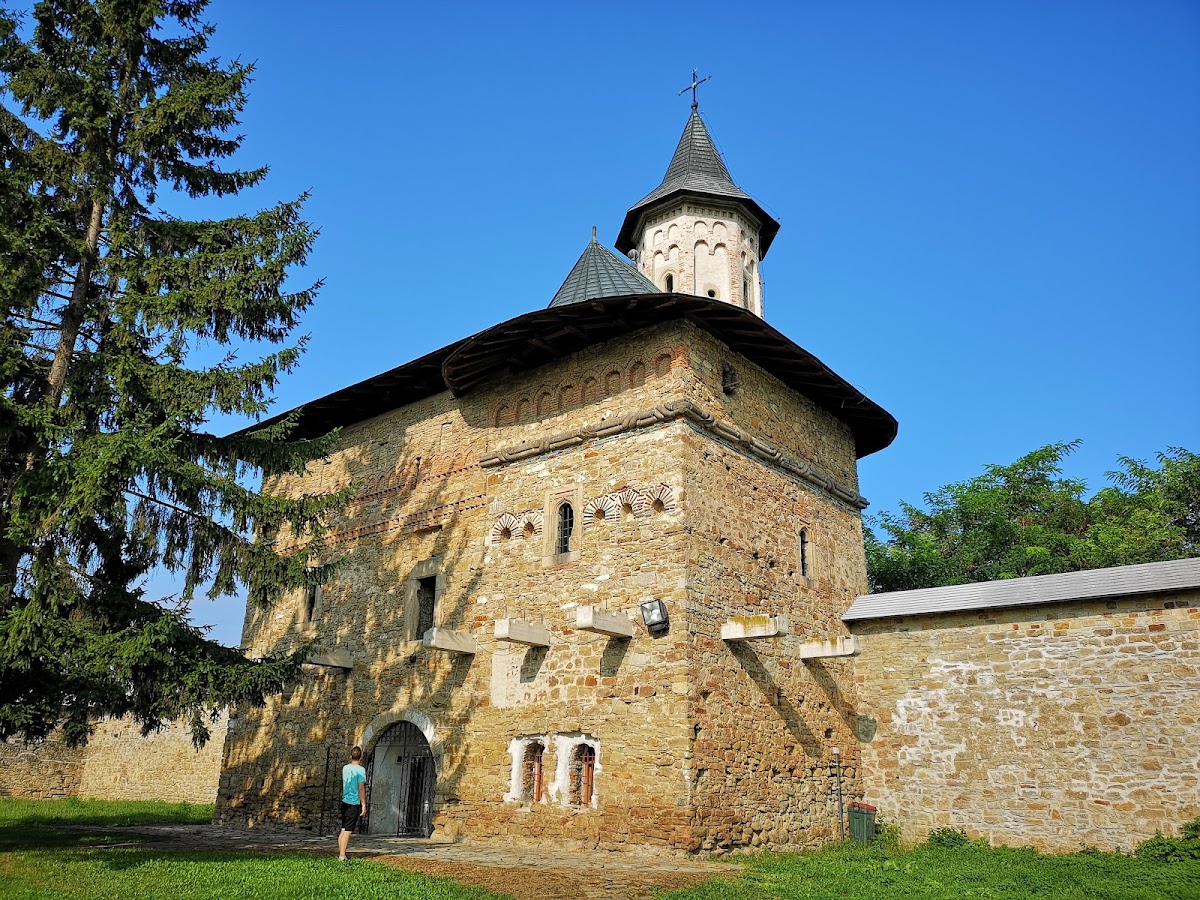
Zamca Monastery stands on a plateau in the western part of Suceava, at the end of Strada Zamca. It is the most important religious building of the city's Armenian community, recorded in Suceava from the fourteenth century, where Alexander the Good recognised an Armenian bishopric in 1401. Excavations in 1954-1956 showed that the church, the west building and the enclosure wall date from the first half of the seventeenth century. In the nave of the church lies the tombstone of Agopșa (Iacob) Vartan, called "the founder of the holy church", who died in 1602, and the year 1606 is inscribed on the keystone of the bell tower. The Armenian traveller Simeon Lehați saw the monastery completed in 1608.
In the seventeenth century the west building housed the residence of the Armenian bishop of Moldavia. After many Armenians left Suceava for Transylvania in the second half of that century, the monastery declined. In the autumn of 1691 the Polish king John III Sobieski left a garrison here, and the Poles raised the earth rampart and ditch that surround the enclosure on the north, east and south sides; the name Zamca probably dates from then, from the Polish "zamek" (stronghold, fortified place). After 1775 the Austrian authorities used the church as an ammunition store, and in 1827 the Armenians recovered the monastery through the courts.
The enclosure wall forms an elongated trapezium with sides of 59, 66, 70 and 74 m, about one metre thick and up to 4 m high in places, supported by buttresses. On the east side stands the 26 m bell tower, with a vaulted entrance passage on the ground floor and the chapel of St Gregory the Illuminator on the first floor. The building on the west side has the chapel of St Mary on its upper floor, with a small octagonal tower. The stone church of St Auxentius has a rectangular plan without side apses, with narthex, nave and sanctuary, and three altars in the Armenian manner; only traces of the original painting survive.
Part of the complex was restored in 1957-1965, and consolidation work followed from 1994. The church was reconsecrated on 14 August 2004 by Archbishop Dirayr Mardichian of the Armenian Church of Romania and Bulgaria. The monastery has no monastic community, but services are held weekly. The complex is a class A historic monument (LMI code SV-II-a-A-05485), comprising the church, the two chapels, the cells, the enclosure wall, the bell tower and the earthwork fortification of 1691.
Strada Zamca, municipiul Suceava, județul Suceava