
Attraction
Rohia Monastery
Rohia Monastery, founded in 1923 in the commune of Târgu Lăpuș, is an Orthodox monastic complex known for its association with the writer Nicolae Steinhardt, who lived and is buried here. The complex holds a library of over 30,000 volumes, one of the most extensive in Romanian monasteries. It is well worth visiting for its book collection, ethnographic museum, and Steinhardt's tomb.
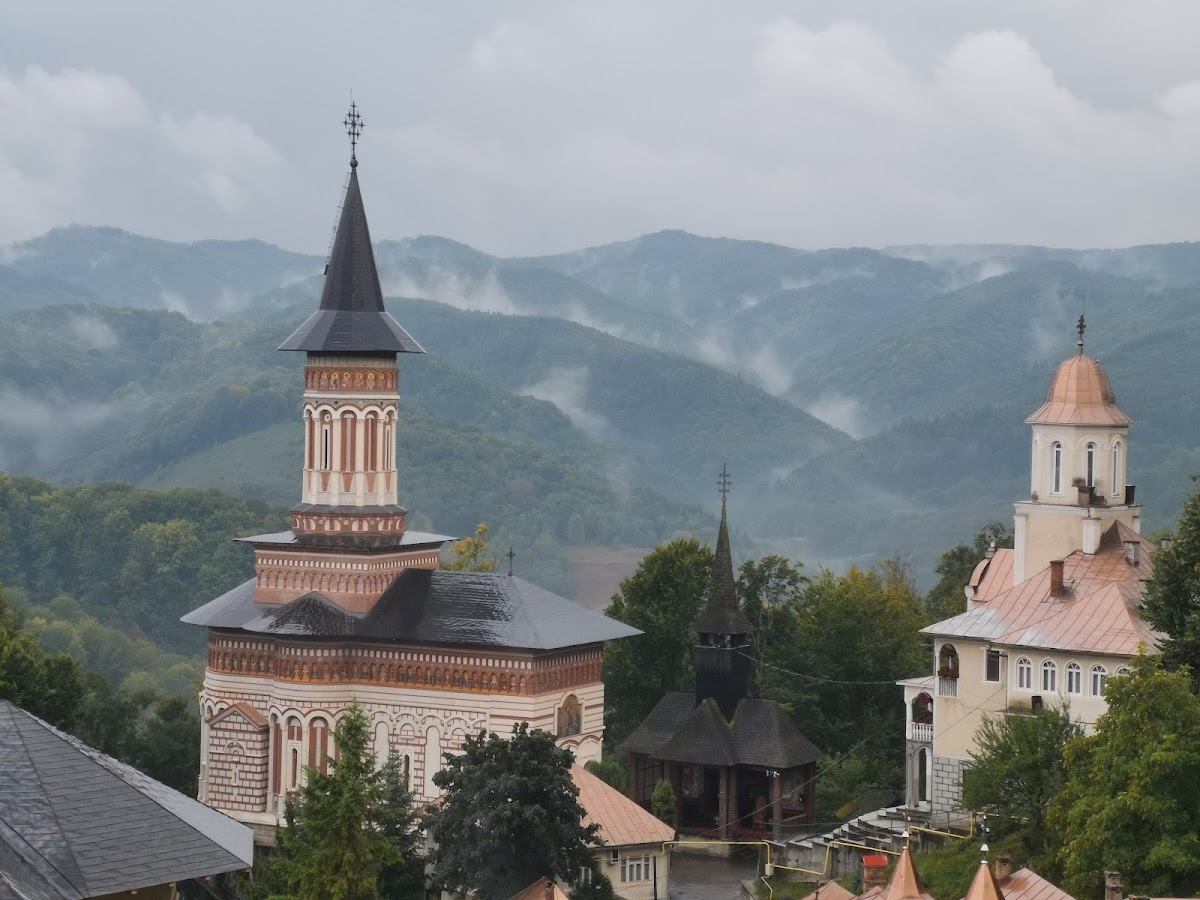
Rohia Monastery is an Orthodox monastic complex located in the village of Rohia, the commune of Târgu Lăpuș, Maramureș County, at an altitude of approximately 600 m, on the slope of a forested hill in the Munții Lăpușului. The foundation was established in 1923 by Nicolae Gherman, a local resident, on land donated to the monastery, with the first structures completed in the following decades. The complex houses the main church, dedicated to Saint Anna, built between 1926 and 1939, several monastic cells, a library of over 30,000 volumes, and an ethnographic museum. The monastery is closely associated with the writer and monk Nicolae Steinhardt, who lived here from 1980 until his death in 1989 and is buried within the grounds. The manuscript of his seminal work, "Jurnalul Fericirii", was preserved at this monastery. The monastery's library, one of the largest monastic libraries in Romania, contains collections of old books, documents, and publications from various fields. The monastery is reached from the town of Târgu Lăpuș via DJ109C, a distance of approximately 12 km to the north-east, along a road that is only partially paved. The monastery operates as a pilgrimage site and can be visited throughout the year. It is well worth visiting for its documentary significance relating to the figure of Nicolae Steinhardt, for its notable monastic library, and for the ethnographic museum, which preserves traditional objects from the Lăpuș region.
Targu Lapus judetul Maramures