
Attraction
Recea Monastery Vrancea
Recea Monastery is a monastic settlement for nuns located in the village of Cândești, commune of Dumbrăveni, on the valley of the Recea stream, 20 km south of Focșani. Founded before 1685 by the clucer Mănăilă Mărăcineanu, a senior captain of the voivode Șerban Cantacuzino, it was destroyed by Turkish, Tatar and Polish invasions and fully rebuilt in 1802–1804 following the earthquake of 7.9–8.2 degrees on 14 October 1802 — the most powerful earthquake in Romanian history. Since 1995 it has housed a museum collection of icons and heritage church objects.
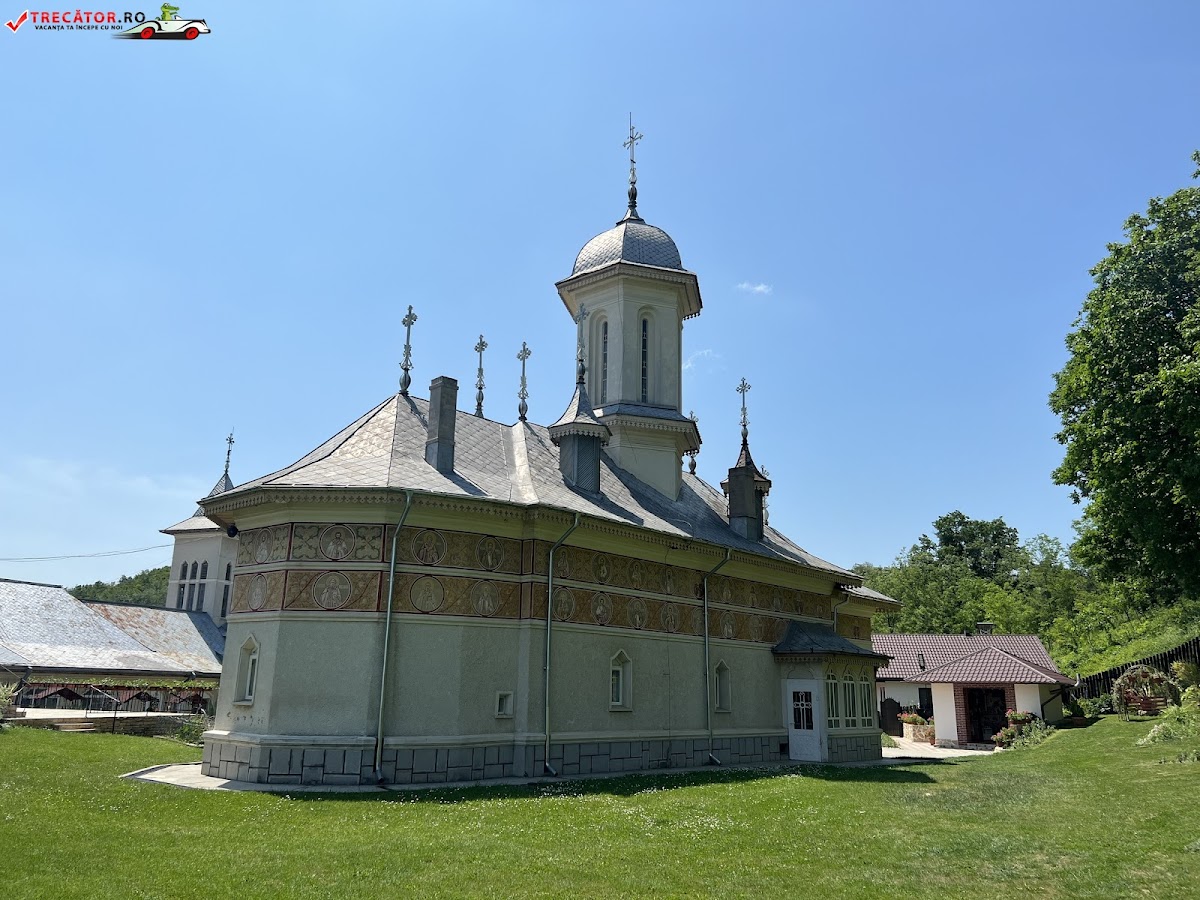
Recea Monastery is a historic monument and religious architectural landmark located in the village of Cândești, commune of Dumbrăveni, Vrancea County, on the valley of the Recea stream, approximately 20 km south of Focșani and 20 km north-east of Râmnicu Sărat. Access is via Dumbrăveni along DJ 204P, then 3 km west to Dragosloveni, followed by 1.3 km along a local road heading south. Founded before 1685 by the clucer Mănăilă Mărăcineanu, former senior captain of the voivode of Țara Românească Șerban Cantacuzino (1678–1688), the monastery initially functioned as a hermitage for monks. The original church was built between 1685 and 1692 and restored in 1710. Over time it was ruined by repeated Turkish, Tatar and Polish invasions, as well as by earthquakes. The devastating earthquake of 14 October 1802, measuring 7.9–8.2 on the Richter scale — the most powerful earthquake ever recorded in Romania — severely shook and left the old church in complete disrepair, necessitating a full rebuilding in 1802–1804, after which it was dedicated to a triple patronal feast: "The Nativity of the Mother of God", "The Holy Trinity" and "Saint Nicholas". Following the secularisation of monastic estates in 1863, it functioned as a parish church, and in 1959 it was dissolved by Decree no. 410. Re-established in 1990 as a convent for nuns, the fresco paintings were executed in 1994–1995 by the painter and priest Petre Brașoveanu from Buzău. Since 1995 a museum collection has been in operation, comprising icons, liturgical books and vestments of heritage value. In the immediate vicinity lies the Alexandru Vlahuță Memorial House in Dragosloveni.
Satul Cândești, comuna Dumbrăveni, județul Vrancea