
Attraction
Radu Vodă Monastery
Radu Vodă Monastery, on Arsenal Hill in Bucharest's 4th district, is a monastic complex founded in 1568 by ruler Alexandru II Mircea. The main church, dedicated to the Holy Trinity, follows a plan inspired by the episcopal church at Curtea de Argeș, with Byzantine influences. It is one of the few medieval Bucharest monuments with a continuously documented history spanning more than four centuries.
Radu Vodă Monastery is one of the oldest monastic complexes in Bucharest, with a documented history of more than 450 years. The first church on the hill is attributed to ruler Mihnea the Bad (1508-1509); the present complex was founded in 1568 by Alexandru II Mircea, a great-grandson of Vlad the Impaler, intended to become the seat of the Metropolitanate of Wallachia. The church, dedicated to the Holy Trinity, has a triconch plan inspired by the episcopal church at Curtea de Argeș, its main tower resting on 12 columns symbolizing the Apostles. In 1595, Sinan Pasha's troops burned the monastery to the ground; it was rebuilt between 1614 and 1625 by ruler Radu Mihnea, from whom it takes its current name.
The complex once housed Bucharest's first library and briefly served as the Metropolitanate's residence. Earthquakes in 1802, 1829, and 1838 caused significant damage, and in 1875 a large part of the precinct was demolished on the order of Titu Maiorescu; only the church, the bell tower, and part of the monastic cells survived. After being closed in 1960, Patriarch Justinian Marina initiated a restoration in 1969-1974 that returned the church to its original architectural form; it was reconsecrated in 1979, and Patriarch Justinian is regarded as the monastery's third founder.
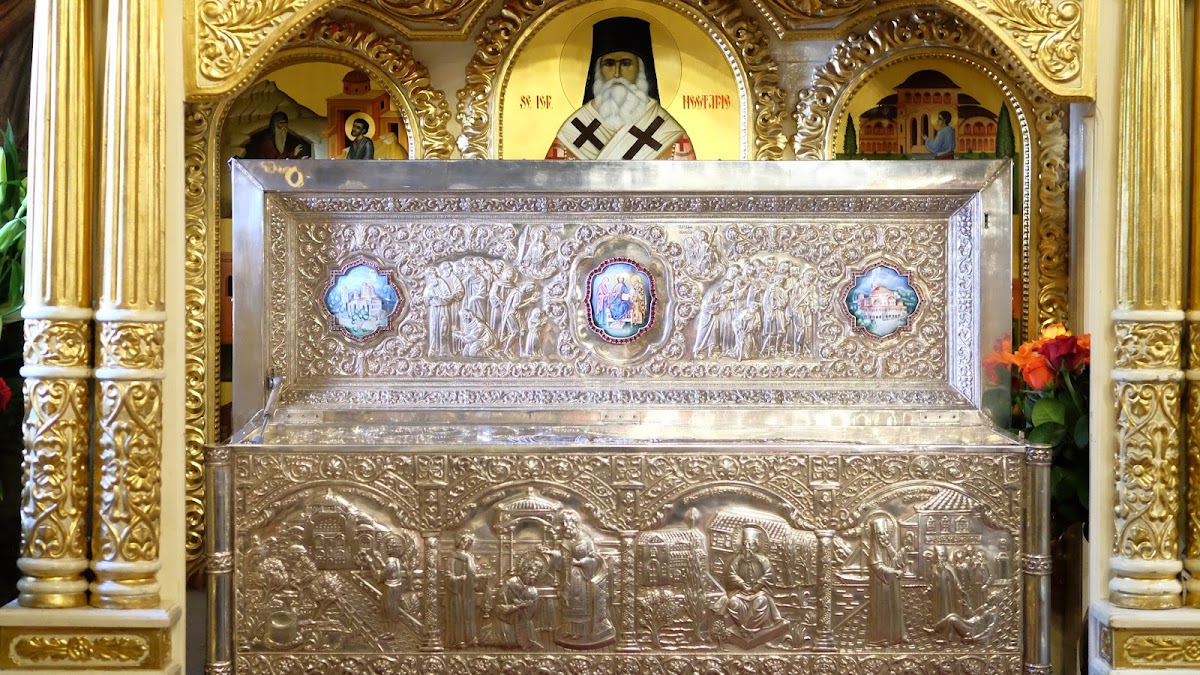
The church holds the tombs of Radu Mihnea and Patriarch Justinian, as well as the relics of Saint Nectarios the Wonderworker, brought here in 2001. The complex is located at Strada Radu Vodă 24, near Unirii Square, easily reached by public transport. Worth visiting for its documented Wallachian architecture and its historical role as a princely necropolis.
Strada Radu Voda 24 Bucuresti