
Attraction
Plumbuita Monastery Bucharest
Plumbuita Monastery is the oldest monastery in Bucharest, located in the Colentina neighbourhood, on a small hill on the bank of the river of the same name. Founded by ruler Petru cel Tânăr around 1560 and rebuilt from the ground up by Matei Basarab in 1647, the monastery has the appearance of a fortified princely court, with thick fortress walls. It is dedicated to the Nativity of Saint John the Baptist and has an exceptional history: from 1573, the first printing press in Bucharest operated here. The complex includes the church, the Princely House, and the bell tower.
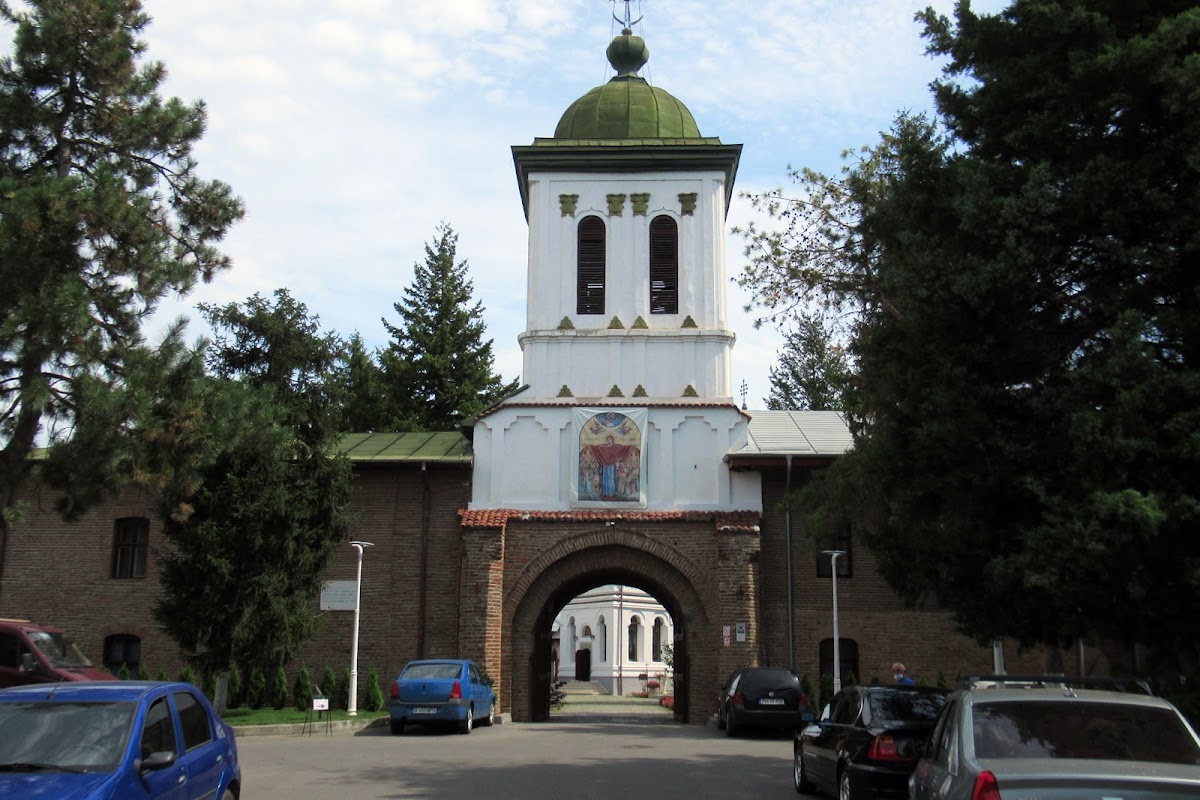
Plumbuita Monastery is the oldest monastery in Bucharest, an Orthodox monastic complex situated in the north-eastern part of the city, in the Colentina neighbourhood (sector 2), on a small hill on the bank of the Colentina river. Construction of the monastery was begun around 1560 by ruler Petru cel Tânăr, son of Mircea Ciobanul and Doamna Chiajna, and was continued by his successors on the throne, Alexandru al II-lea Mircea and Mihnea Turcitul, who completed it; in 1585, the latter dedicated the establishment to the Xiropotamu Monastery on Mount Athos. Situated in a strategic position at the exit from the city toward Moldova, the monastery also played an important defensive role. In 1573, at the initiative of Voivode Alexandru al II-lea Mircea, the first printing press in Bucharest and the third in Țara Românească was established here; the first books printed in the city appeared at Plumbuita in 1582 (two Tetraevangheliare and a Psalter). After being severely damaged by the earthquake of 1595 and a fire in 1614, the church was rebuilt from the ground up in 1647, in the form preserved to this day, by order of ruler Matei Basarab, considered the third and most important founder of the monastery; he rebuilt it after the model of Radu cel Mare's foundation at Mănăstirea Dealu, to commemorate the victory won in 1632, beneath the monastery's walls, in the battle that brought him the throne of Țara Românească. At the same time, the Princely House was added and the complex was reinforced with thick defensive walls, making it a veritable fortress. The church, dedicated to the Nativity of Saint John the Baptist, has a trefoil plan with a tower over the nave, and combines architectural features typical of Muntenia with Gothic-style window frames reflecting Moldavian influence; in the narthex, the votive painting depicts Matei Basarab and his wife, Doamna Elina. The name "Plumbuita" was given to it by locals, after the church's lead roof; according to tradition, Matei Basarab had this lead melted down to cast bullets during the battles. Over the centuries, the monastery witnessed a number of significant events: in 1821 Tudor Vladimirescu established his camp here, and in 1848 it was temporarily converted into a place of detention for several leaders of the Revolution. Today, the monastery preserves for veneration relics of Saint Nicholas, Saint George the Great Martyr, and other saints, remaining an important spiritual, historical, and cultural landmark of the capital.
Strada Plumbuita 58, București