
Attraction
Moisei Monastery
Moisei Monastery, dedicated to the Dormition of the Mother of God, stands on a plateau above the village of Moisei, at the foot of the Rodna Mountains, between Borșa and Vișeu de Sus. Its wooden church, consecrated in 1672 by Metropolitan Sava Brancovici, belongs to a class A historic monument complex (LMI code MM-II-a-A-04599), alongside a masonry church built in 1911.
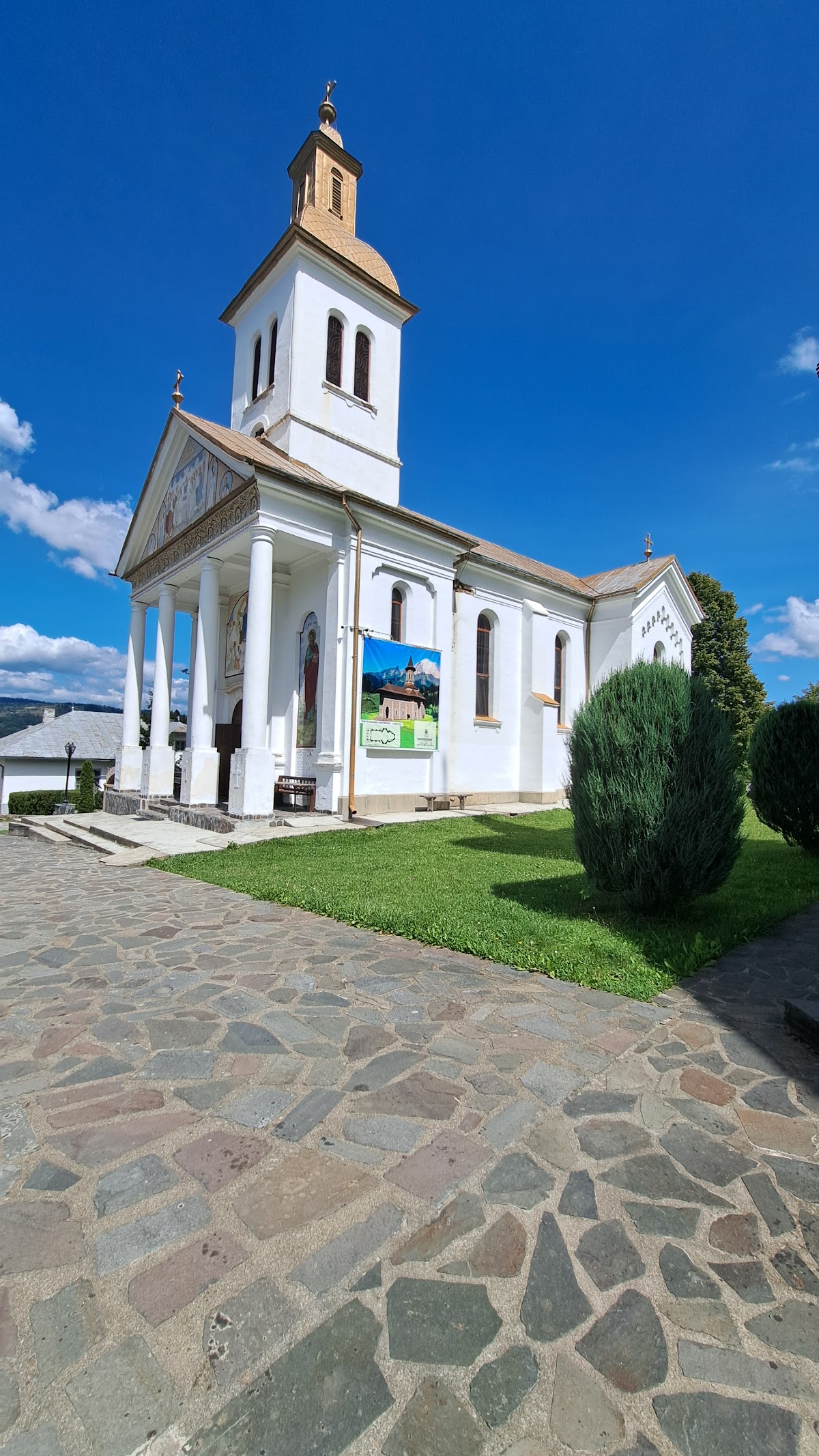
Moisei Monastery lies in Moisei commune, on a plateau above the village at the foot of the Pietrosul Rodnei massif, about 10 km from Borșa and 7 km from Vișeu de Sus, on the national road linking Sighetu Marmației with the Prislop Pass. It is dedicated to the Dormition of the Mother of God (15 August). Tradition speaks of a hermitage in the fifteenth century and of a wooden church raised in 1599, but the monastery is first documented in 1637, when Bishop Dumitru Pop resided here. The wooden church was consecrated on 15 August 1672 by Metropolitan Sava Brancovici of Transylvania, in the presence of monks from Putna, of which the monastery was a dependency.
In the seventeenth and eighteenth centuries Moisei was a religious and cultural centre of Maramureș: Bishop Iosif Stoica held a synod here in 1690, a school operated from 1694, and a workshop of icon painters was active, whose icons also survive in the churches of Poienile Izei, Vișeu de Mijloc and Giulești. After 1700 the monastery was Greek Catholic. In autumn 1948, when the Greek Catholic Church was banned, the Basilian monks and their abbot Lucian Pop were arrested and the complex was handed to the Romanian Orthodox Church. The Greek Catholic Eparchy of Maramureș claims the monastery.
The wooden church, in its present form from around 1750, has a polygonal altar, a nave covered by a semicircular vault and a small bell tower above the narthex. It preserves fragments of wall painting (Jacob's Dream, the Four Evangelists) and three eighteenth-century icons. The complex, a class A historic monument (LMI code MM-II-a-A-04599), comprises the wooden church and the seventeenth-century stone pillars of the "Way of the Cross". Beside it stands the large neoclassical masonry church built in 1911 and repainted in 1982. The gate and enclosure wall date from 2008-2011. The pilgrimage on the feast of the Dormition is documented from 1873.
In the village of Moisei, separate from the monastery, stands the Monument to the Romanian Martyrs (LMI code MM-IV-m-A-04828), on the Izvorul lui Dragoș plateau. It commemorates the 29 Romanians from forced labour detachments killed by retreating Hungarian troops on 14 October 1944 in two wooden houses at the edge of the village. The ensemble, by sculptor Vida Géza, consists of 12 pillars (two human faces and ten Maramureș masks), first carved in wood and remade in stone from 1972. One of the two houses is a historic monument (LMI code MM-IV-m-A-04829).
Sat Moisei, comuna Moisei, județul Maramureș