
Attraction
Horaița Monastery
Horaița Monastery is an Orthodox monastery of monks in Crăcăoani commune, Neamț County, at about 660 m altitude at the head of the Horaița stream valley, below the Stânișoara Mountains. Its first church, of wood, was built in 1822-1824 by Irinarh Roset, and the present church, dedicated to the Baptism of the Lord, was built between 1848 and 1867 under Abbot Ermoghen Buhuș.
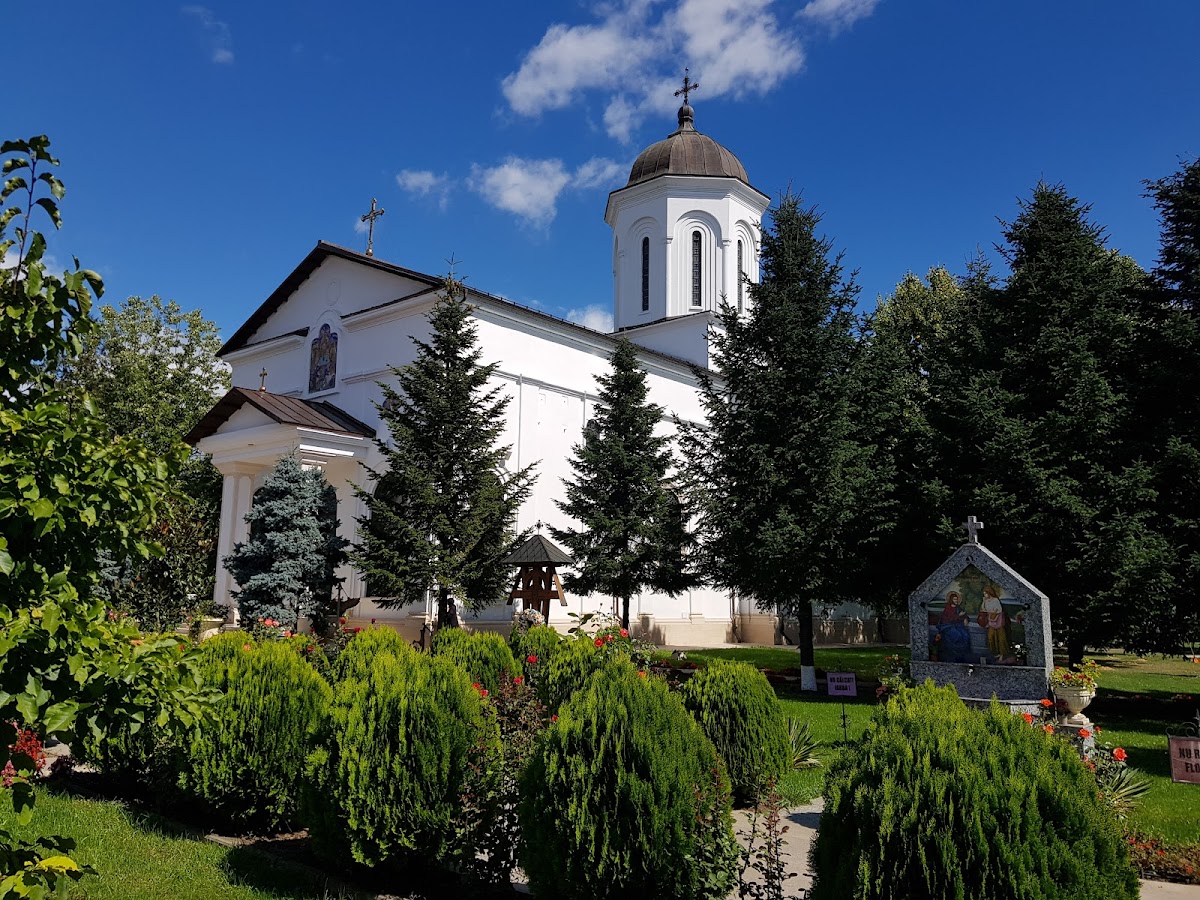
Horaița Monastery stands in the village of Poiana Crăcăoani, Crăcăoani commune, about 6 km from the road linking Piatra Neamț and Târgu Neamț, in a sloping clearing at the head of the Horaița stream valley, at about 660 m altitude. A charter of Prince Alexandru cel Bun dated 11 July 1428 mentions the church at Horaița among the 52 churches placed under Bistrița Monastery, but the present monastery dates from 1822-1824, when Irinarh Roset (1771-1859), a monk of Neamț Monastery, built a wooden church here dedicated to the Descent of the Holy Spirit, with the support of Metropolitan Veniamin Costachi. Prince Ioan Sandu Sturza granted the founding charter. Irinarh served as the first abbot until 1837, when he retired to the Holy Land.
His successor, Archimandrite Ermoghen Buhuș, built the present church, dedicated to the Baptism of the Lord, begun in 1848 and completed in 1867, and consecrated on 20 October by Metropolitan Calinic Miclescu. Princes Grigore Alexandru Ghica and Alexandru Ioan Cuza also contributed to its construction. The church is about 30 m long, 17 m wide and 20 m high, built of stone with brick vaults and walls 1.6-4 m thick, and has eight towers. The neo-Byzantine painting was done by Mihai Chiuaru and his pupils between 1988 and 1993. The carved and gilded iconostasis has its pulpit placed above the royal doors rather than on the north side, as is customary.
On the north side of the courtyard is the winter chapel of St Nicholas (1850-1852), and the bell tower (1853-1855) houses on its first level a chapel dedicated to the Descent of the Holy Spirit. The other buildings of the complex date from after 1920. The monastery's most treasured object is the icon of the Mother of God known as the "Deliverer from Drought", from the first half of the eighteenth century, which came from the old wooden church and is carried in processions in times of drought. In 1919 Prince Carol, the future King Carol II, was sent here for 75 days as punishment for his marriage to Zizi Lambrino. The monastery cemetery holds the grave of the auxiliary bishop Eugeniu Laiu (1894-1967), who became a monk at Horaița.
Horaița Monastery is a historic monument (LMI code NT-II-a-B-10643) and has a community of about 20 monks. On a nearby peak to the south stands Horăicioara Skete.
Sat Poiana Crăcăoani, comuna Crăcăoani, județul Neamț