
Attraction
Hlincea Monastery
Hlincea Monastery is a monastic complex in the village of Hlincea, Ciurea commune, at the foot of Cetățuia hill on the southern edge of Iași. Its church of St George was founded before 1591 by Princess Maria, daughter of Prince Petru Șchiopul, and her husband, the boyar Zottu Tzigara, and preserves interior painting from 1659-1660 including the votive portrait of Vasile Lupu.
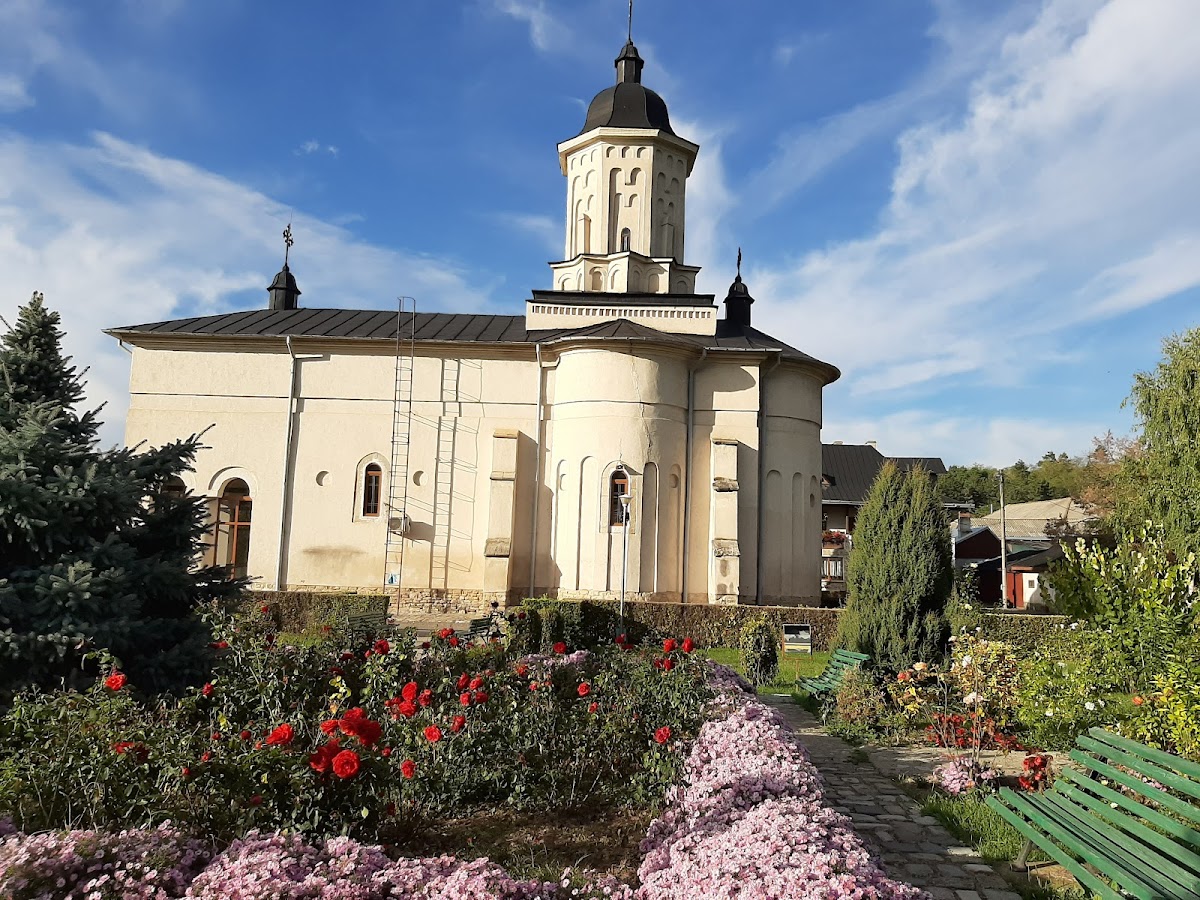
Hlincea Monastery lies in the village of Hlincea, Ciurea commune, at the foot of Cetățuia hill, beside the Nicolina river and the Iași-Vaslui railway line, about three kilometres from Cetățuia Monastery. The church of St George was built in the penultimate decade of the sixteenth century, before the ruling family left Moldavia in 1591, by Princess Maria, daughter of Prince Petru Șchiopul, together with her husband Zottu Tzigara, a Greek boyar from Ioannina who served as spatharios and grand treasurer. Until the reign of Vasile Lupu, documents referred to it as "Zotta's monastery at Hlincea".
Dedicated to the Dionysiou Monastery on Mount Athos, the site fell into ruin after 1591, when Greek monks were no longer sent. Vasile Lupu rebuilt the church from 1639, with work completed under his son Ștefăniță Lupu. The inscription painted in 1660 omits the original founders and long misled researchers, but a document from 1662 confirms Zottu Tzigara's foundation.
The interior painting, executed in 1659-1660, is the most valuable part of the complex. On the south wall of the nave is the votive portrait of Vasile Lupu, Ștefăniță Lupu and Lady Ecaterina in ceremonial dress, while the gallery of warrior saints includes Mercurius, Nicetas, George, Demetrius and Theodore. The iconostasis, brought from Cetățuia Monastery, dates from the eighteenth century.
From 1672 until 1990, Hlincea was a dependency of Cetățuia Monastery. During the Russo-Turkish wars of 1787-1792 and 1806-1812 it served as a military hospital, and during the cholera epidemic of 1831 as a quarantine station. The complex, a class A historic monument, comprises the church, the ruined sixteenth-century cells, the seventeenth-century bell tower and the enclosure wall.
Hlincea judetul Iasi