
Attraction
Giulești Monastery
The ruins of Chiajna-Giulești Monastery are the most imposing ruined monument in Bucharest, located on the north-western outskirts of the city, in the Giulești-Sârbi neighbourhood. Built during the Phanariot period (the second half of the 18th century), the church was impressive in its dimensions — 43 m in length, walls 1–2 metres thick, and a height of 12 m at the cornice — making it the largest of its time. Bombarded by the Turks in 1814 and damaged by repeated earthquakes, it has remained a monumental ruin, beside which a new wooden church in the Maramureș style was erected in 2012. The site is shrouded in urban legends about paranormal phenomena.

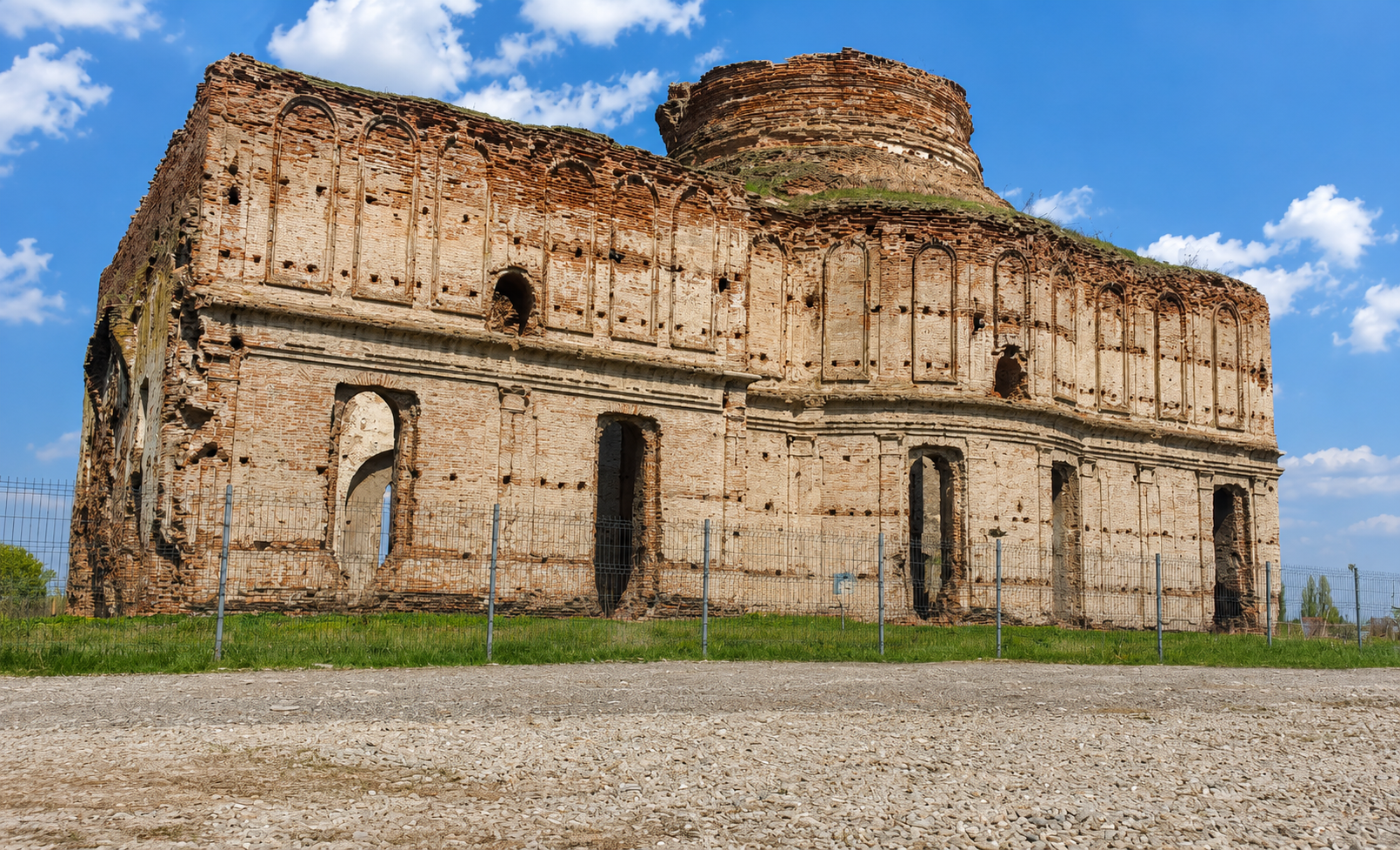
Chiajna-Giulești Monastery, also known as Mănăstirea Giulești-Țigănie-Chiajna, is a historic monument located on the north-western outskirts of Bucharest, in the Giulești-Sârbi neighbourhood, at 172 Drumul Săbăreni, Sector 6, near the Bucharest–Craiova railway line. The earliest documentary record is an Austrian map of Bucharest dating from 1770. According to most sources, construction was begun by the Phanariot ruler Alexandru Ipsilanti during the Russo-Turkish War of 1768–1774; an alternative hypothesis attributes it to the nobleman Mihai Cantacuzino, who is said to have built it between 1764 and 1766. The church was remarkable for its unusual dimensions for the period: 43 m in length, 17 m in width, walls 1–2 metres thick, and a height of 12 m at the cornice, making it the largest church of its time, with architecture in the Ionic and Baroque style. Owing to its fortress-like appearance and massive walls, the monastery served as a refuge for the surrounding population against invaders and plague epidemics. It was bombarded by the Turks in 1814, in the context of the tensions that followed the catastrophic Peace of Bucharest of 1812, and after the Revolution of 1821 it was completely abandoned, leaving only the main church — today a ruin. Repeated earthquakes damaged its structure: a note from 1821 recorded that the church's tower had fallen into ruin and only half of it remained. A grim episode from more recent history: following the devastating earthquake of 1977 and until 1988, the rubble and refuse of demolished Bucharest were carted to the former Chiajna landfill situated around the ruins, turning the area into a wasteland. The abandonment and dramatic atmosphere of the site fuelled numerous urban legends about paranormal phenomena and apparitions, making the ruin popular among urban explorers and mystery enthusiasts. After 1993, a decision was made to revive the monastic establishment: the Archdiocese of Bucharest obtained a perimeter of 10,000 m² around the ruins, and in the summer of 2012 a new wooden church in the Maramureș style was erected following the consecration of the site. The monastery today operates under the patronal feast of "The Protection of the Mother of God" (Acoperământul Maicii Domnului) and is the only monastic establishment in Sector 6 of the capital. In 2024, the ruins were investigated by researchers using modern technologies to assess the structure with a view to future restoration works.
Drumul Săbăreni 172, 060646 București