
Attraction
Coșula Monastery
Coșula Monastery is an Orthodox monastic complex located in the village of Coșula, commune of Copălău, Botoșani County, on the bank of the Miletin river, approximately 20 km from the city of Botoșani. It was founded in 1535 by the great treasurer Mateiaș, an advisor to ruler Petru Rareș, in the style of medieval Moldavian architecture, and is dedicated to Saint Nicholas. The church preserves a fresco nearly 500 years old, remarkable for the celebrated pigment known as "yellow of Coșula", and is listed as a historic monument.
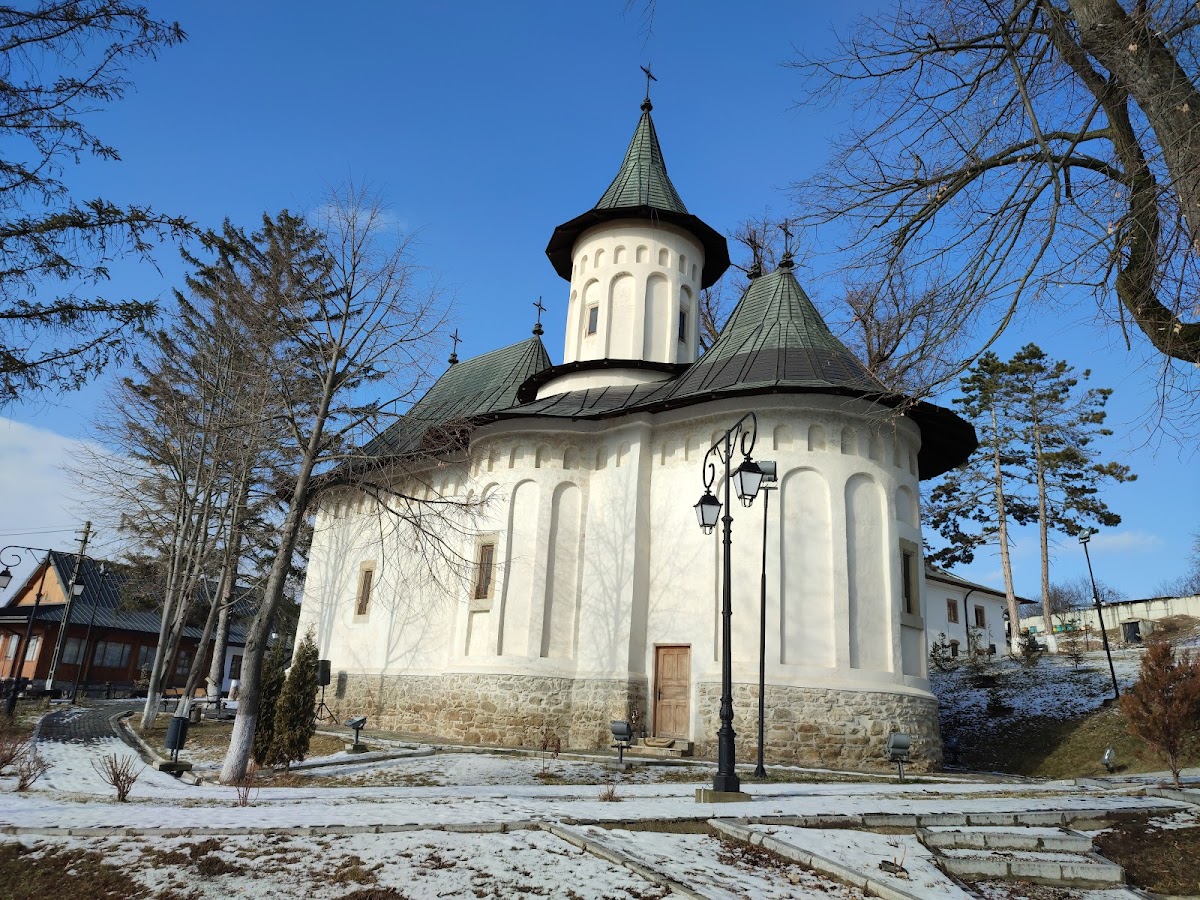
Coșula Monastery is an Orthodox monastic complex located in the village of Coșula, commune of Copălău, Botoșani County, built on a hillside spur on the left bank of the Miletin river, approximately 20 km south-west of the city of Botoșani. The monastery was founded in 1535, during the reign of Petru Rareș, at the expense of the great treasurer Mateiaș (Coșolvei), one of the ruler's prominent advisors. Although it was built during the Rareș era, it is not a voivodal foundation but a boyar one, as attested by the inscription carved at the entrance to the old church. The main church, dedicated to Saint Nicholas, is a small-scale construction, yet impressive in its proportions and the quality of its interior spaces, built in the style of Moldavian feudal architecture, with walls of rough stone and brick. The church was painted in 1537–1538 and retains a large portion of its original frescoes in the Moldavian style. The monastery was the only one in Botoșani County to have had its exterior painted as well, and its paintings are renowned for the use of a unique pigment known as "yellow of Coșula". During the 17th and 18th centuries, the monastery experienced its golden age, becoming an important spiritual and cultural centre. It was here that a monk of the community produced the first translation into Romanian of a text from Herodotus's Histories, based on a Modern Greek manuscript brought from the island of Crete. The monastic complex, included on the list of historic monuments, comprises, in addition to the main church, several heritage sites: the abbot's house dating from the 17th century (itself a listed historic monument), the refectory, the kitchens, the bell tower, and the enclosure wall. After a period during which it functioned as a parish church, monastic life was renewed, and following an extensive restoration project funded with European funds, a museum and a pilgrim's house were set up within the complex, making the monastery one of the most important tourist and religious sites in Botoșani County.
Cosula judetul Botosani