
Attraction
Corbii de Piatră Monastery
Corbii de Piatră Monastery is the oldest rock-hewn place of worship in Romania, carved directly into a massive rock face 30 m high and 14.5 m long, located in the village of Jgheaburi, commune of Corbi, Argeș County, on the left bank of the Râul Doamnei. The first documentary record dates from 23 June 1512, when the nun Magdalina re-established it under the patronal feast of "The Dormition of the Mother of God", dedicating it to the ruler Neagoe Basarab. The interior paintings, in the pure Byzantine tradition, date from the first part of the 14th century and represent the oldest ensemble of mural painting in Țara Românească. It is the first convent documented in Romania.
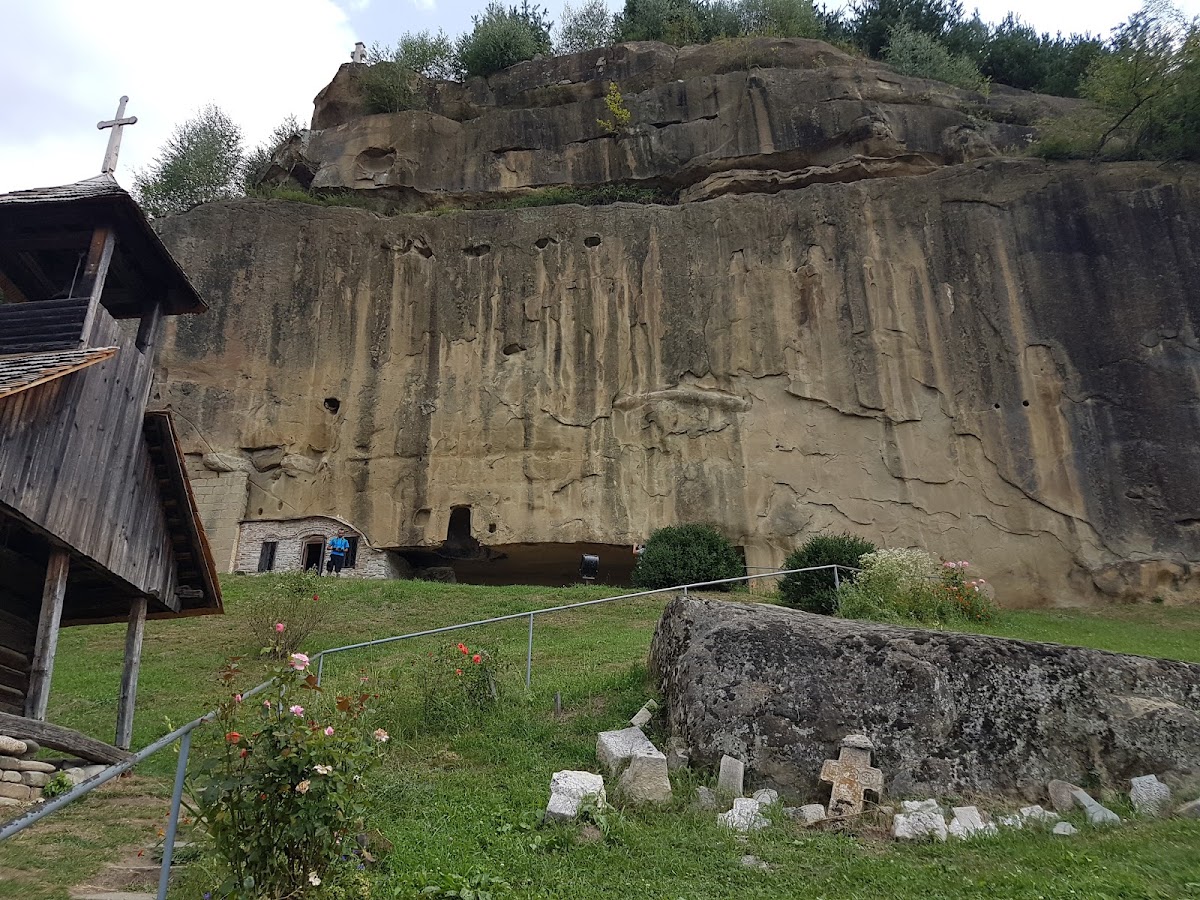
Corbii de Piatră Monastery is a rock-hewn monastic complex located in the village of Jgheaburi, commune of Corbi, Argeș County, on the left bank of the Râul Doamnei, approximately 33 km from Curtea de Argeș on the road towards the commune of Nucșoara. It is considered the oldest rock-hewn monastery in Romania, typologically related to the group of rock-cut churches in Cappadocia. The monastery church is carved into a massive rock face approximately 30 m high and 14.5 m long. Originally, the church had two altars within a single nave, a feature unique in Romania. The interior paintings, accompanied by Greek inscriptions, allow the ensemble to be dated with certainty to the first part of the 14th century, making it the oldest ensemble of mural painting in Țara Românească. The preserved biblical scenes include the Sacrifice of Abraham, the Nativity of the Lord, the Presentation of the Lord, the Raising of Lazarus, the Baptism of the Lord, the Transfiguration, the Ascension of the Lord, the Archangel Gabriel, and the Holy Military Saints. Although the church has never been restored, large portions of the original painting are preserved. On 23 June 1512, the nun Magdalina — the daughter and wife of a boyar, and heiress of the estate at Corbi — re-established the monastery. It was given the patronal feast of "The Dormition of the Mother of God" and was dedicated to the ruler Neagoe Basarab, receiving the status of a princely monastery. It is the first convent documented in Romania and functioned as a dependency (metoc) of Curtea de Argeș Monastery until the 18th century. Adjacent to the church, also hewn into the rock, is the monastery's trapeza — the refectory — which tradition holds was used by Neagoe Basarab as an open-air tribunal. Near the monastery stand the ruins of the castle of Voicu, the father of Ioan de Hunedoara, and the locality of Corbi is considered the ancestral home of the Corvineștilor family. Access is from Curtea de Argeș via the road towards the commune of Nucșoara, approximately 400 m from the centre of the commune of Corbi.
Corbi judetul Arges