
Attraction
Cheia Monastery
Cheia Monastery is an Orthodox monastery for monks, dedicated to the Holy Trinity, on the south-eastern side of the village of Cheia, Măneciu commune, in the Teleajen valley below the Ciucaș Mountains. Its stone church was built between 1835 and 1839 with the support of Bishop Chesarie of Buzău and painted by the church painter Naum, on the site of wooden churches recorded from 1770. The complex is a listed historic monument (PH-II-a-A-16412).
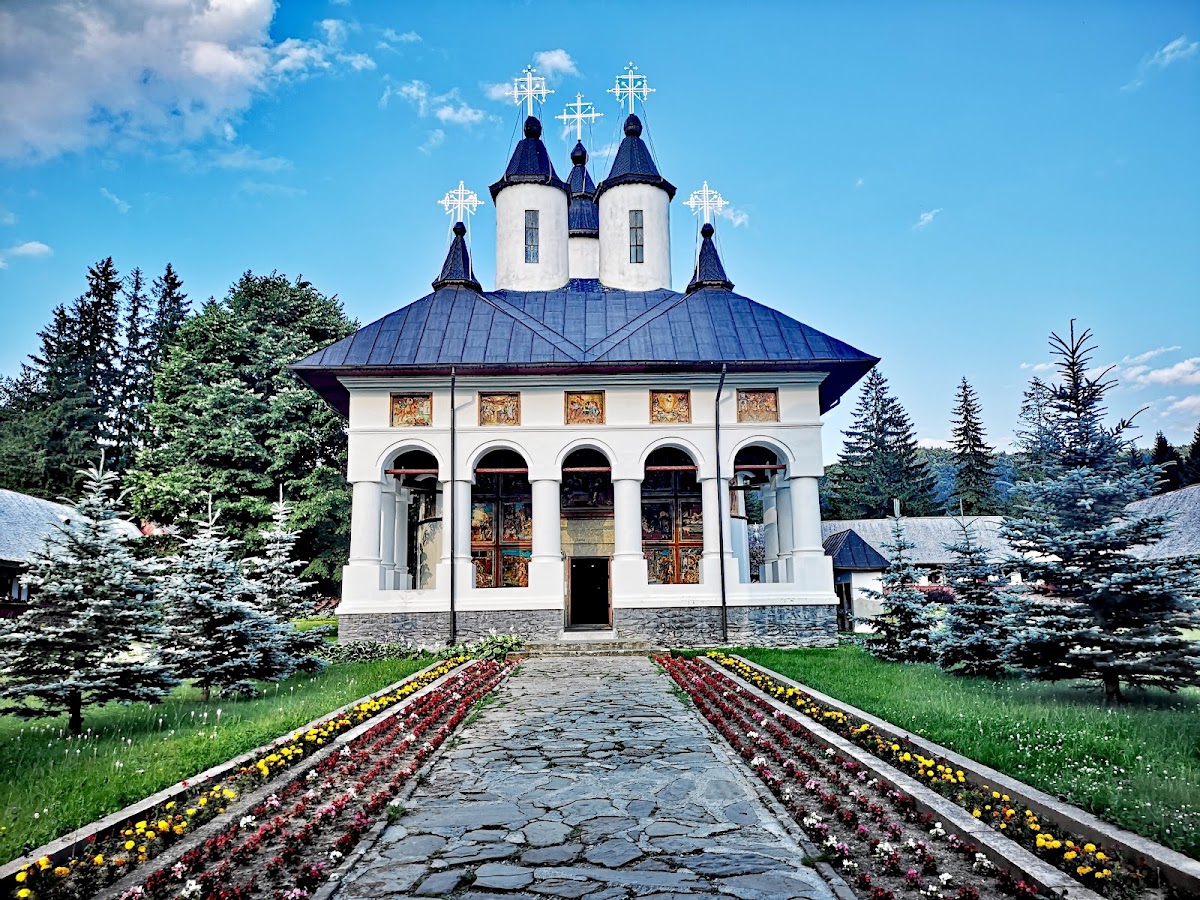
Cheia Monastery lies on the south-eastern side of the village of Cheia, Măneciu commune, Prahova County, between the Tâmpa and Cheița streams, close to the old border between Wallachia and Transylvania. It is first recorded in 1770, when shepherds from Săcele built a wooden church dedicated to St Nicholas, which was destroyed by the Ottomans seven years later. A second wooden church, built under the abbot Atanasie and dedicated to the Dormition of the Mother of God and later to the Holy Trinity, burned down around 1833-1834.
The present church, of stone and brick, was begun in 1835 under the abbot Damaschin, a hieromonk from Săcele, with the support of Bishop Chesarie of Buzău, who consecrated it on 20 July 1839 to the Holy Trinity. The painting was completed by the church painter Naum, of the Buzău school, on 26 August 1839, and the main icons of the iconostasis are attributed to Gheorghe Tattarescu. The iconostasis and the tetrapod were made in Vienna in Baroque style. The murals were repainted by Gheorghe Cepoiu around 1927 and restored in the 1980s.
The chapel dedicated to the Dormition of the Mother of God, approved in 1919, was completed around 1927 under the abbot Grigore Munteanu. Gheorghe Becescu-Silvan, who promoted tourism in the Ciucaș Mountains, was reburied in the monastery cemetery in 1924. From 1950, Bishop Nicolae Popoviciu of Oradea, deposed by the communist regime, lived here in exile until his death. Since 1961 the monastery has been a dependency of the Romanian Patriarchate.
The complex is a class A historic monument (PH-II-a-A-16412) and comprises the Holy Trinity church (1835-1839), the chapel, the abbot's house, the refectory, the cells on the south, east and north sides of the enclosure and the bell tower. The monastery is inhabited by monks and stands beside the DN1A road in Cheia, a starting point for trails into the Ciucaș Mountains.
Cheia nr. 118, comuna Măneciu, județul Prahova