
Attraction
Cetățuia Monastery
Cetățuia Monastery is a fortified Orthodox monastery for monks on a hill in southern Iași, founded by Prince Gheorghe Duca between 1668 and 1672. Its church, dedicated to the Holy Apostles Peter and Paul, holds the founder's tomb.
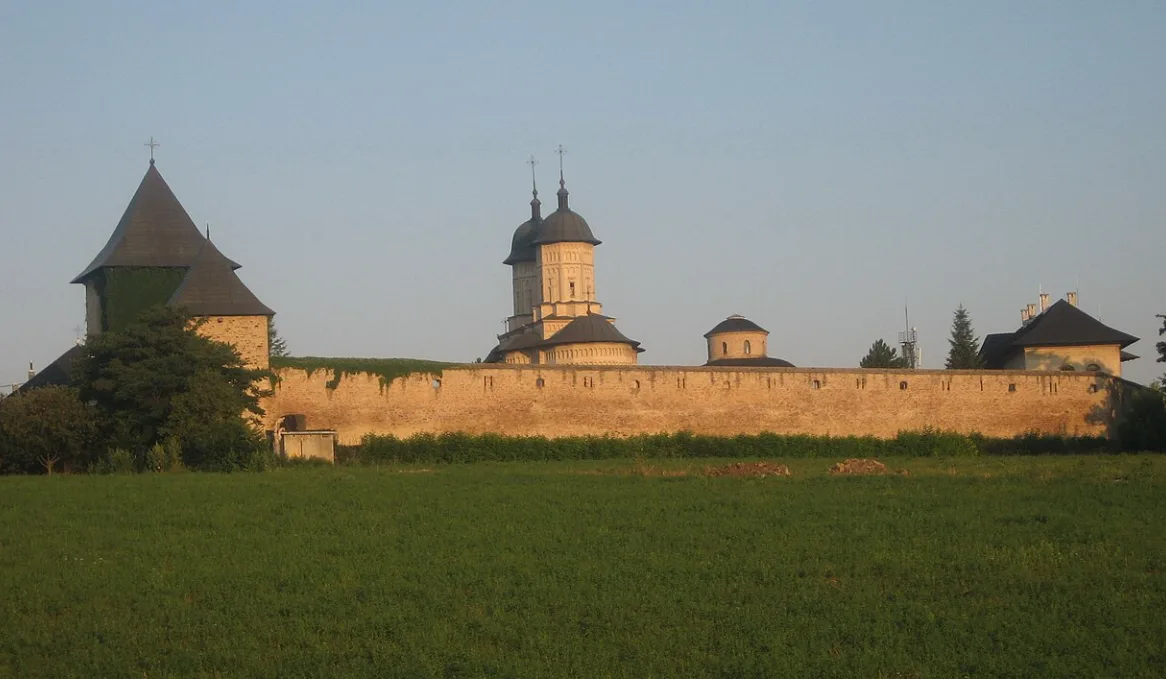
Cetățuia Monastery is an Orthodox monastery for monks on a high hill in the south of Iași, at Strada Cetățuia no. 1. The complex is enclosed by stone walls about 1.40 m thick and 7 m high, with corner towers and a bastion to the north, around a pentagonal courtyard of roughly 120 by 60 m.
The monastery was founded by Prince Gheorghe Duca, who bought the vineyard on the hill in 1666. Work began in the autumn of 1668, the walls, bastions and bell tower were finished in June 1670, and the church was consecrated in 1672. In 1670 the monastery was dedicated to the Patriarchate of Jerusalem, and around 1682 a printing press with Greek type was set up here, working until 1698.
The church, dedicated to the Holy Apostles Peter and Paul, has a triconch plan, two octagonal towers and Gothic doors and windows, and is regarded as a simplified copy of the Trei Ierarhi Church in Iași. The 1673 murals by the painters Mihai, Gheorghe and Dima from Ioannina, assisted by the painters Nicolae and Ștefan, survive only in part, as the church was repainted in 1827-1837. A niche on the south side of the narthex holds the tomb of Gheorghe Duca, whose remains were brought back from Lviv in 1693 by his son Constantin Duca.
Thanks to its walls, the monastery served as a refuge for Constantin Cantemir, Dimitrie Cantemir and Mihai Racoviță. The enclosure preserves the 1670 bell tower, with the Moldavian coat of arms above the entrance, the Princely House, now a museum of religious art, the Gothic Hall and the princely kitchen, a round domed stone building. The complex is a historic monument, LMI code IS-II-a-A-03806.
Str. Cetățuia nr. 1, Iași, județul Iași