
Attraction
Celic-Dere Monastery
Celic-Dere Monastery is an Orthodox convent in Frecăței commune, about 25 km south-west of Tulcea, founded in the first half of the 19th century by monks from Mount Athos. Its main church, built between 1901 and 1932 and painted by Gheorghe Eftimiu, belongs to an ensemble listed as a historic monument.
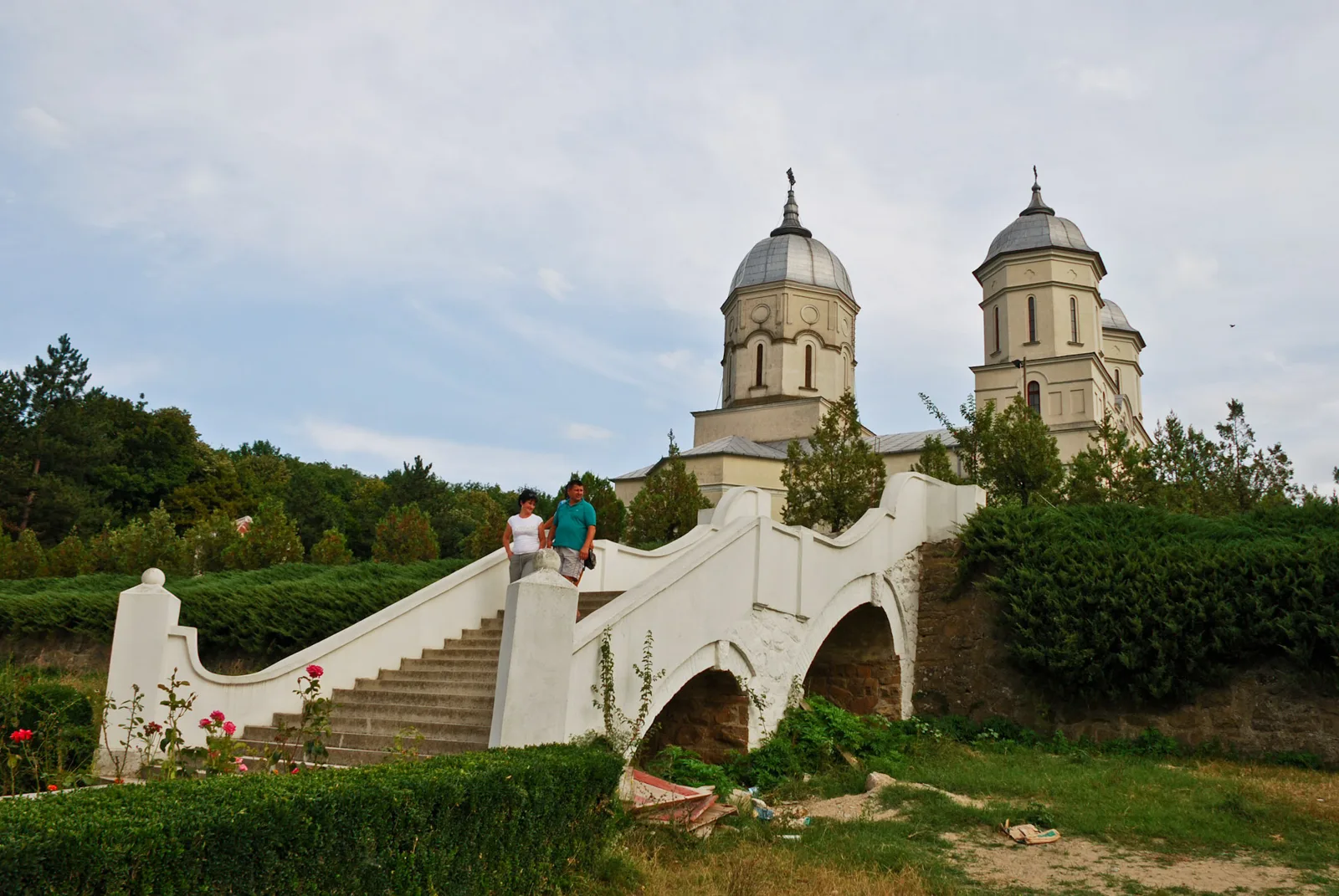
Foto: Danbaragan, CC BY-SA 3.0 ro, via Wikimedia Commons
Celic-Dere Monastery lies about 3 km south-east of Telița village, in Frecăței commune, Tulcea County, about 25 km south-west of Tulcea and 12 km west of Cataloi. It is an Orthodox convent dedicated to the Dormition of the Mother of God and belongs to the Diocese of Tulcea. Its name comes from the stream in whose valley it stands.
The monastery was founded around 1835 to 1841. According to his own statement, made in 1857, its founder, the archimandrite Athanasie Lisifenco, born in Chilia, was tonsured at Caracal Monastery on Mount Athos and in 1841 left "for the Danube lands, near Isaccea, by the water called Celic-Dere" and founded a hermitage here. In 1845 it became a convent, with nuns brought from Bessarabia, while the monks moved near Saon marsh, where they laid the foundations of Saon Monastery. The foundation of the present church was laid in 1901 by Bishop Partenie Clinceni of the Lower Danube, to plans by the architect Toma Dobrescu; work resumed in 1910 with the support of minister Spiru Haret, continued until 1916 and was completed in 1924-1925. The fresco painting, in Neo-Byzantine style, was done between 1926 and 1932 by the painter Gheorghe Eftimiu, and the church was consecrated on 2 October 1932.
The main church has a triconch plan and three towers; it is in fact two churches one above the other, and the lower level holds the "Izvorul Tămăduirii" (Life-Giving Spring) chapel, used as a winter church between 1932 and 1954. The iconostasis, of gilded pear wood, was carved by Anghel Dima. The chapel keeps the remains of the founder Athanasie in a reliquary. The ensemble also includes the abbot's house, the cells, the workshops and a windmill, all listed. Visitors should dress appropriately for a place of worship; the monastery is reached by car on the Tulcea, Cataloi, Telița road, and buses on this route stop in front of the monastery.
The Celic-Dere Monastery ensemble is a category B historic monument, LMI code TL-II-a-B-06039 (dated 1901-1932), with these components: the "Dormition of the Mother of God" church, the "Izvorul Tămăduirii" chapel, the abbot's house, the cells, the workshops and the windmill.
Did you know that the monastery's name is Turkish? "Çelik dere" means "steel stream", after the Celic-Dere stream in whose valley the monastery was built.
La circa 3 km sud-est de satul Telița, comuna Frecăței, județul Tulcea