
Attraction
Brâncoveanu Monastery, Sâmbăta de Sus
Brâncoveanu Monastery at Sâmbăta de Sus, founded between 1696 and 1707 by Constantin Brâncoveanu and destroyed in 1785 by Habsburg authorities, was restored by Metropolitan Nicolae Bălan (1926-1946) and fully rebuilt, with a new church, by Metropolitan Antonie Plămădeală (1985-1993). It is one of the most representative examples of Brâncovenesc-style architecture in Transylvania. The complex includes the old church, a new church, monastic cells, and a museum of religious art. It is reached from the town of Victoria, via road DJ 104H, about 10 km on paved road.
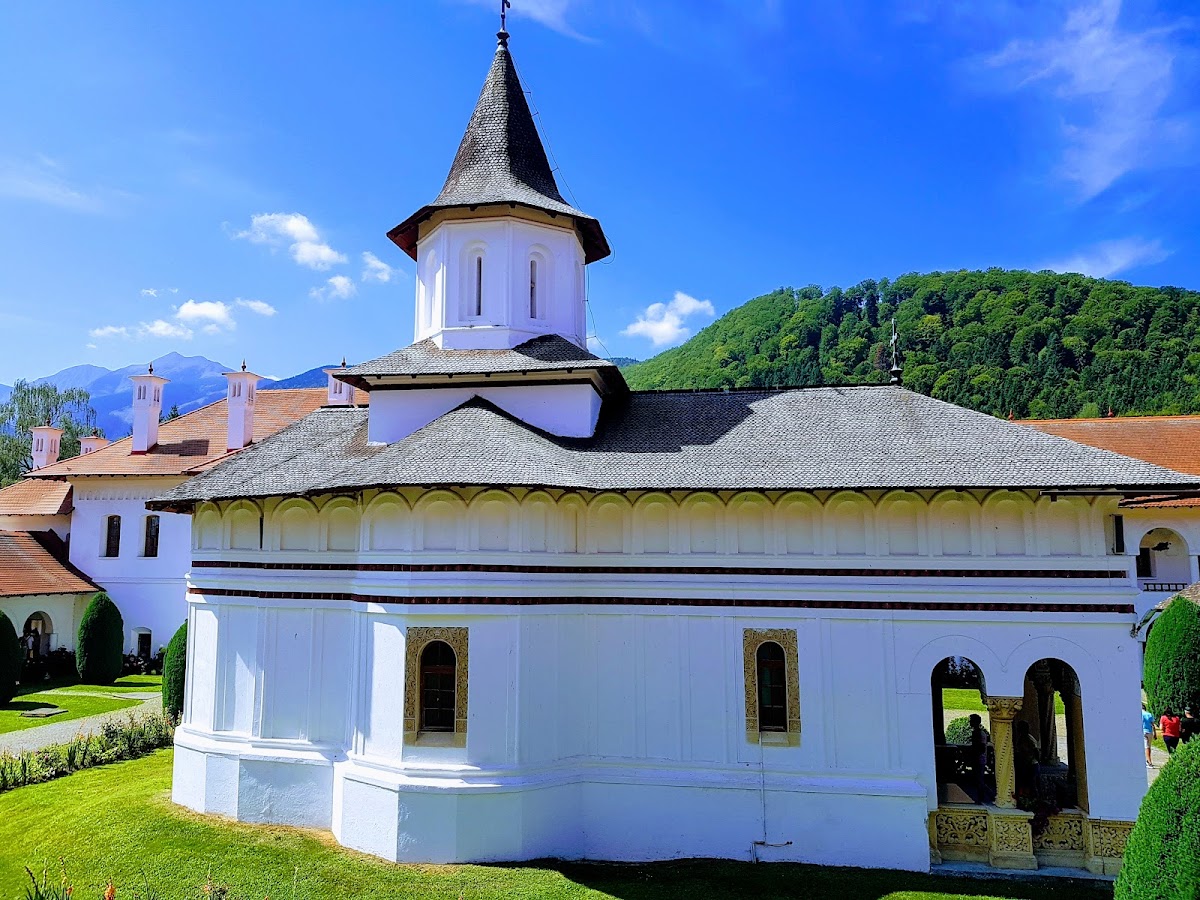
Brâncoveanu Monastery at Sâmbăta de Sus is an Orthodox monastic complex at the foot of the Făgăraș Mountains, in Brașov County, at an altitude of roughly 600-620 meters, on the banks of the Sâmbăta stream. The first wooden church was built here in 1657, by nobleman Preda Brâncoveanu; on the same site, between 1696 and 1707, his grandson, ruler Constantin Brâncoveanu, built a stone and brick church in Brâncovenesc style, aiming to strengthen Romanian Orthodoxy on both sides of the Carpathians after Transylvania came under Habsburg rule.
In 1785, taking advantage of the fact that the estate had temporarily passed out of the Brâncoveanu family's control, the Vienna court sent General Preiss, who tore down the monastery on the orders of Habsburg Catholic authorities. The monastic cells were completely destroyed, and the church was left in ruins for about 140 years. The honor of second founder went to the Metropolitan of Transylvania, Dr. Nicolae Bălan, who began restoring the old church in 1926, preserving the original 1766 murals (by painters Ionașcu and Pană); it was consecrated in 1946, under King Michael I, whose votive portrait is visible inside (whitewashed over during the early communist years, later uncovered again).
The monastery's third founder is Metropolitan Antonie Plămădeală, who, starting in 1985 — 200 years after the 1785 destruction — completely rebuilt the entire quadrangle enclosure, with two wings of monastic cells on two levels. A new church, dedicated to the "Holy Martyrs of Brâncoveanu," was also built and consecrated on 15 August 1993 — exactly 208 years after the 1785 destruction — in the presence of Ecumenical Patriarch Bartholomew I and Patriarch Teoctist of Romania.
The current complex includes the old Brâncovenesc church, the new church, monastic cells, a chapel, a museum of religious objects and historical documents, and the "Spring of Healing" well — documented since the 17th century, the oldest piece within the compound, believed by the faithful to have healing properties. The bell tower, rebuilt by Nicolae Bălan in its original form, housed the monastery's five bells (over 2,000 kg combined) until 1997, when they were moved to the tower of the new enclosure. The monastery serves as the seat of the Sibiu Archdiocese and operates as an active monastic center, also hosting, since 2003, the "Sâmbăta Academy" ecumenical center. It is reached from the town of Victoria, via road DJ 104H, about 10 km, paved and passable year-round. Worth visiting for its authentic Brâncovenesc architectural value, the historical documents and heritage objects on display in the museum, and the turbulent historical context of Romanian Orthodox resistance in Transylvania.
Strada Mănăstirii 1 Sâmbăta de Sus