
Attraction
Berca Fortress-Monastery
The Berca Fortress-Monastery is an Orthodox monastic complex in Berca commune, Buzău County, built in 1694, during the reign of Constantin Brâncoveanu, by court steward Mihalcea Cândescu and his wife Alexandrina Cantacuzino. The main church, dedicated to the Archangels Michael and Gabriel, is representative of Brâncovenesc style. Designed as a true fortress, with thick walls, a watchtower, and an underground escape tunnel, the complex is largely in ruins today, with only the church consolidated and in use. Located 20-25 km northwest of Buzău, the monastery neighbors the Mud Volcanoes nature reserve.
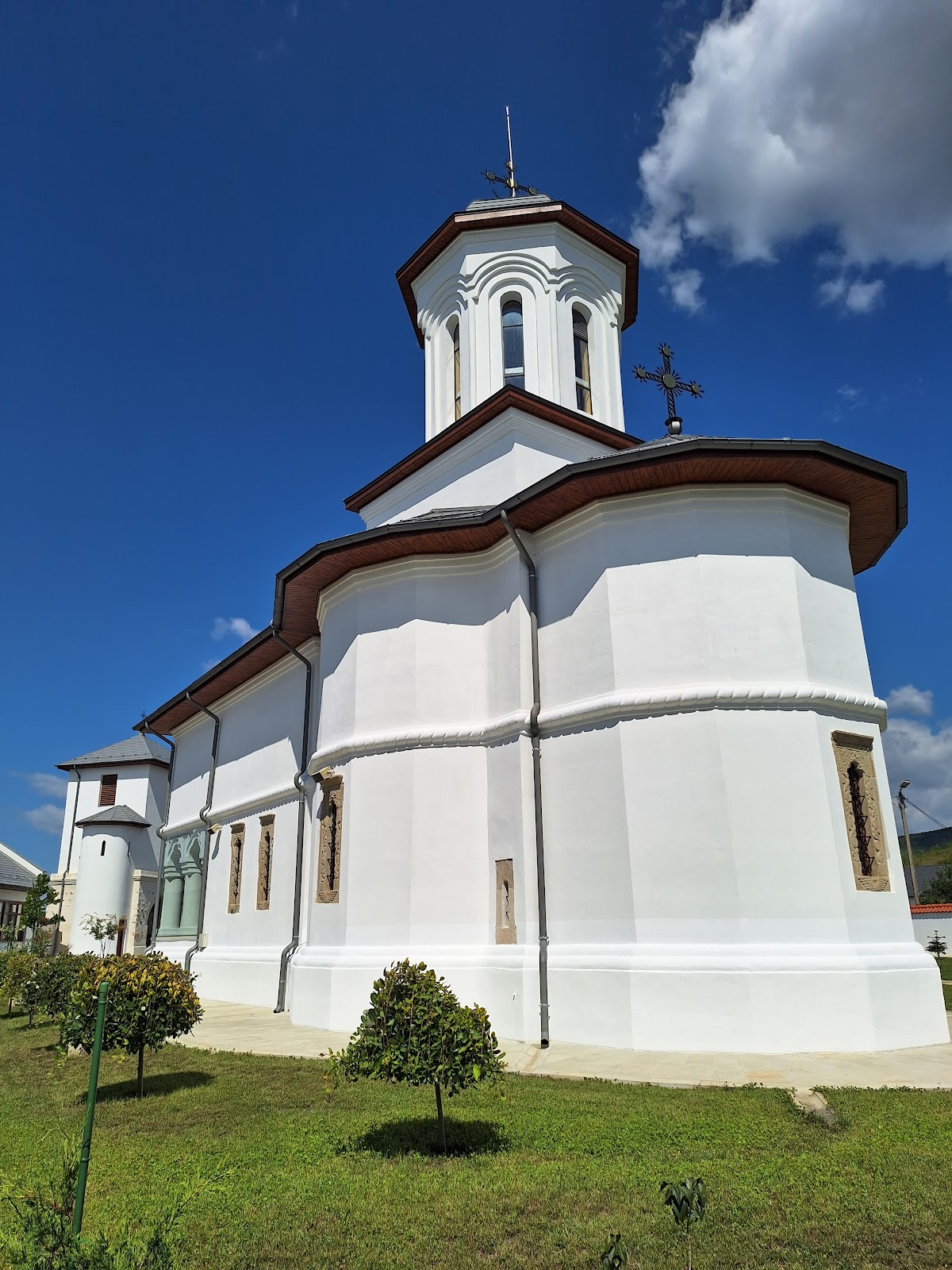
The Berca Fortress-Monastery is an Orthodox monastic complex located on a hilltop, at the entrance to Berca commune, Buzău County, at the foot of the Curvature Subcarpathians, about 20-25 km northwest of the city of Buzău. The complex was built in 1694, during the reign of Constantin Brâncoveanu, by court steward Mihalcea Cândescu and his wife, Alexandrina Cantacuzino, together with their sons Șerban, Mihalcea, and Moise; the great church was consecrated on 6 June 1694, immediately after construction was completed.
The main church, dedicated to the Archangels Michael and Gabriel, is representative of Brâncovenesc style, built in a cross shape, with a single tower over the nave and a porch resting on masonry pillars. Its facades, though simple, are decorated with eight windows adorned with angel faces carved in stone and a belt imitating a braided rope. The original painting was done by the famous painter Pârvu Mutu, but was replaced, following reinforcement work in 1984-1987, with the current painting, the work of Nicolae Teodorescu Pitarul, head of Buzău's school of church painters.
The complex was designed as a true fortress-monastery — a solution used by Wallachian rulers to build defensive structures without violating the Ottoman ban on fortifications in the Romanian lands. The central courtyard and church were surrounded by thick brick walls, similar to other Brâncovenesc-era foundations; the bell tower served as a watchtower, and an underground tunnel allowed retreat into the nearby forests in case of siege. A princely residence was built on the south side, over vaulted brick cellars, partly preserved today.
Today, most of the complex lies in ruins — the former abbey residence, the cell block, the bell tower, and the enclosure wall are all in ruins, though listed among Romania's historic monuments. Only the church has been reinforced and remains functional, housing a small hermitage community of nuns, led by abbess nun Casiana Puiu.
The monastery stands near Romania's unique Mud Volcanoes nature reserve (Pâclele Mari, Pâclele Mici, and the Berca "Boilers"), a few kilometers away. It is reached via county road DJ203K from the city of Buzău, through Berca, passable by vehicle year-round. Berca Monastery is worth visiting for its Brâncovenesc-style architecture, its rare fortress-monastery concept, and its proximity to the Mud Volcanoes, allowing a cultural-religious route to be combined with a natural one on the same day.
Berca judetul Buzau