
Attraction
Barbu Monastery
Barbu Monastery lies in Leiculești village, Tisău commune, Buzău County, in the Nișcov Valley, about 25-30 km west of the city of Buzău. It bears the name of its founder, Captain Barbu Bădeanu, who raised the church in the 1660s with financial support from the ruler Antonie Vodă of Popești. The old church, a listed historic monument, is dedicated to the Holy Archangels Michael and Gabriel, with a second dedication to Saint George. The complex was once enclosed by walls and defensive towers, serving as a refuge in troubled times.
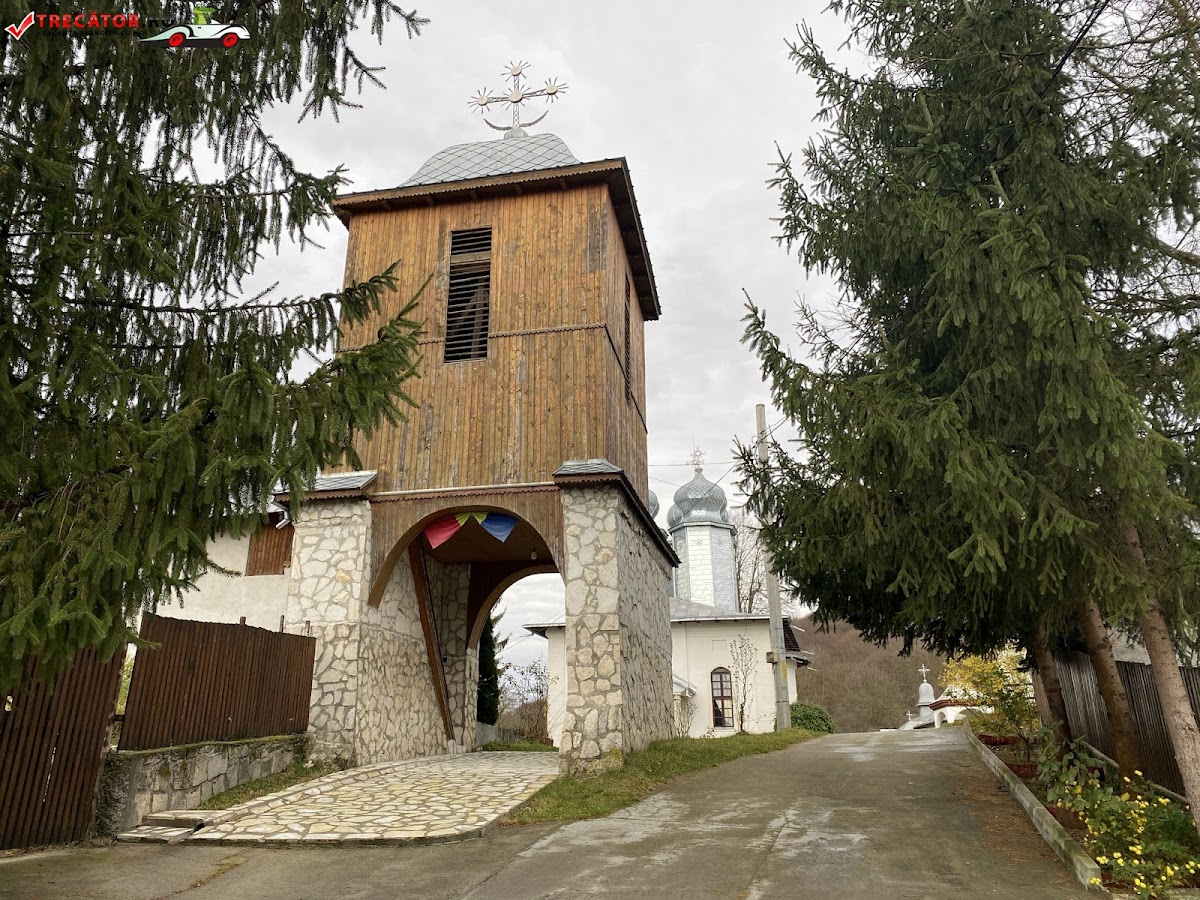
Barbu Monastery lies in Leiculești village, Tisău commune, Buzău County, in the Nișcov Valley, roughly 25-30 km west of the city of Buzău. It belongs to the string of some twenty old monasteries and churches along this valley and stands just 12 km from Ciolanu Monastery, within the same commune. Today it is a convent, under the Archdiocese of Buzău and Vrancea.
The foundation's beginnings are lost to time: an earlier, small monastic settlement of hermit monks stood on the site of the present church. Sources point to an early founding in 1632, by Radu Mihalcea, a high official at the court of Matei Basarab. The present church and cells, however, were raised at the expense and through the labour of Captain Barbu Bădeanu, helped by his wife Rada, daughter of the boyar Jipa of Vernești, and by their sons Hrizea, Radu, Jipa, Andronic, Neagoe, and Badea. The work concluded in 1669, with money also drawn from the treasury of ruler Antonie Vodă of Popești. The monastery bears its founder's name.
The original founding inscription, still set on the outer wall to the right of the narthex, records the event and the name of the first abbot, the hieromonk Petronie. The old church, a listed historic monument, is dedicated to the Holy Archangels Michael and Gabriel, celebrated on 8 November. The complex was enclosed by walls and defensive towers, functioning, like many Buzău foundations of the period, as a refuge in times of hardship.
In the 18th century, Barbu Monastery became a dependency of Văcărești Monastery, itself dedicated to the Holy Sepulchre in Jerusalem. Following the secularization of monastic estates, the monks' hermitage was dissolved and the church became a parish church for the people of Leiculești.
In 1871, the scholar-bishop Dionisie Romano of Buzău re-established the foundation, this time as a convent, bringing here thirty nuns from the Saint George Hermitage near Bozioru, which had collapsed under the pressure of springs. In memory of that moment, the church holds an icon of Saint George, and takes this saint as its second dedication. The church was repaired between 1894 and 1895 through the efforts of Abbess Glafira Georgescu.
The foundation was dissolved once more under the communist regime and reactivated after 1989. In 1996, a chapel dedicated to the Life-Giving Spring and a new range of cells were built and painted.
Barbu Monastery is worth visiting for its original founding inscription, which links the visitor directly to the founder of 1669, for its 17th-century architecture with a fortified enclosure, uncommon in the Nișcov Valley, and for the unusual story of its second dedication, brought here along with the nuns of a collapsed hermitage.
Leiculești, judetul Buzau