
Attraction
Antim Monastery
Antim Monastery, built between 1713 and 1715 by Metropolitan Antim Ivireanul, is one of the best-preserved examples of Brâncovenesc-style architecture in Bucharest. Its triconch church retains exterior stone carving typical of the period, and its founder, canonized in 1992, is recognized as a central figure in Romanian cultural and printing history.
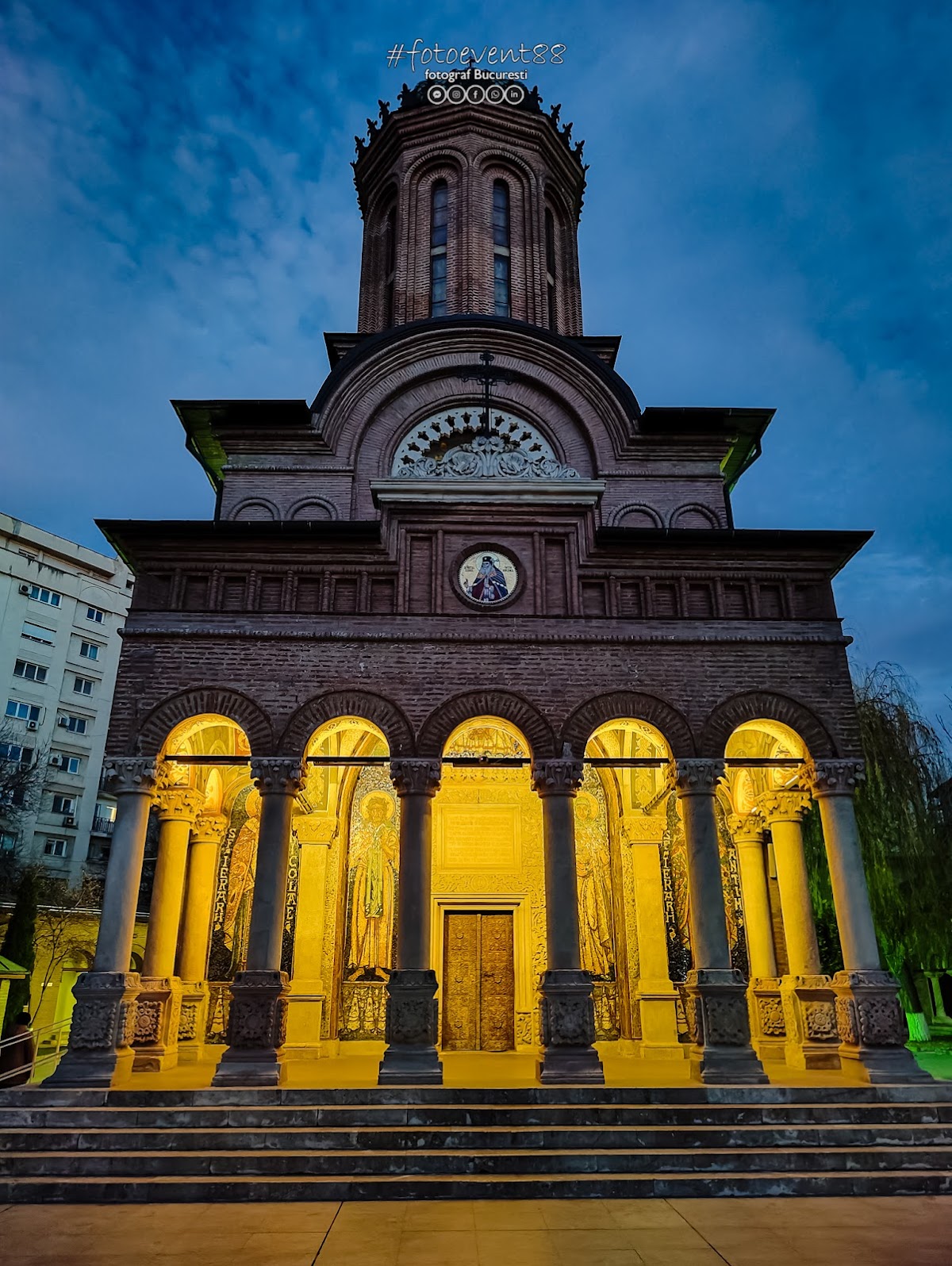
Antim Monastery is an Orthodox monastic complex in central Bucharest, at 29 Antim Street, Sector 5, built between 1713 and 1715 on the initiative and at the expense of Antim Ivireanul, a Metropolitan of Wallachia of Georgian origin. The complex includes the main church, dedicated to All Saints, monastic cells, a bell tower, and an enclosing wall; the monastery was originally laid out like a fortress, with the church at the center, cells along the sides, and a small tower at each corner.
The church follows a triconch plan typical of Brâncovenesc-style architecture, with a monumental porch resting on 10 stone columns with carved capitals. It features exterior stone carving of remarkable iconographic density, including walls decorated with openwork stone discs showing Persian, Arab, and Georgian influences. The massive oak door at the entrance was carved by Saint Antim himself, bearing his personal emblem — a snail, a symbol of faith and humility. The original inscription, dated 1715 and written in Greek verse, is preserved at the entrance.
Antim Ivireanul was a remarkable printer, engraver, and scholar who developed and modernized printing in the Romanian language, printed the world's first Orthodox book in Arabic script, and sent a printing press to Tbilisi, helping to establish printing in Georgia. At Antim Monastery he founded Wallachia's first public lending library. He was canonized by the Romanian Orthodox Church in 1992, giving the monastery the status of a pilgrimage site.
The complex was fully restored between 1964 and 1966, under Patriarch Justinian. At the end of 1945, the "Rugul Aprins" ("Burning Bush") intellectual circle was founded at Antim Monastery, later disbanded by the communist regime in 1950. The Holy Synod Palace, built within the compound in 1912, was moved 25 meters and rotated 13 degrees in 1984 to save it from demolition during the communist systematization of the historic center. The monastery still houses a museum of religious art today. It is reached by public transport, with Izvor metro station (M1/M3) an 8-10 minute walk away. Worth visiting for its authentic Brâncovenesc architectural value and the historical significance of its founder in Romanian culture.
Strada Antim 29 Bucuresti