
Attraction
Lake Sinoe
Lake Sinoe is a brackish liman of roughly 135 km², with a salinity of about 15 g/l, part of the Razim-Sinoe lagoon complex within the Danube Delta Biosphere Reserve. It is the only unit of the complex that retains a functional, if sluice-controlled, connection to the Black Sea. In antiquity this was the marine gulf of Halmyris, and on its shore stood Histria, a Greek colony founded around 657 BC, whose decline was caused precisely by the gulf's transformation into a lagoon.
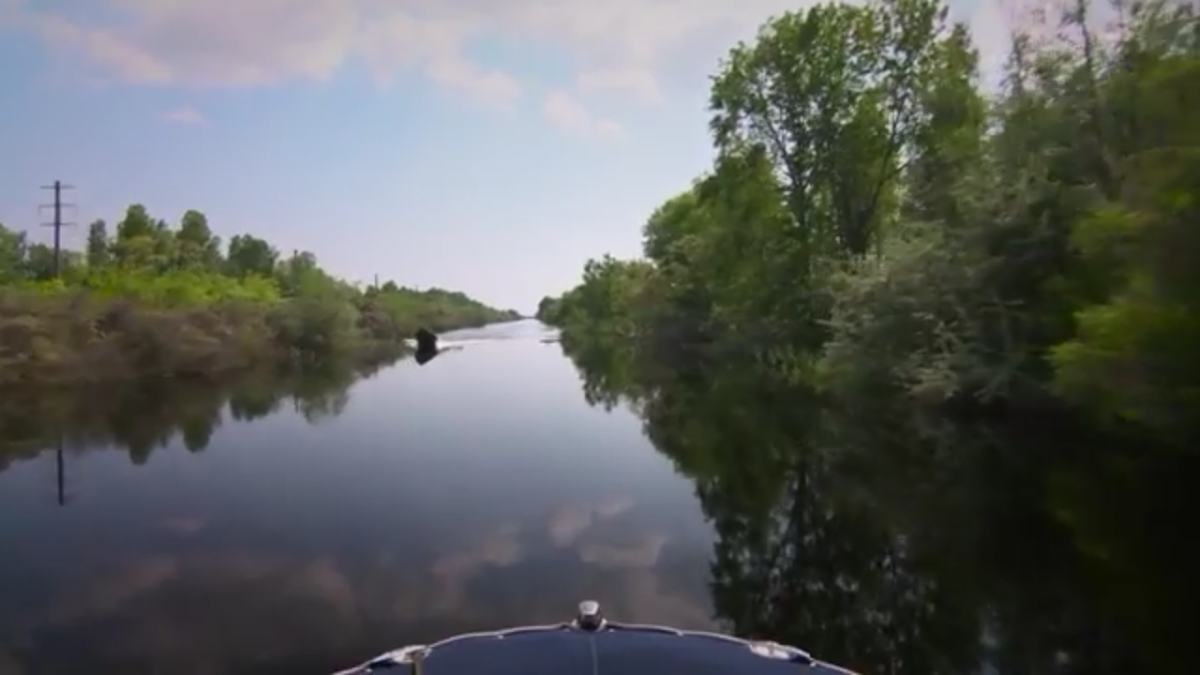
Lake Sinoe lies in the southern Danube Delta, on the boundary between Constanța and Tulcea counties, near the commune of Istria. It is a liman of roughly 135 km², with a maximum depth of about 1.6 metres, the second most significant lake of the Razim-Sinoe lagoon complex after Razim itself.
What sets it apart from the rest of the complex is its salinity. Because of its position and its distance from the mouths of the Dunavăț and Dranov canals, which bring fresh water from the Saint George branch, Sinoe holds a salt concentration of around 15 g/l. After the hydrotechnical works carried out from 1970 onward, the complex was divided into two units: the Razim unit, cut off from marine influence and converted into a freshwater reservoir for irrigation, and the Sinoe unit, comprising the lakes Sinoe, Nuntași, and Tuzla, which retains its link to the Black Sea through the sluices at Periboina and Edighiol. Sinoe is thus the only part of the complex with a functioning brackish ecosystem, holding species adapted to those conditions.
The Razim-Sinoe lagoon complex covers roughly 1,145 km² in all, of which the lakes account for 863 km². It formed through the damming of an ancient marine gulf by a sand bar, a process that took more than a thousand years. Both the Danube's alluvial deposits and the gradual eastward shift of the coastal currents, as the Delta advanced, contributed to it. The isolation of Lake Sinoe began with the formation of the Chituc bar, which closed off its southern side, and was completed by the coastal cordon between the Chituc and Perișor bars. The area belongs to the Danube Delta Biosphere Reserve and holds ten of its twenty strictly protected zones.
The ancient gulf was called Halmyris, and on its shore stood Histria, a Greek colony founded by settlers from Miletus around 657 BC, the oldest documented city on Romanian territory. Its economy peaked around 480 BC, when the region's first silver coins were struck here. Histria's decline in the 7th century AD was caused directly by the silting of the marine gulf and the transformation of its harbour into a lagoon, compounded by Avar and Slavic invasions. In other words, the lake on whose shore the ruins now stand is itself the reason the city was abandoned. The site is protected within the Istria-Sinoe zone, of roughly 400 hectares.
The lake hosts significant colonies of water birds, among them pelicans, cormorants, and egrets, along with numerous species of migrating ducks, which is why the area draws ornithologists.
Lake Sinoe is worth visiting because it is one of the few places where geology and history explain each other: a gulf that slowly closed into a lagoon, a Greek city abandoned because of that closure, and a brackish ecosystem left as the last witness of the link to the sea.
Istria judetul Constanta