
Attraction
Lake Herăstrău
Lake Herăstrău, covering 74 hectares, was created between 1930 and 1936 by regulating the Colentina River, and is the largest lake in the Colentina lake chain. It is flanked by King Michael I Park of Romania (popularly known as Herăstrău Park, 187 hectares) and the National Village Museum, opened the same year. It is conveniently reached by metro, with Aviatorilor station just a few hundred meters away.
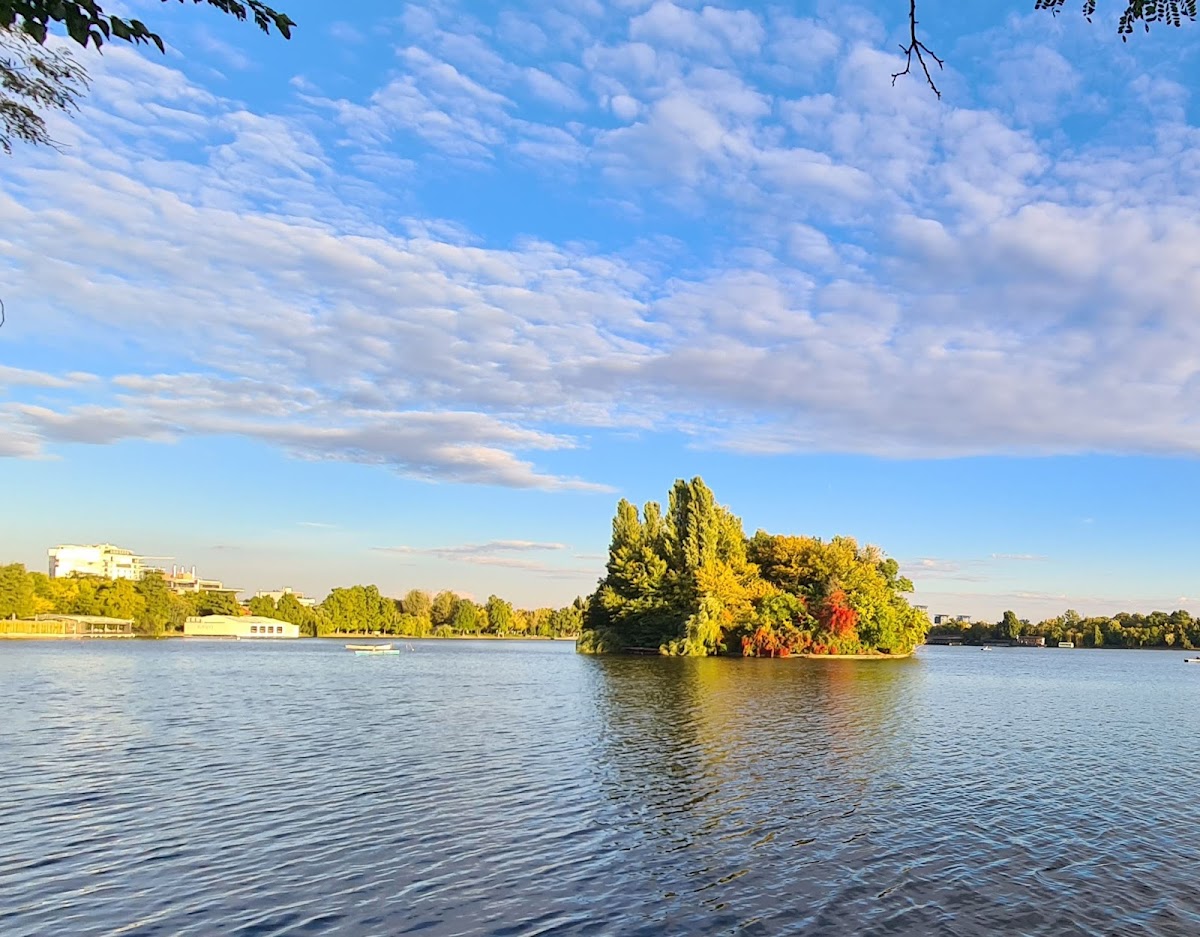
Lake Herăstrău is the largest lake in the Colentina lake chain, covering roughly 74-77 hectares with an average depth of 1.5-2 meters. It lies in northern Bucharest, on Kiseleff Avenue, right next to King Michael I Park of Romania (popularly known as Herăstrău Park), which covers about 187 hectares and is the capital's largest urban park.
The lake was created between 1930 and 1936, by regulating and widening the Colentina River, as part of a large-scale urban project launched under King Carol II, during the administration of mayor Dem I. Dobrescu, led by engineer Nicolae Caranfil. Before these works, the area was a marshy, periodically flooded plain; creating the lake alone required moving about 1.5 million cubic meters of earth. The lock connecting Lake Herăstrău to Lake Floreasca was built between 1933 and 1936, and restored in 2007.
The park itself was designed between 1936 and 1939 by architects Ernest Pinard and Friedrich Rebhuhn (an Austrian landscape architect responsible for the plant composition), with the paths laid out by Romanian architect Octav Doicescu. Over the years the park has carried several names — National Park, Carol II Park, I.V. Stalin Park — and its current official name is King Michael I Park of Romania. The lake's shoreline measures about 7.4 km, plus 1.6 km of island shoreline; the path circling the lake is about 5.9 km long.
On the lake's shores stands the "Dimitrie Gusti" National Village Museum, opened in 1936 on the initiative of professor Dimitrie Gusti — one of the world's first open-air ethnographic museums — housing more than 300 traditional buildings from across the country. Aquatic life includes carp, crucian carp, perch, and pike-perch, and the lake is also used for sport fishing and boat rides. It is reached by metro to Aviatorilor station or by surface public transport along Kiseleff Avenue and Aviatorilor Boulevard. Worth visiting for the combination of urban leisure infrastructure, the nearby open-air museum, and the chance to directly observe the history of interwar Bucharest's hydro-engineering.
Soseaua Kiseleff Bucuresti