
Attraction
Lake Babadag
Lake Babadag is a former liman of almost 24 km² between the town of Babadag, Enisala and Zebil, linked to Lake Razim by the Enisala canal. It is part of the Danube Delta Biosphere Reserve, and one of Romania's largest sand martin colonies nests in its loess banks.
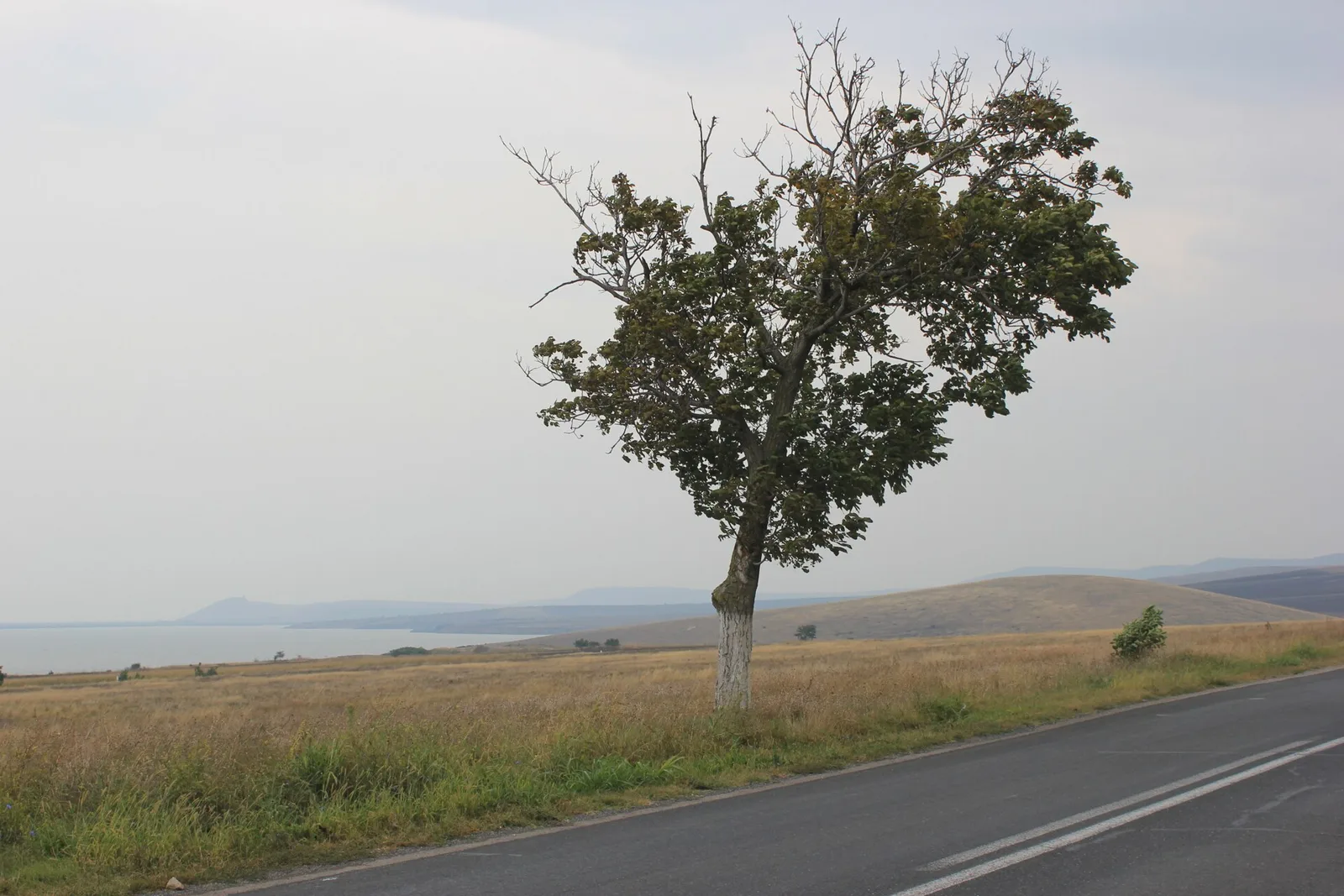
Foto: Julian Nyča, CC BY-SA 4.0, via Wikimedia Commons
Lake Babadag lies north-east of the town of Babadag, between Babadag, Enisala and Zebil, west of Lake Razim, in Tulcea County. It covers about 2,370 ha (including the Sărătura and Cotului limans), is about 8.7 km long and has a maximum depth of 3.1 m. It is fed by the Taița and Telița rivers, through the Zebil and Topraichioi ponds, and drains into Lake Razim through the Enisala canal.
Geologically, the lake is a former marine estuary (liman), part of the Razim-Sinoie lagoon complex. Its natural connection with the complex was cut by the hydraulic works carried out after 1970, when lakes Razim, Golovița, Zmeica and Babadag became the "Razim unit", a freshwater reservoir. Today the lake is used as a fish farm and as the water source for the Babadag irrigation system, which covers more than 25,000 ha in the south-east of the county.
A study by the Danube Delta National Institute for Research and Development, carried out in 2008-2009 around the lake and the neighbouring ponds (Zebil, Tăuc and Topraichioi), recorded 91 bird species, 80 of which nest here. They include the great white pelican and the Dalmatian pelican, the great cormorant and the pygmy cormorant, the little egret, the purple heron, the mute swan, the white-tailed eagle, the European bee-eater, the European roller, the common kingfisher and the hoopoe. The lake holds bream, Prussian carp, carp, zander and eel, and carp and bighead carp are also stocked as fry. Hunting is forbidden around the lake.
Lake Babadag legally belongs to the Danube Delta Biosphere Reserve, a UNESCO site and Ramsar wetland, and is part of the Natura 2000 site ROSPA0031 Danube Delta and Razim-Sinoie Complex. The Enisala canal is also included in the Natura 2000 site ROSCI0065 Danube Delta. The Reserve Administration (ARBDD) issues access permits for tourism and recreational fishing within the reserve.
Did you know that the lake's loess banks, 8-10 m high, hold one of the largest sand martin (Riparia riparia) colonies in Dobruja and in Romania? Researchers of the Danube Delta Institute counted more than 2,000 pairs, and the colony stretches along about 7 km of shore.
Între orașul Babadag și satele Enisala și Zebil, județul Tulcea