
Attraction
"Alexandru Borza" Botanical Garden, Cluj-Napoca
The "Alexandru Borza" Botanical Garden of Babeș-Bolyai University covers about 14 hectares south of central Cluj, with its entrance at 42 Republicii Street. It opened to the public in 1925 and has greenhouses, a Japanese garden, a Roman garden, a botanical museum and the largest herbarium in Romania.
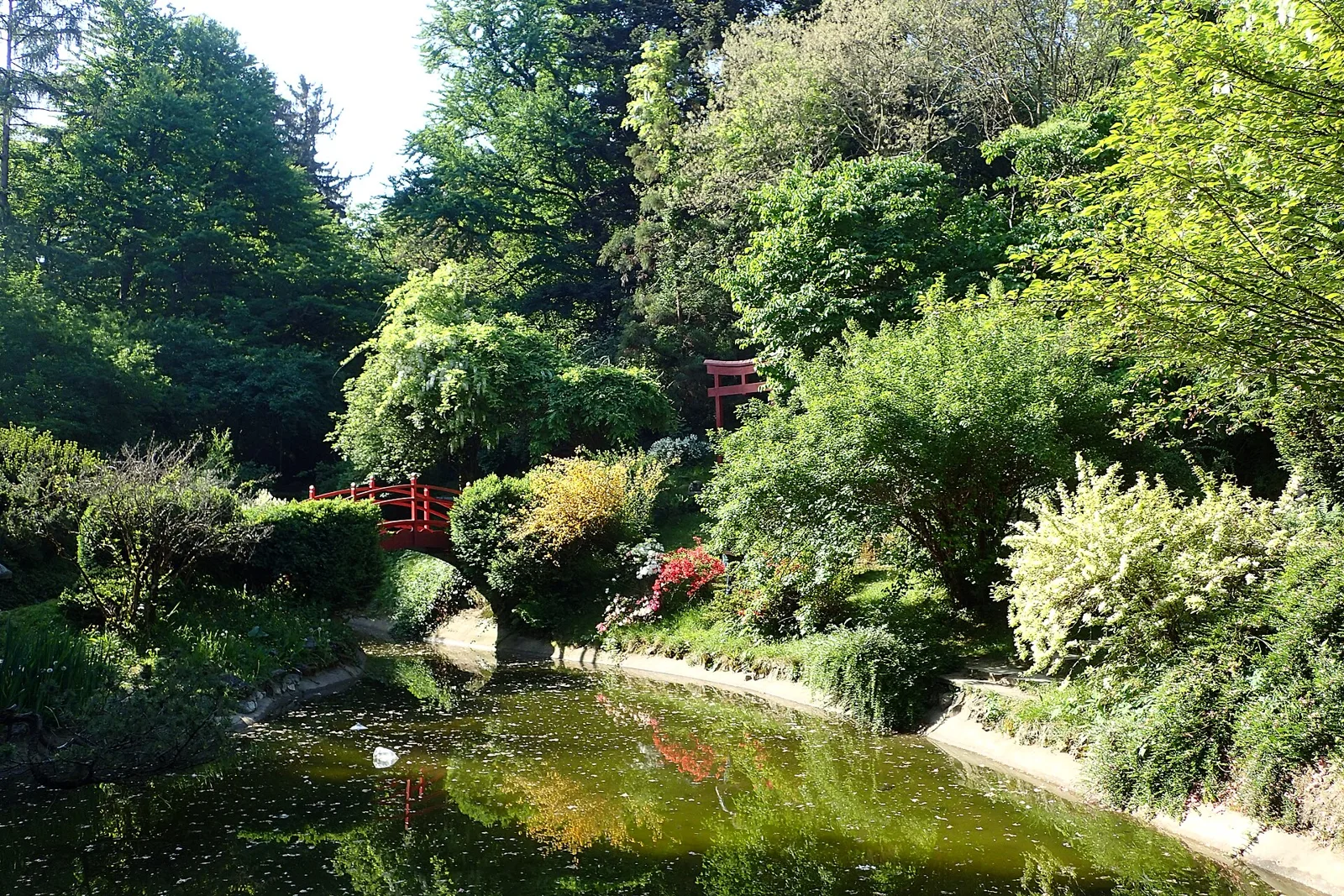
Foto: Krzysztof Ziarnek, Kenraiz, CC BY-SA 4.0, via Wikimedia Commons
The "Alexandru Borza" Botanical Garden is the academic botanical garden of Babeș-Bolyai University in Cluj-Napoca. It lies in the central part of the city, towards the south, and visitors enter from 42 Republicii Street.
Cluj had botanical gardens before this one: in the early 19th century one operated next to the Reformed College, and after 1872 Professor August Kanitz set up the university garden on land donated by Count Mikó. After 1900 Professor Aladár Richter bought a 9-hectare plot in the south of the city, where today's garden stands. From 1919 Professor Alexandru Borza was put in charge of completing the new garden, which he enlarged to 14 hectares. The garden officially opened to visitors on 25 June 1925. The Botanical Institute building was built in 1930-1935 and inaugurated in 1937 in the presence of King Carol II, and the large greenhouse complex was built between 1957 and 1960.
Today the garden has ornamental, systematic, economic and phytogeographic sectors (with the flora of deserts, North America, East Asia, the Balkans and the Mediterranean, and the flora of Romania), plus a sector for visually impaired visitors. The Japanese garden, designed by Borza in the gyō no niwa style, has a tea house on a small lake, a curved bridge and stone lanterns. The Roman garden, near the greenhouses, has a statue of the goddess Ceres, two Roman sarcophagi from the cemetery of ancient Napoca and plants whose Romanian names come from Latin. Of the 1960 greenhouse complex, three greenhouses are open to the public: the equatorial plants house, the palm house and the house of Mediterranean and Australian plants. The Botanical Museum, on the ground floor of the Botanical Institute, has nearly 7,000 exhibits. There is also a water tower, once used for irrigation, and statues, including an Eminescu by Oscar Han, given to the garden in 1935.
The garden belongs to Babeș-Bolyai University, which uses it for research and teaching. Its herbarium, with about 700,000 specimens, is the largest in Romania. The Botanical Garden is a historic monument, code CJ-II-a-B-07455.
Did you know that the round pool in the equatorial greenhouse holds, from spring to late autumn, the giant water lily Victoria cruziana, one of the largest water lily species in the world? The Cluj garden has grown it since 1930.
Strada Republicii 42, Cluj-Napoca, județul Cluj