
Attraction
Scărișoara Ice Cave
Hidden in the heart of the Munții Apuseni, at an altitude of 1,165 metres, Ghețarul de la Scărișoara shelters the largest underground glacier in Romania and the second largest in the world. Over 3,500 years old, this natural monument — declared a speleological reserve as early as 1938 — is one of the most spectacular geological wonders in the country.
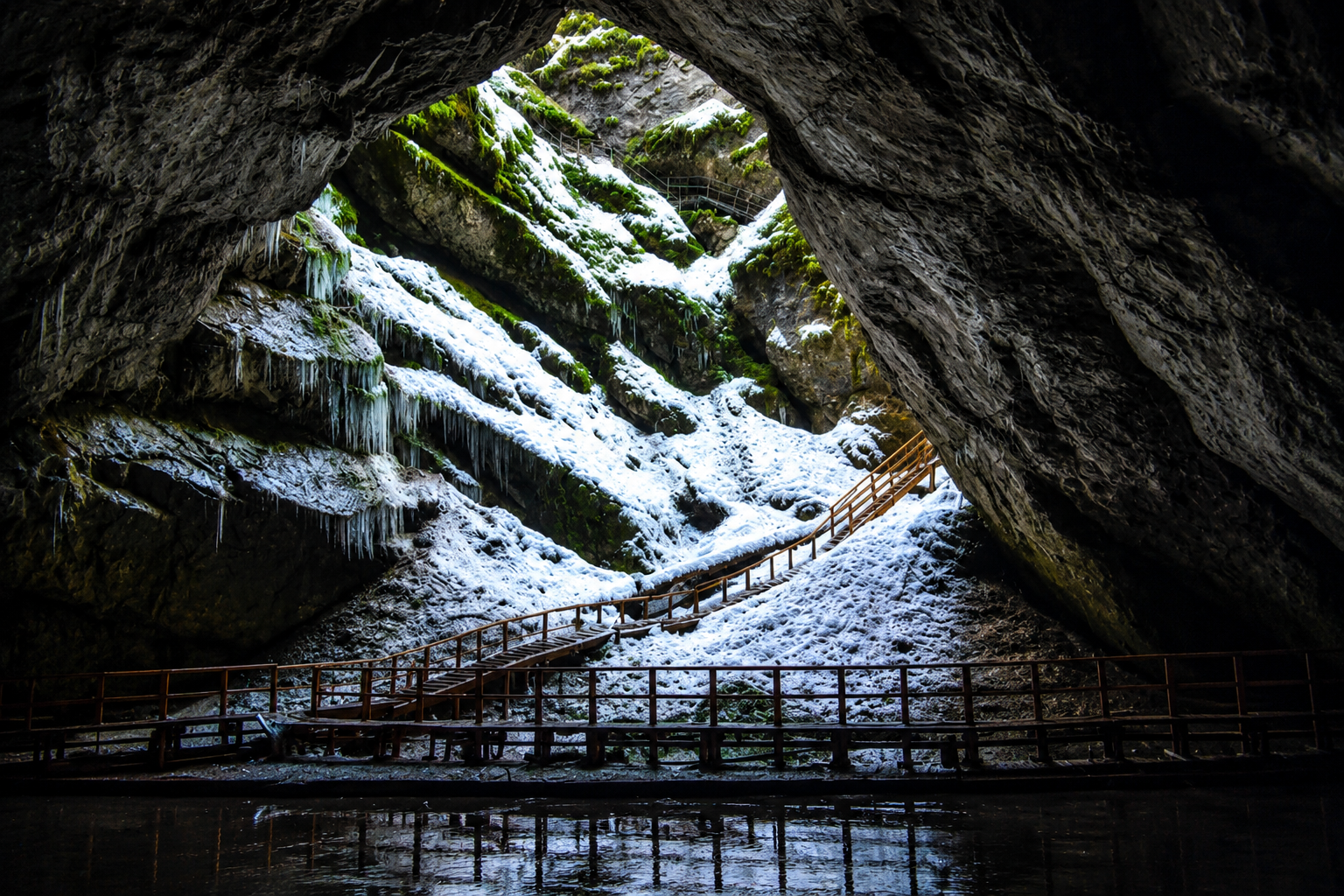
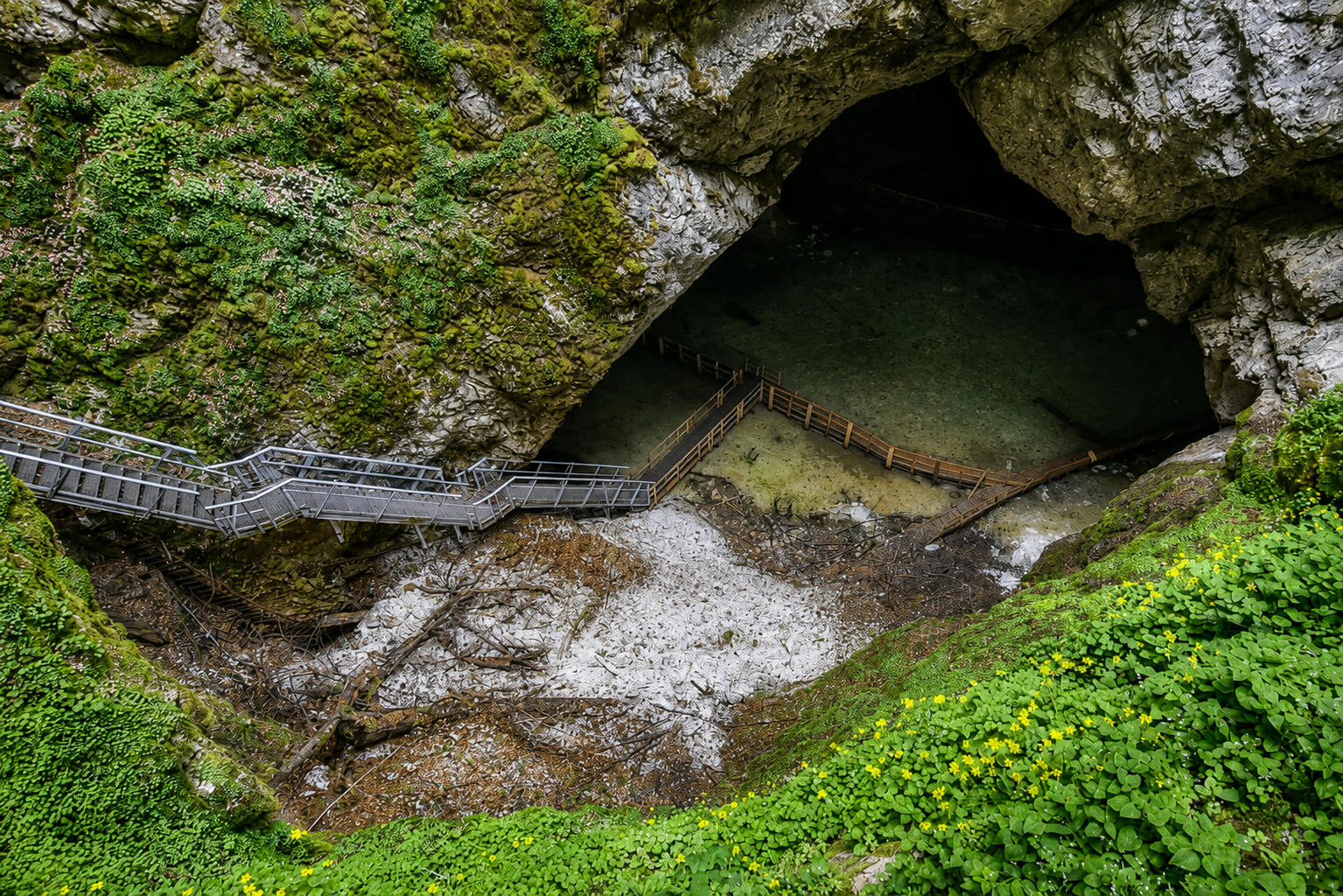
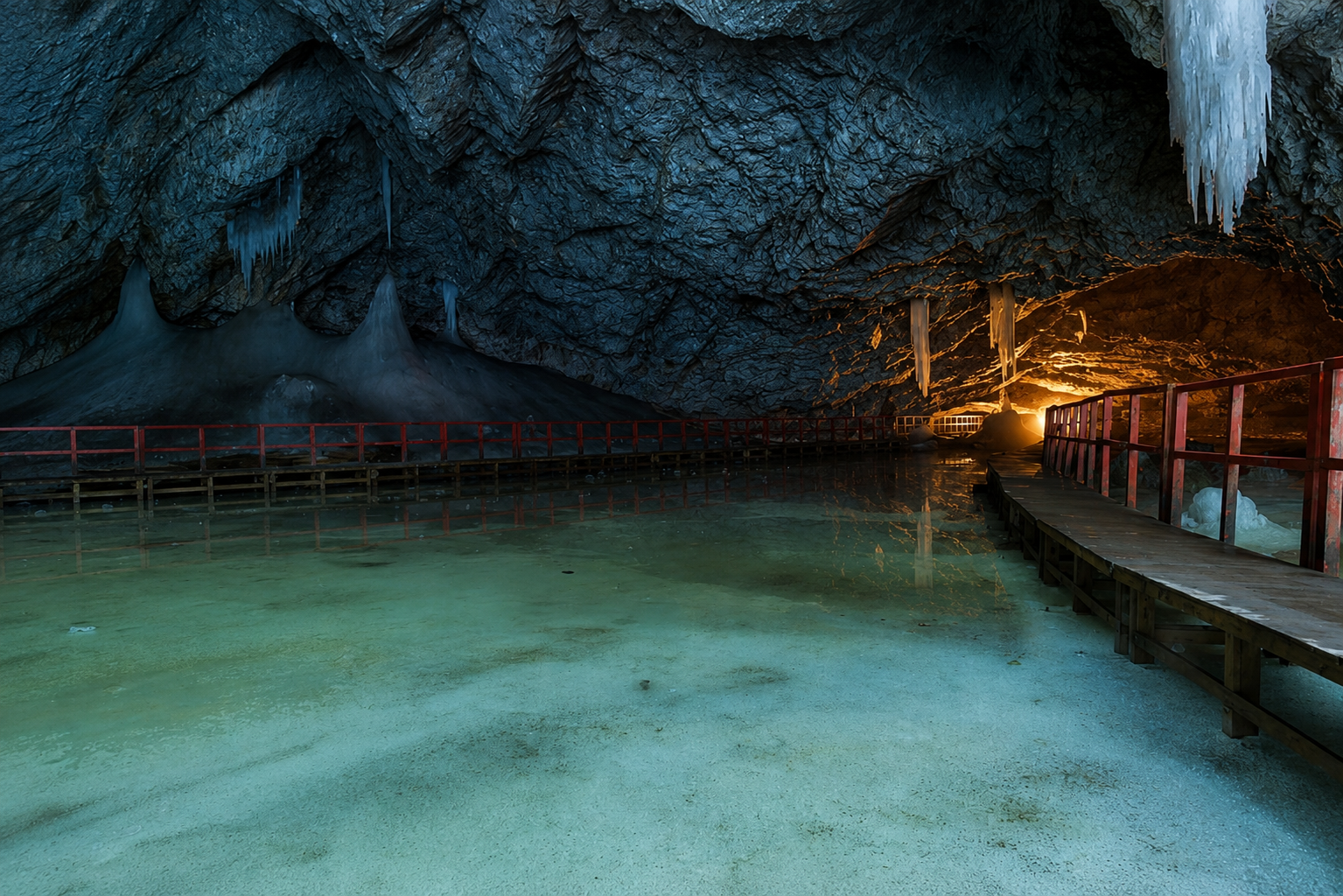
Hidden in the heart of the Munții Apuseni, on the territory of the commune of Garda de Sus in Alba county, Ghețarul de la Scărișoara is one of the most fascinating natural attractions in Romania. Situated at an altitude of 1,165 metres, it shelters the largest underground glacier in Romania and the second largest in the world — after the one in Slovakia. The cave opens through an impressive shaft 60 metres in diameter and 48 metres deep, down which visitors descend via a metal staircase anchored into the rock. At the base of the shaft lies the entrance to the cave itself, where the temperature drops sharply — a chill of just a few degrees accompanies every step toward the heart of the ice. The ice block has a volume of over 75,000 cubic metres, a surface area of 5,500 square metres, and a thickness that exceeds 37 metres in certain places. The age of the ice is estimated at over 3,500 years. Visitors can explore two sections: Sala Mare and the gallery known as Biserica, where both permanent and seasonal ice stalagmites create a surreal landscape. Researchers study the ice layers as a natural archive of the climate over the past millennia — each layer tells a story about weather conditions thousands of years ago. Declared a natural monument as early as 1938 — the first cave to receive this status in Romania — and included within the Parcul Natural Apuseni, the cave must be visited with an authorised guide. Access is from the commune of Garda de Sus, along the road that climbs through Cheile Ordâncușei.
Garda de Sus judetul Alba