
Attraction
Buzău Land UNESCO Global Geopark
Buzău Land Geopark, designated a UNESCO site in April 2022, extends over approximately 1,036 km² in the bend of the Carpathians, in the northern part of Buzău County, and is Romania's second UNESCO Global Geopark, after Hațeg Country. This entirely rural territory comprises 18 communes and concentrates rare geological phenomena, including the mud volcanoes of Pâclele Mari and Pâclele Mici, salt domes, eternal fires and the Ulmet concretions. It also features amber deposits at Colți, salt caves at Meledic and rock-hewn settlements, alongside a cultural and archaeological heritage spanning from the Bronze Age to the medieval period.
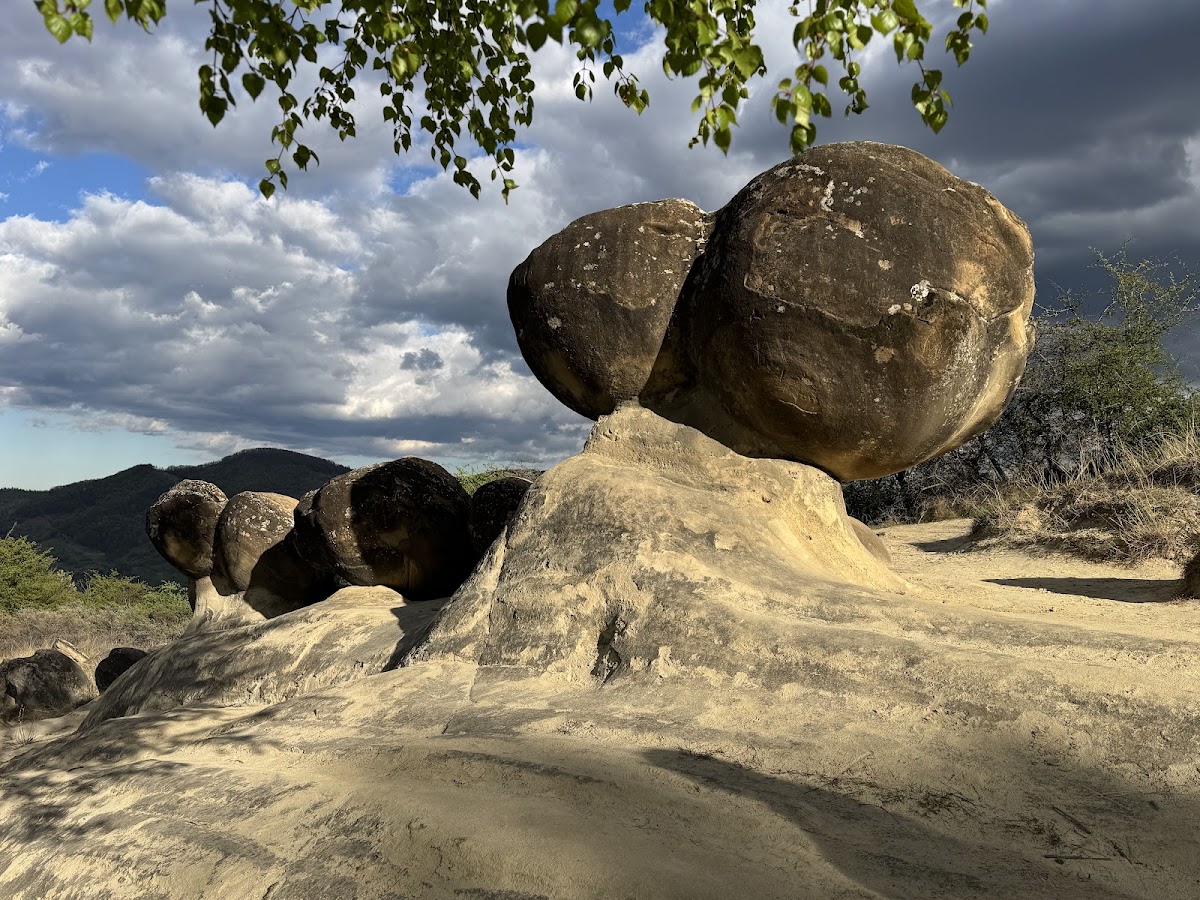
Buzău Land Geopark is a territory of approximately 1,036 km², designated a UNESCO site in April 2022 and included in the Global Geoparks Network, making it Romania's second UNESCO Global Geopark, after Hațeg Country. Located in the bend of the Eastern Carpathians, at the transition between hills and mountains in the northern part of Buzău County, it is an entirely rural territory coinciding with the administrative limits of 18 communes. The landscape is marked by rare geological structures, foremost the mud volcanoes of Pâclele Mari, in the commune of Berca, and Pâclele Mici, in the commune of Scorțoasa — regarded as the largest of their kind in Europe, formed by natural gas emanations that carry clay-rich mud to the surface, building active cones and craters. The territory also holds salt domes and the Meledic complex, with caves developed in salt, the eternal fires sustained by methane emanations at Lopătari, the Ulmet concretions, and the amber deposits of Colți, some specimens of a reddish hue, once mined at several sites in the area.
The geological structure is complex, with sedimentary rocks at the surface recording a history spanning more than 70 million years. The cultural heritage includes the rock-hewn settlements of the Aluniș–Colți–Bozioru area, with traces of habitation succeeding one another from the Bronze Age through Late Antiquity and the medieval period. The geopark originated as a project launched in 2007 by the University of Bucharest in partnership with the Buzău County Council, and is managed by the Buzău Land Association. The concentration of active geological phenomena and of natural and cultural sites within a single territory makes it relevant for the study of Subcarpathian geodiversity.
Satuc, Judetul Buzau