
Attraction
Danube Delta Biosphere Reserve
The Danube Delta, covering an area of 5,800 km², is the second largest delta in Europe, of which 3,446 km² lies within Romanian territory. Declared a UNESCO Biosphere Reserve in 1991 and a Ramsar site, it is home to over 300 bird species and approximately 160 fish species. It hosts the largest colony of great white pelicans in Europe — at Roșca-Buhaiova — and the largest continuous reed bed in the world, estimated at 1,563 km².
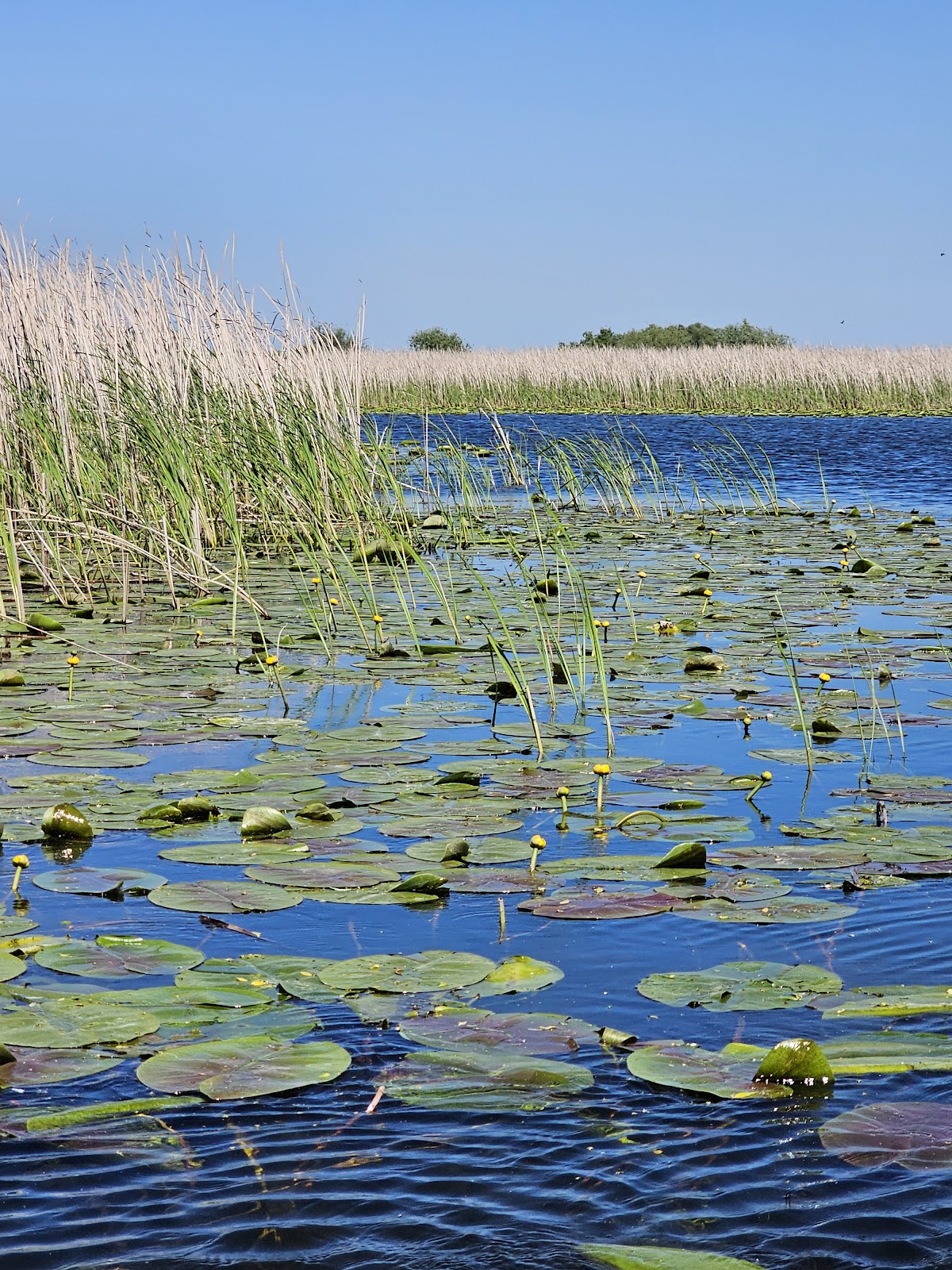
The Danube Delta is the second largest delta in Europe, with a total area of 5,800 km², of which 3,446 km² lies within Romanian territory, the remainder belonging to Ukraine. Formed over the last approximately 10,000 years through the accumulation of sediment carried by the river, the delta continues to expand by around 40 metres per year into the Black Sea. In 1991 it was inscribed on the UNESCO Natural Heritage list and declared a Biosphere Reserve, and in the same year it was designated a Ramsar site of international importance for wetlands. It comprises 20 strictly protected areas totalling over 50,000 hectares — approximately 9% of the reserve's total surface area. The delta ecosystem is home to over 300 bird species and approximately 160 fish species, including sturgeon — some of which are critically endangered. The flora includes approximately 1,839 plant species. The reed bed, estimated at approximately 1,563 km², constitutes the largest continuous reed marsh in the world. The Roșca-Buhaiova area hosts the largest and oldest colony of great white pelicans in Europe, documented by researchers for nearly a century — with up to 18,000 individuals counted in recent surveys. The Dalmatian pelican colony at Ceaplace is the second largest in Europe, after the one at Prespa in Greece. Pădurea Letea, covering an area of 2,825 hectares, is the northernmost forest with subtropical elements in Europe, sheltering several rare orchid species. The delta functions as one of the most important avian migration corridors in the Northern Hemisphere, with spectacular peaks during the spring and autumn migration periods. It is well worth visiting for its ecosystemic uniqueness at a European level and for the biodiversity concentrated within a relatively small area. The Danube Delta holds three distinct international designations, all dating from 1991: UNESCO World Heritage Site — inscribed on the World Cultural and Natural Heritage List in December 1991; Ramsar Site — recognised as a wetland of international importance in September 1991; MAB-UNESCO Biosphere Reserve — a separate UNESCO programme, from 1992. In addition, the European Diploma for Protected Areas — awarded in 2000, renewed in 2005, 2010 and 2020.
Delta Dunarii judetul Tulcea