
Attraction
Nucu Rock Complex
The Nucu Rock Complex, in the mountainous area of Buzău County, near the village of the same name, brings together several distinct rock-cut sites: Iosif's Little Church (documented since 1587), Dionisie Torcătorul's Cell (4th-6th centuries AD), Agatonul Nou (documented since 1580), and Fundul Peșterii Grotto, where researchers recently identified weapon depictions over 4,000 years old. It is reached from Buzău, via Pătârlagele and Colți, about 65-70 km away. The site holds major historical and religious significance as evidence of early monasticism in the Carpathian region.
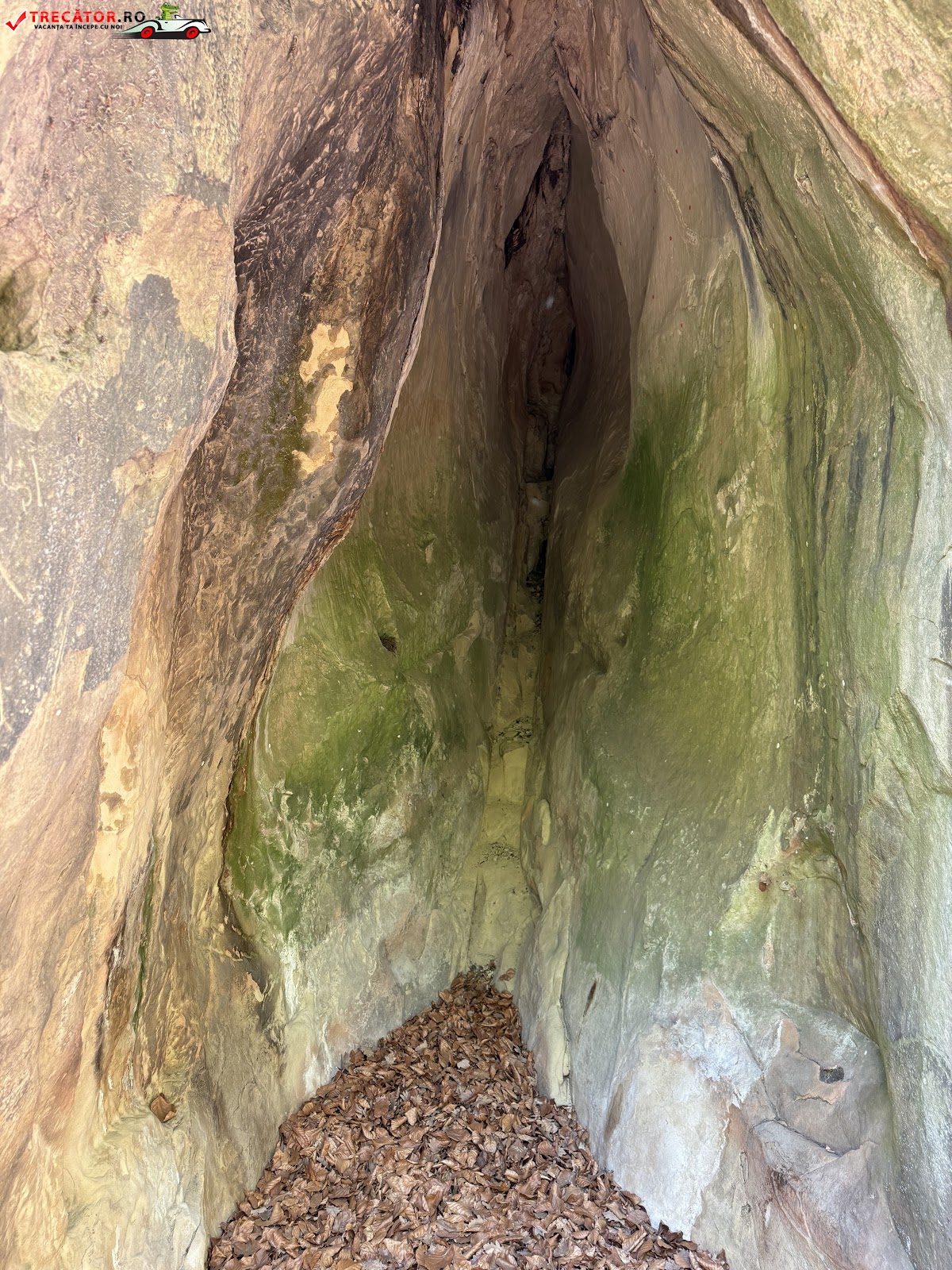
The Nucu Rock Complex is one of Romania's most extensive rock-cut monument ensembles, located in the mountainous part of Buzău County, near the village of Nucu (Bozioru commune), at the foot of the Bozioru massif, on the Ivănețu ridge. The complex is part of the "Land of Luana" and the UNESCO "Buzău Land" Geopark, internationally recognized in April 2022.
The area includes several distinct sites of very different ages. Dionisie Torcătorul's cave-cell, about 3 km from Nucu village, is dated to the 4th-6th centuries AD. Iosif's Little Church, considered the most beautiful and best-preserved of Nucu's hermitages, is documented since 1587, though a paleo-Christian symbol carved above the door (resembling a fish, ichthys) suggests a possibly much older origin, from the 3rd-4th centuries. Agatonul Nou, dedicated to Saint John Chrysostom, is documented since 1580; the hermitage, made up of a small church, a cell, and a cellar, disappeared in the 18th century. Piatra Găurită (Iosif's Cave) is dated by some sources much earlier, to the 3rd-4th centuries BC, making it among the oldest remains in the area.
Fundul Peșterii, about 200 m from Dionisie's cell, is a grotto closed to the public, considered an important archaeological site. Researchers from the Buzău County History Museum identified 137 weapon depictions there, including 15 types of Bronze Age daggers, along with arrowheads, spearheads, pentagrams, and other symbols — some depictions estimated at over four millennia old. Researchers hypothesize the grotto may have served as an initiation site for a warrior elite.
The area's remains were first inventoried in the second half of the 19th century by Alexandru Odobescu. Over time, the cells of the Buzău Mountains served various purposes — hiding places for treasure, refuges for early Christians, then Orthodox hermitages. The complex is reached from the city of Buzău, via Pătârlagele and Colți, an estimated 65-70 km away; the last stretch of road is partly unpaved, and fully visiting the sites requires walking marked trails, with about 17 km between the villages of Nucu and Aluniș. The complex is listed among Romania's historic monuments and is of interest both to researchers of early Christianity in the Carpathian region and to specialists in prehistoric archaeology. Worth visiting for the exceptional diversity of rock-cut dwelling forms and the overlapping historical layers, from prehistory to medieval Orthodox monasticism.
Nucu judetul Buzau