
Attraction
Aluniș Rock Complex
The Aluniș Rock Complex, in the village of Alunișul, Colți commune, Buzău County, is centered on a church carved into rock in 1274 — one of the few churches of its kind in Romania where services are still held, in continuous use for over 700 years. The complex also includes 2 monastic cells cut into the rock, plus other undated rock formations. The site is part of the UNESCO "Buzău Land" Geopark and the "Land of Luana" ethnographic region. Worth visiting for its uniqueness as an active medieval rock-cut church and for its well-preserved hand-carving techniques.
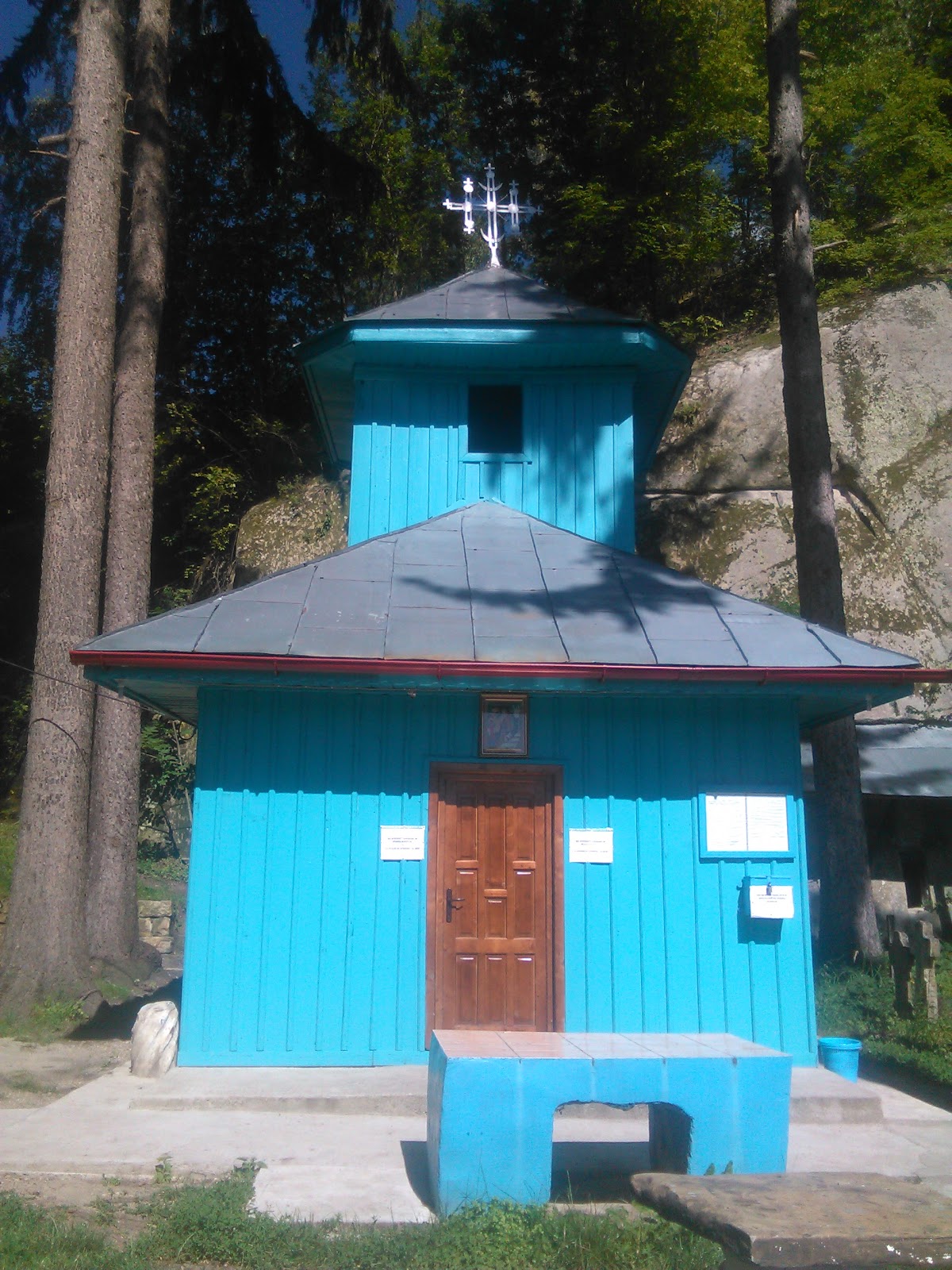
The Aluniș Rock Complex is a group of rock-cut places of worship and monastic cells, located in the village of Alunișul, Colți commune, Buzău County, a few kilometers from the commune of Colți, on a ridge known as Martirei. The complex is part of the "Land of Luana," the ethnographic and geological region in the Buzău Mountains, notable for the largest concentration of rock-cut hermitages and monastic dwellings in Romania.
The complex's centerpiece is the church dedicated to the "Beheading of Saint John the Baptist," carved directly into the rock, dated to the year 1274 — one of the oldest Christian churches on Romanian territory and one of very few rock-cut churches in the country where religious services are still held, continuously, for over 700 years. According to local legend, the church was dug by two shepherds, Vlad and Simion, who grazed their flocks in the area; one of them reportedly heard a voice in his sleep urging him to dig into the rock, where he found an icon of the Mother of God. The two shepherds' names are inscribed on the north wall of the altar.
The church is nave-shaped, with a vaulted ceiling, measuring 8.80 m long, 4 m wide, and 2.80 m high. The small altar apse holds the Holy Table, the Prothesis, and niches for liturgical vessels. A wooden porch was added at the entrance in 1825. In 1870, hieromonk Eftimie Ciolăneanu installed an oak-wood iconostasis with icons on zinc plate; since 1871, the church has served as a parish church, a role it still holds today.
On either side of the church, the complex includes two monastic cells, also carved into the rock, used by the hermitage's monks, along with five other undated rock formations — three unfinished, one blocked with boulders, and one positioned on the ridge, serving as a lookout. Medieval documentary records of the hermitage include donations, disputes, and commercial deeds, including an 1586-1587 charter of ruler Mihnea the Turned.
The site is near other rock-cut landmarks in the area, such as Agaton, Fundul Peșterii, and Iosif's Little Church, all accessible within the same area. The complex is part of the "Buzău Land" Geopark, recognized as a UNESCO site in April 2022. Worth visiting for its uniqueness as a still-active medieval rock-cut church, its well-preserved hand-carving techniques, and the chance to concretely understand the way of life of monastic and rural communities in the Buzău Subcarpathians.
Alunis comuna Colti judetul Buzau