
Attraction
Cetățuia Hill in Cluj-Napoca
Cetățuia Hill, on the right bank of the Someșul Mic river, holds the remains of the Habsburg fortress built after 1715 and is a well-known viewpoint over central Cluj. On the top stand the iron cross raised in 1995, the Paratroopers' Tower and the hilltop park.
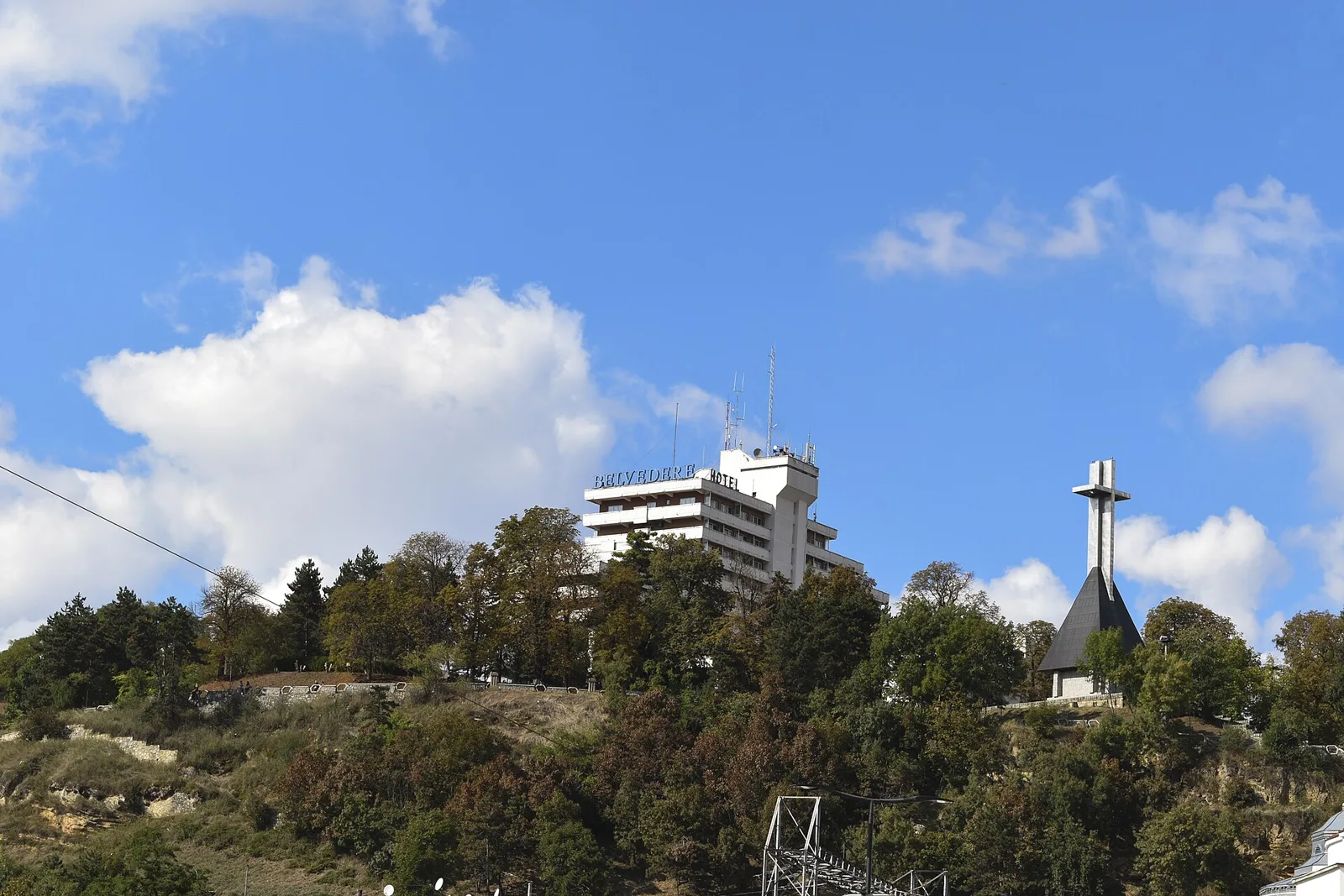
Foto: Norbert Csaba, CC BY-SA 4.0, via Wikimedia Commons
Cetățuia Hill (Fellegvár in Hungarian) rises on the right bank of the Someșul Mic river, in the Gruia district of Cluj-Napoca, north of the historic centre. The plateau on top looks over the whole city centre, with the tower of St. Michael's Church.
Between 1715 and 1735 a star-shaped Habsburg fortress, with bastions, a redoubt and a tower and surrounded by an earth rampart, was built on the hill to plans by the military architect Giovanni Morando Visconti. The citadel was meant to control the town after Transylvania came under Austrian rule, but it was often used as a prison, especially during the 1848 Revolution. The Belvedere Hotel was built on the hill in the 1970s, and in 1995 a large iron cross was raised to replace the one destroyed by the communists in the 1950s; the original cross had been raised in memory of those imprisoned here.
Parts of the walls, a few buildings and two gates (south-east and north) survive from the fortress; the former redoubt became the Paratroopers' Tower. The hill is laid out as a park with paths and viewing terraces and can be climbed on foot from the city, including by the stairs of Aleea Scărilor, or reached by car up to the hotel. Access is free.
The "Cetățuia Cluj-Napoca" ensemble is a category A historic monument, LMI code CJ-II-a-A-07240, dated 1716.
Did you know that the Saxon pastor Stephan Ludwig Roth, one of the leading figures of the 1848 Revolution in Transylvania, was imprisoned and executed on Cetățuia on 11 May 1849? A plaque on the hill commemorates him.
Dealul Cetățuia, cartierul Gruia, Cluj-Napoca, județul Cluj