
Attraction
Cetatea Trascăului
Cetatea Trascăului, also known as Cetatea Colțești, is situated on the steep summit of a limestone rock at an altitude of 740 m, to the west of the village of Colțești, in the commune of Rimetea, Alba County. Built around the year 1296 by vice-voivode Thorotzkay, it is considered by some historians to be the oldest construction in Transylvania still visible today.
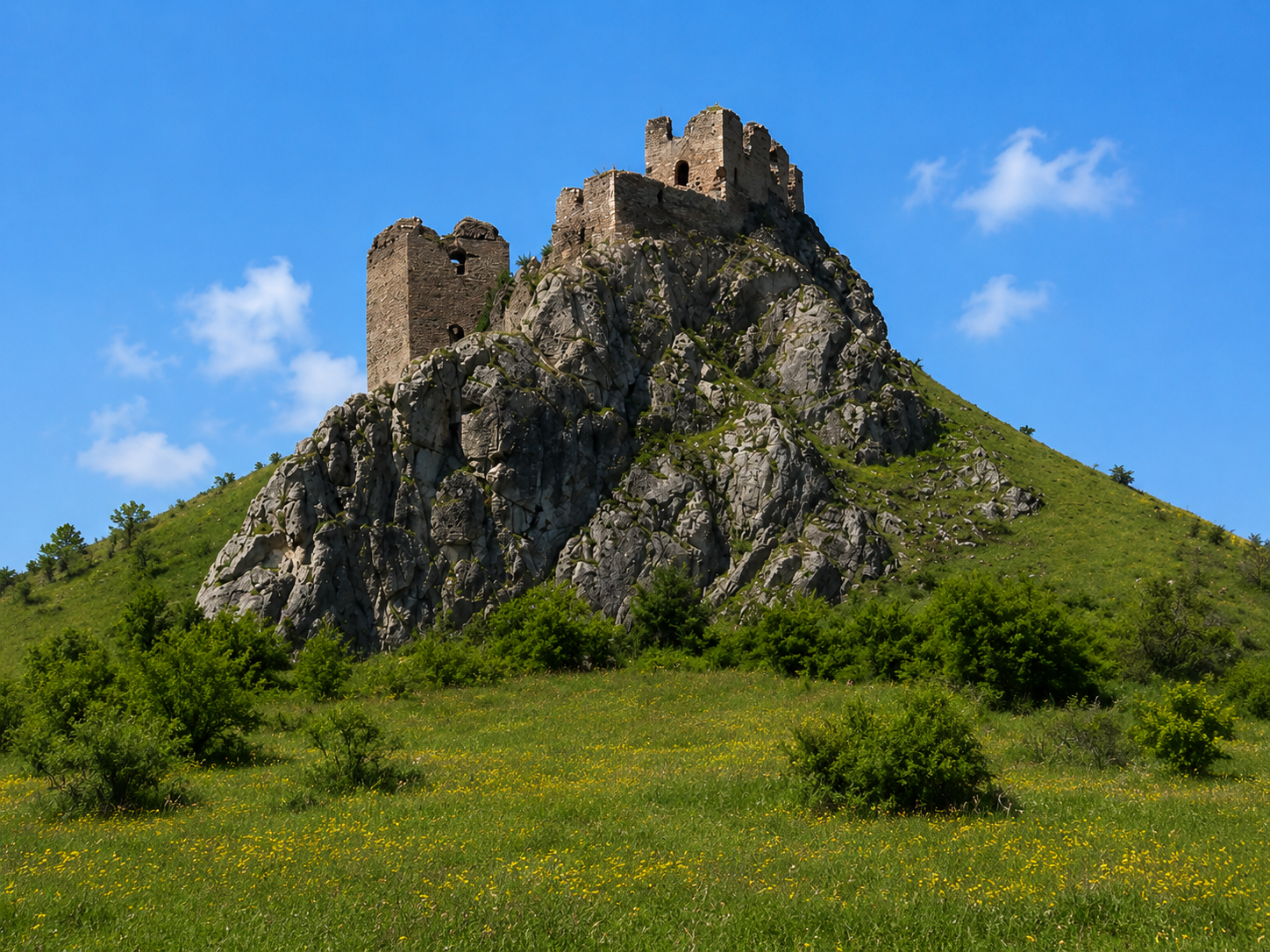
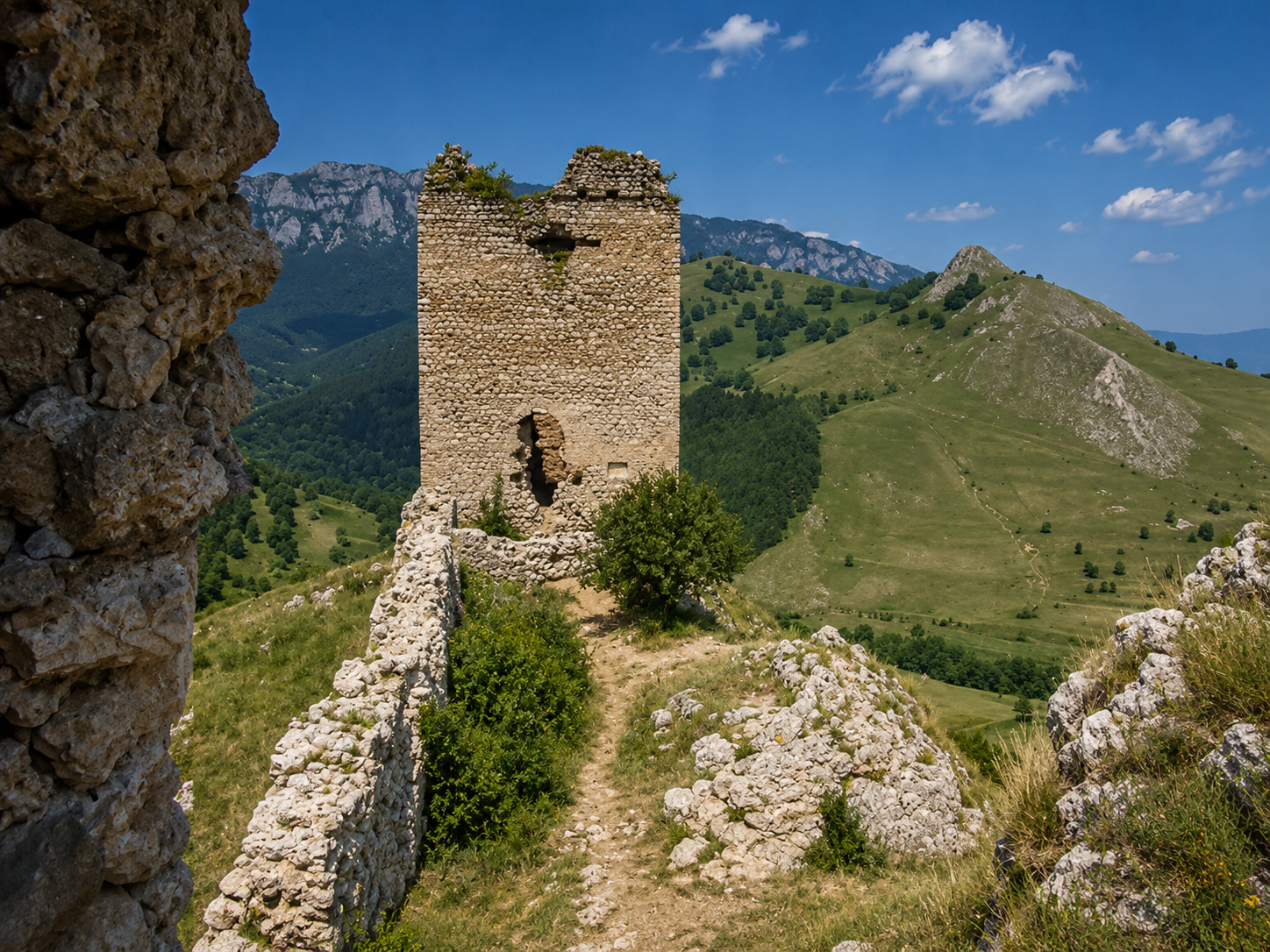
Cetatea Trascăului was built around the year 1296 by vice-voivode Thorotzkay of Trascău, on the steep summit of a limestone klippe, as a direct response to the Tatar invasion of 1241, during which the villages in the valley had suffered significant damage. On the northern tower, approximately 20 m tall, a stone inscription attributing the construction to the Thorotzkay family is preserved to this day. Throughout the 15th century, the fortress passed through several historical events: in 1470 it was confiscated by King Matthias Corvinus and given to the voivode of Transylvania, before being returned to the Thorotzkay family in 1510. In 1514 it was devastated by peasants led by György Dózsa. The final blow came in 1703, when Austrian imperial troops under General Tiege destroyed the fortress, because the Thorotzkay family had opposed the annexation of Transylvania to the Habsburg Empire. A significant portion of the enclosure walls and the two lateral towers, built from local limestone, have been preserved. The fortress was listed on the Historical Monuments Register of Alba County in 2010. A local legend speaks of an underground tunnel said to connect the fortress to another fortification 4 km away and to the cathedral in Rimetea. It is well worth a visit for the exceptional panorama over the Depresiunea Trascăului, Piatra Secuiului, and the villages of Rimetea and Colțești.
Dealul Cetăţii (Varodal)