
Attraction
Sighișoara Citadel
Sighișoara Citadel is the fortified upper town of Sighișoara, still inhabited today, set on a hill on the south bank of the Târnava Mare. Together with the Lower Town it forms the Historic Centre of Sighișoara, inscribed on the UNESCO World Heritage List in 1999, and nine of the fourteen towers of its enclosure wall survive, among them the Clock Tower.
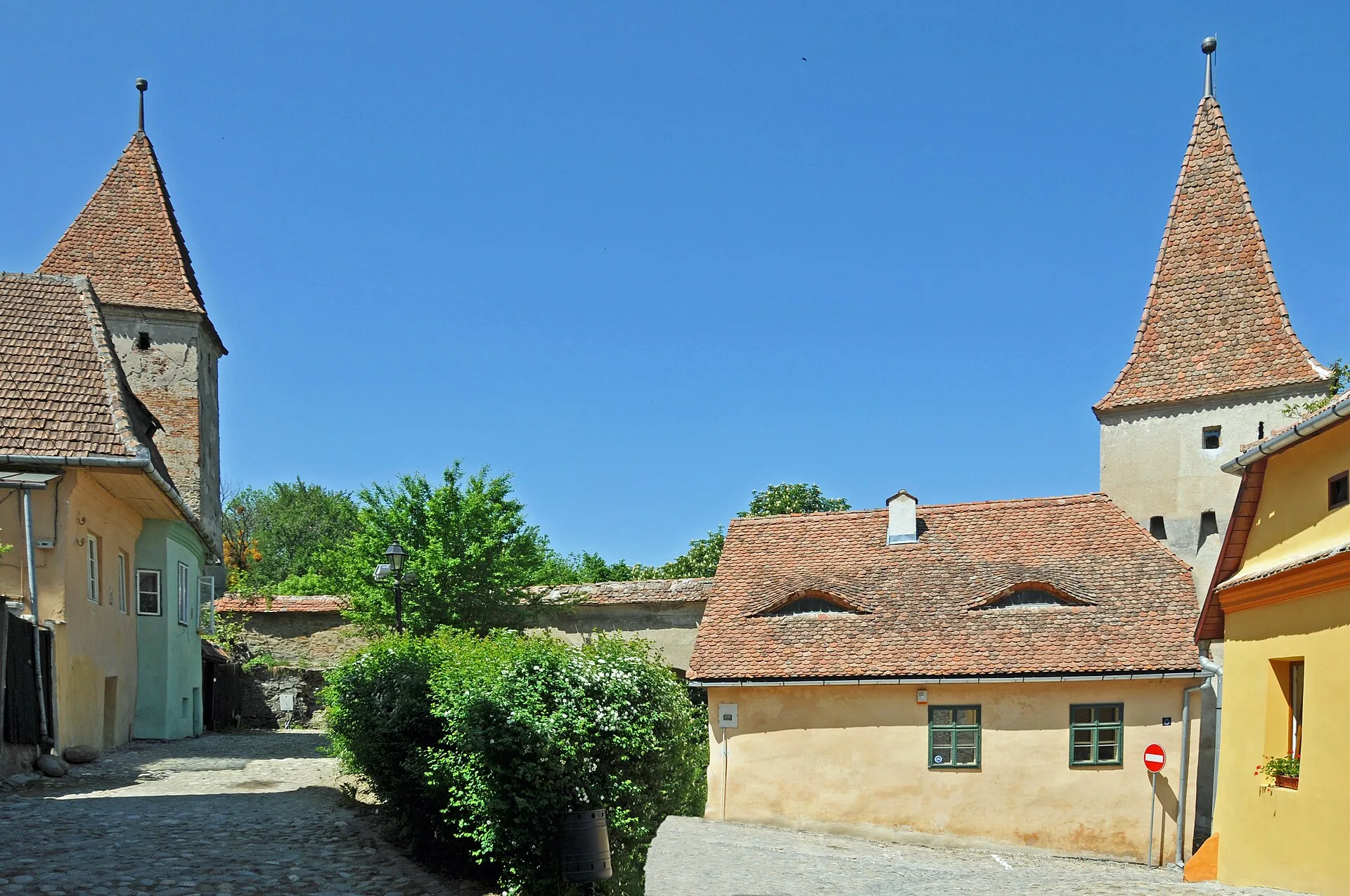
Foto: Dennis G. Jarvis, CC BY-SA 2.0, via Wikimedia Commons
Sighișoara Citadel occupies a long hill on the south bank of the Târnava Mare river, laid out on two terraces: Citadel Hill, at about 350 m above sea level, and School Hill, at about 429 m, where the Church on the Hill stands. It is the upper part of the medieval town and is still inhabited. Together with the Lower Town at the foot of the hill, it forms the Historic Centre of Sighișoara, inscribed on the UNESCO World Heritage List in 1999 (criteria iii and v), with a property area of 33 ha and a buffer zone of 145 ha.
German craftsmen and merchants known as Saxons were settled here by the kings of Hungary in the thirteenth century, on a hill occupied since the Palaeolithic. After the Tatar invasion of 1241, the fortified settlement was strengthened with walls and towers, which were extended around the whole plateau at the end of the fourteenth century. In 1280 the town was known as Castrum Sex, and in 1367 it received the title of civitas. Each guild was responsible for building and defending a tower. The fire of 1676 destroyed three quarters of the town, which was rebuilt on its old foundations.
Of the fourteen towers of the wall, nine survive: the Clock Tower and the towers of the Tanners, Tinsmiths, Ropemakers, Butchers, Furriers, Tailors, Shoemakers and Blacksmiths. The two main gates are on the south side, beneath the Clock Tower, which houses the History Museum, and on the north side, beneath the Tailors' Tower. School Street, the main axis, starts from Citadel Square. The houses, mostly craftsmen's homes of two or three storeys, have narrow street fronts and vaulted cellars; many were rebuilt after 1676 on fifteenth and sixteenth century foundations. The citadel also contains the Monastery Church, the former church of the Dominican monastery, with a Baroque altar from 1680, the City Hall (1886-1888), built on the site of the monastery, the Vlad Dracul House and the Covered Stairs leading up to the Church on the Hill.
The historic centre of Sighișoara is a listed historic monument (LMI code MS-II-s-A-15806), and the fortifications, with their towers and the curtain walls between them, are listed as MS-II-a-A-15805 and dated to the fourteenth to eighteenth centuries. The citadel is entered on foot, through the passage beneath the Clock Tower or through the gate beneath the Tailors' Tower.
Cetatea Sighișoara (Dealul Cetății), municipiul Sighișoara, județul Mureș